
I started a couple of projects during May, but life got busy and I had some zipper issues and they stayed unfinished until today when I had a lovely unplugged Thursday and had the time and energy to finish them. The first is another tunic using the Made By Rae blouse pattern, the Beatrix. I used this great fabric from Alison Glass. All over the internet there are dresses and Beatrix blouses made with this plus-patterned fabric in different colors but I was actually inspired by this post by Tara whose blog Girl Like the Sea is wonderful. When I saw the same fabric on sale, I snatched it up. I liked the white strips Tara used in the blouse for her daughter and it made me think a white exposed zipper would work well.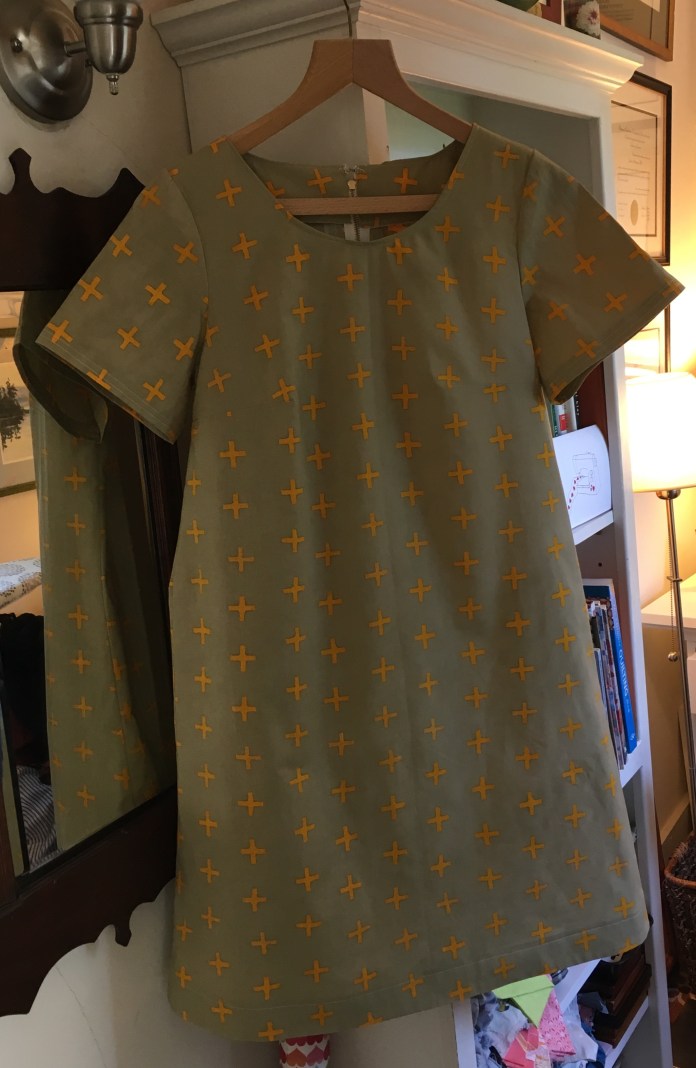 This is my third Beatrix Tunic. The first two were blogged here and here. I have made several versions of the Green Bee Pearl shift and this project is sort of a combination of the patterns. I had used exposed zippers when I made my plaid Pearls and was really happy with the extra zing the metal zipper gave to a relatively simple pattern so I decided to try it here. The hardest part was finding the right zipper. I finally ordered two sizes of white zippers from Zipit, an etsy store with a good selection. I had already cut out this pattern and a linen Pearl and prepared the back for the zipper using Megan Nielson’s tutorial. When I previously inserted the zippers on the plaid Pearls, I used a technique based on Dana’s zipper bag tutorial. It had worked really well for me but I thought the Brumby method might give me a cleaner look. What I learned about the Brumby method, in which you prepare the opening for the zipper first, is that measuring accurately is key. Sadly, when I went to insert the zipper into the opening, it turned out that my measurements were off and the opening for my zipper was too long. One of my zippers was too short and one was too long (sort of a Goldielocks problem). So I had to order more zippers. And this is why these tunics did not end being worn during May! I now have a lot of zippers. 🙂
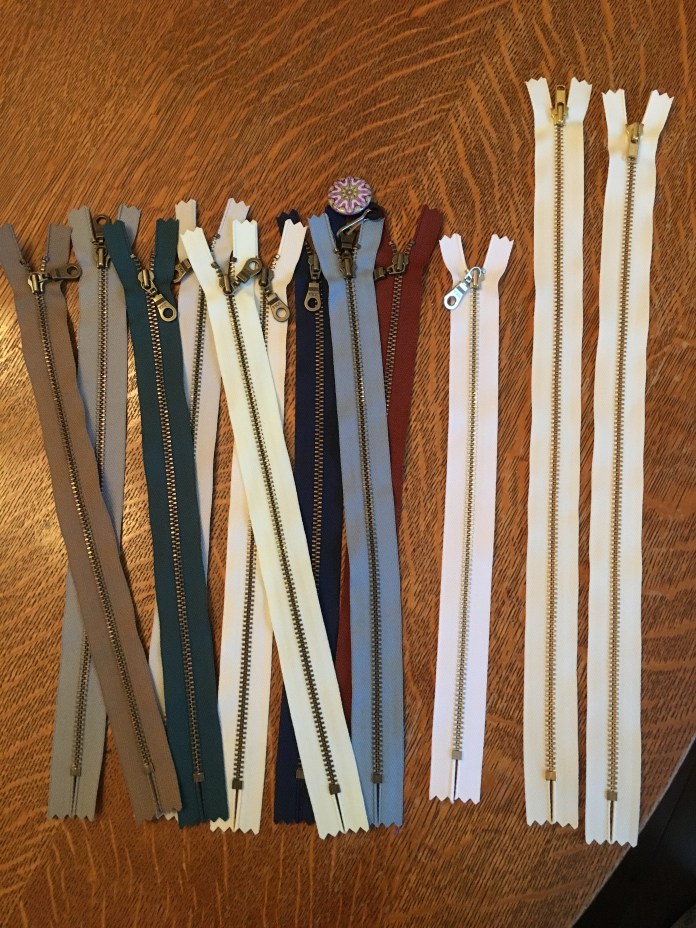 Sometimes I will make a great deal of headway on a project and then weeks go by before I find the time to get back to it. I have learned to relax and know that some day I will finish, even if it takes weeks (or months). For this tunic, I cut out the top of the Beatrix and graded out to the width of the Pearl. This time, I didn’t curve the hem but used the Pearl hem line. My new go-to work uniform is a tunic over leggings with boots in the winter and sandals in the summer. It is easy and comfortable. I will definitely be making more of these. Some pictures below.
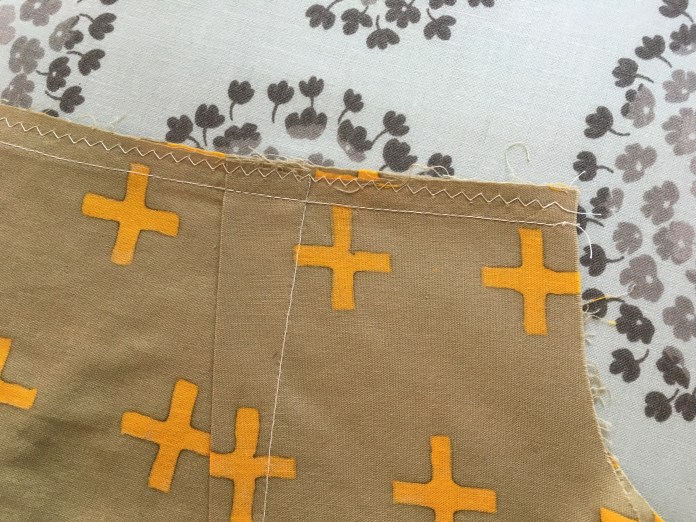
 Stay-stiched neck line above and darts below as per the Beatrix Sewalong, a great tutorial broken into smaller, manageable steps. I don’t own a serger so I zip zag most seams to finish.
 Sleeves are turned down once, ironed and then a second time and stitched with two rows of stitches. Quick, easy and durable.
 My favorite way to make a simple pattern more interesting is a contrasting hem. I love these two fabrics together.
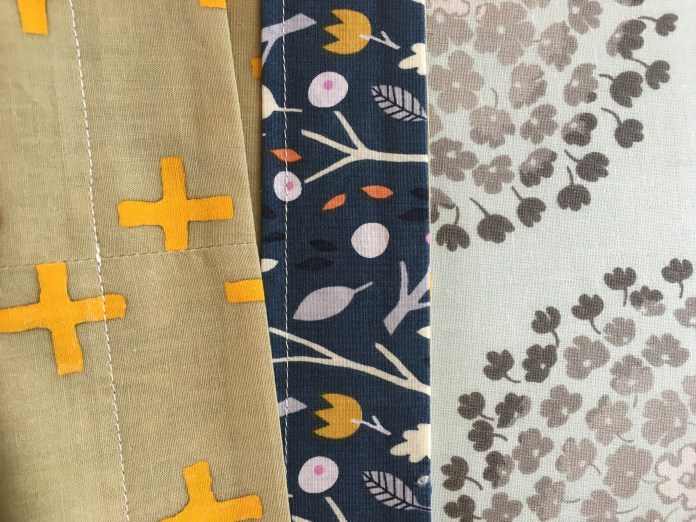 I have blogged about my very simple method for hem facings here and here. Pictures of the steps below. I start with a 3 inch strip of fabric and sew it on right sides together keeping in mind the direction that it will face once the facing is turned up.
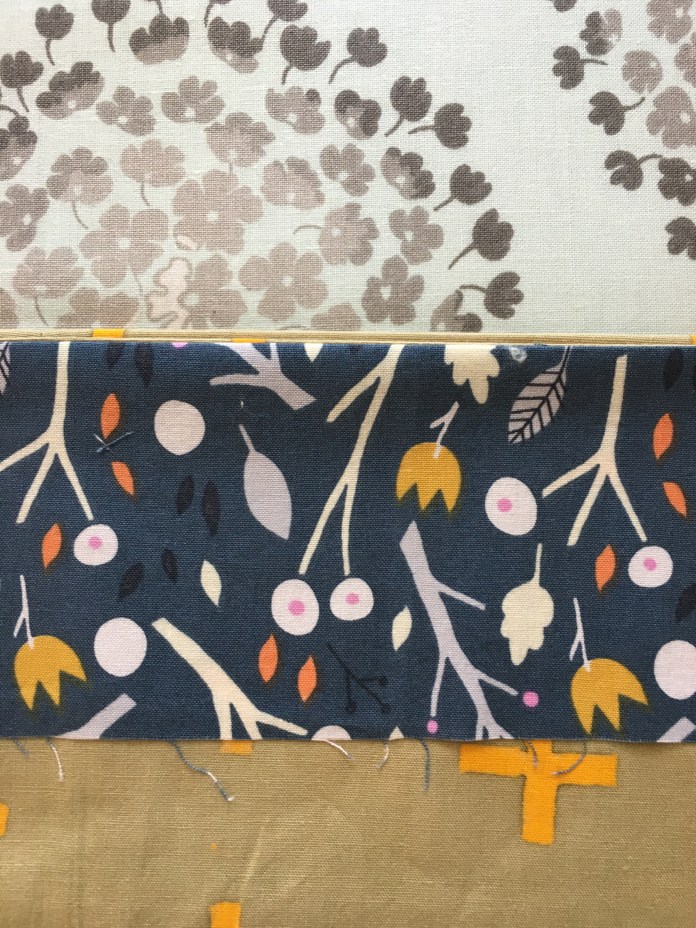 Lots of ironing is involved.
 I actually use the metal plate on my sewing machine as my guide as I sew. It works perfectly for the measurements of this hem facing.
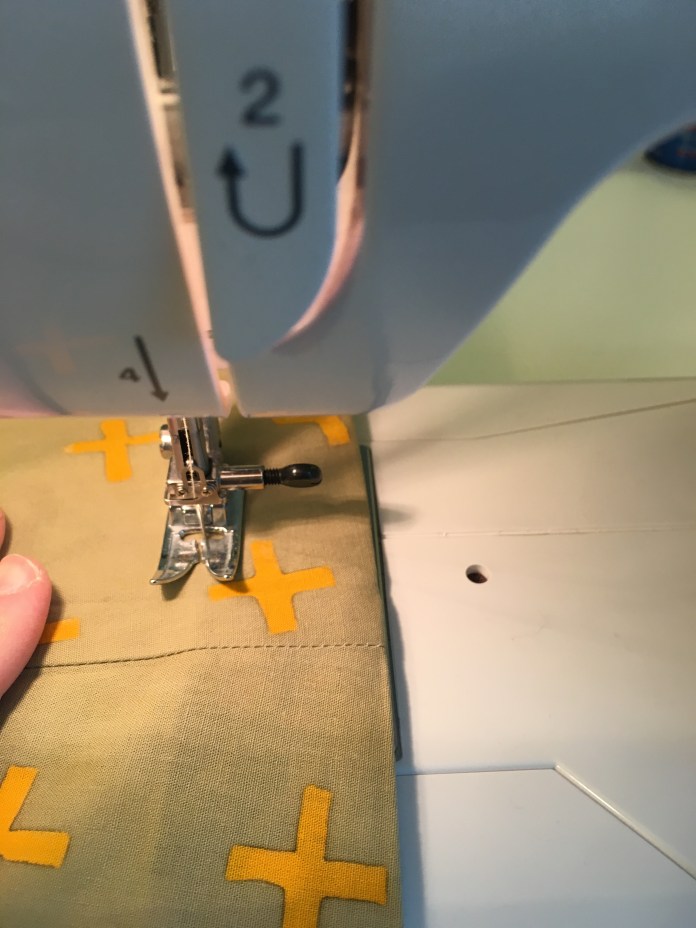 When I think of it, I leave the threads long and pull them to the inside and knot them using the quilter’s technique of sliding the knot down the thread using a big pin or needle as seen here.
 Some pictures of the finished hem. I was really happy with how this one turned out.
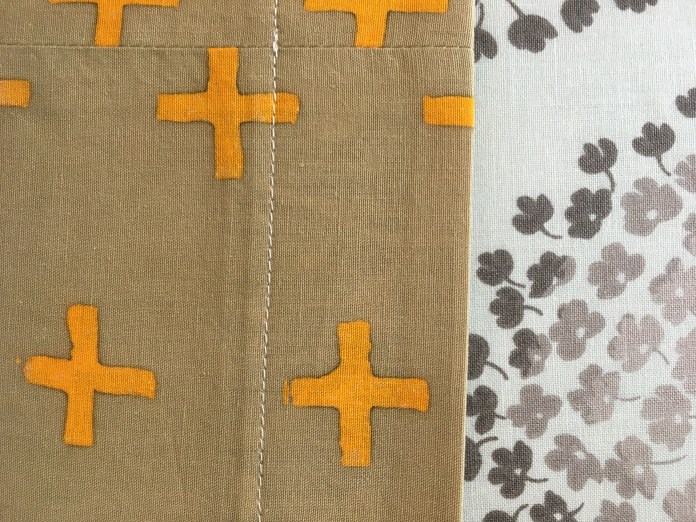 with facing showing
 My zipper didn’t completely line up with the top of the dress so I added a hook and eye at the top. My top stitching along the zipper is not perfect but as my dad actually used to say, “It wouldn’t be noticed from a trotting horse” which is true. I think the machine sometimes has trouble with the layers.
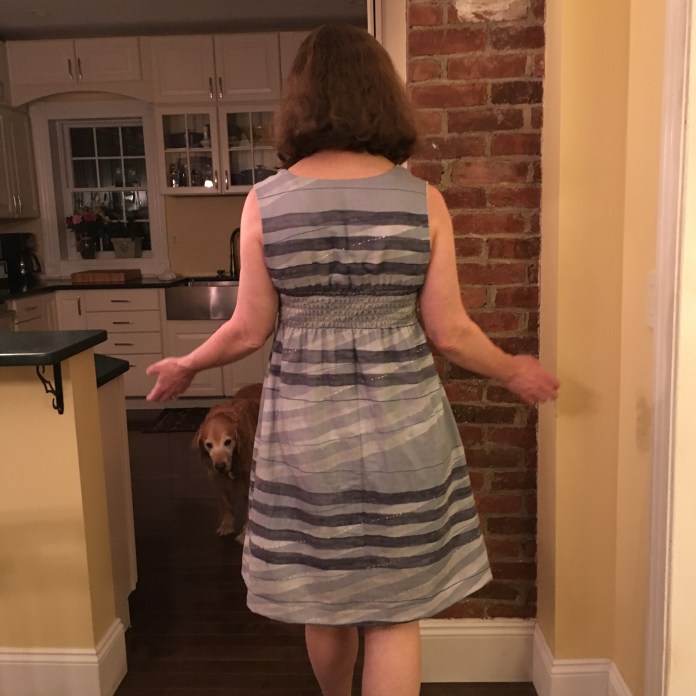
 Finished Dress/Tunic ready to be worn. I intentionally made the back slightly longer (you can see the back facing peeking through in the picture below) because that is where my weight is (ahem) and if I make the front and back the same, the back appears to be riding up which is not the look I am going for.
  Rae also recently posted about a Beatrix with a zipper. Hers has an invisible zipper, something I have yet to master. You can link to her post and see her beautiful blouse here.
Tag Archives: Made by Rae
Me Made May 2016 Round-Up
Screenshot of my phone on Me Made May day 24. I looked at my instagram account and wondered why I had so many notifications. I scrolled down and this is what I saw. Pretty amazing.

Last year I participated in Me Made May but I had just started sewing clothes for myself. I posted maybe 8 or 10 times with many repeats. It was so fun though to see so many different versions of great patterns. I was totally inspired and went on to sew many projects inspired by those posts. This year I was ready. Me Made May is not really different for me than any other month because except for the days I work as a bedside RN when it is all scrubs all day until I come home and fall into the shower, (after 12 + hours, I can’t imagine taking a selfie or changing into anything other than sweats,) I wear me made clothes every day. The posting and selfies though are not my normal routine. But once again inspired by the community, I tried to post most days. Here are some of the posts.
The Washi Dress in many versions including a double gauze version with sleeves on a cold day not pictured in this post:


The Beatrix Blouse as a tunic and two sleeveless versions worn on the only warm days. 


The Bianca Top and Dress in many versions:


The Ruby Dress in many versions:


The Pearl Shift in flannel (on cold, rainy May days which were numerous):
 I made two new Washi dresses for family members. A Paisley Washi for my mom for Mother’s Day and a Polka Dot Washi for my sister for her birthday.


and two new dresses for myself, a Nani Iro Washi: and a Polka Dot Shift.


All in all, it was a great month, though cold. Note all the cardigans. Those were not for show folks!
Until next year, #nursebeansews over and out (with Sadie the photobomber!)
A Polka Dot Washi Dress for my Sister
This is the before picture. When I made my first Washi Dress last winter, I didn’t have enough fabric and ended up adding a strip of a different fabric as a border. I was really happy with the result. I was new to this sewing business and if you look closely you can see that I didn’t match up the seams on the main part of the dress and the border but to be honest, it doesn’t even matter. It is cute. I wear it all the time and I get lots of compliments. It is a tribute to Rae that even my first attempts at her patterns have turned out to be wearable and cute.
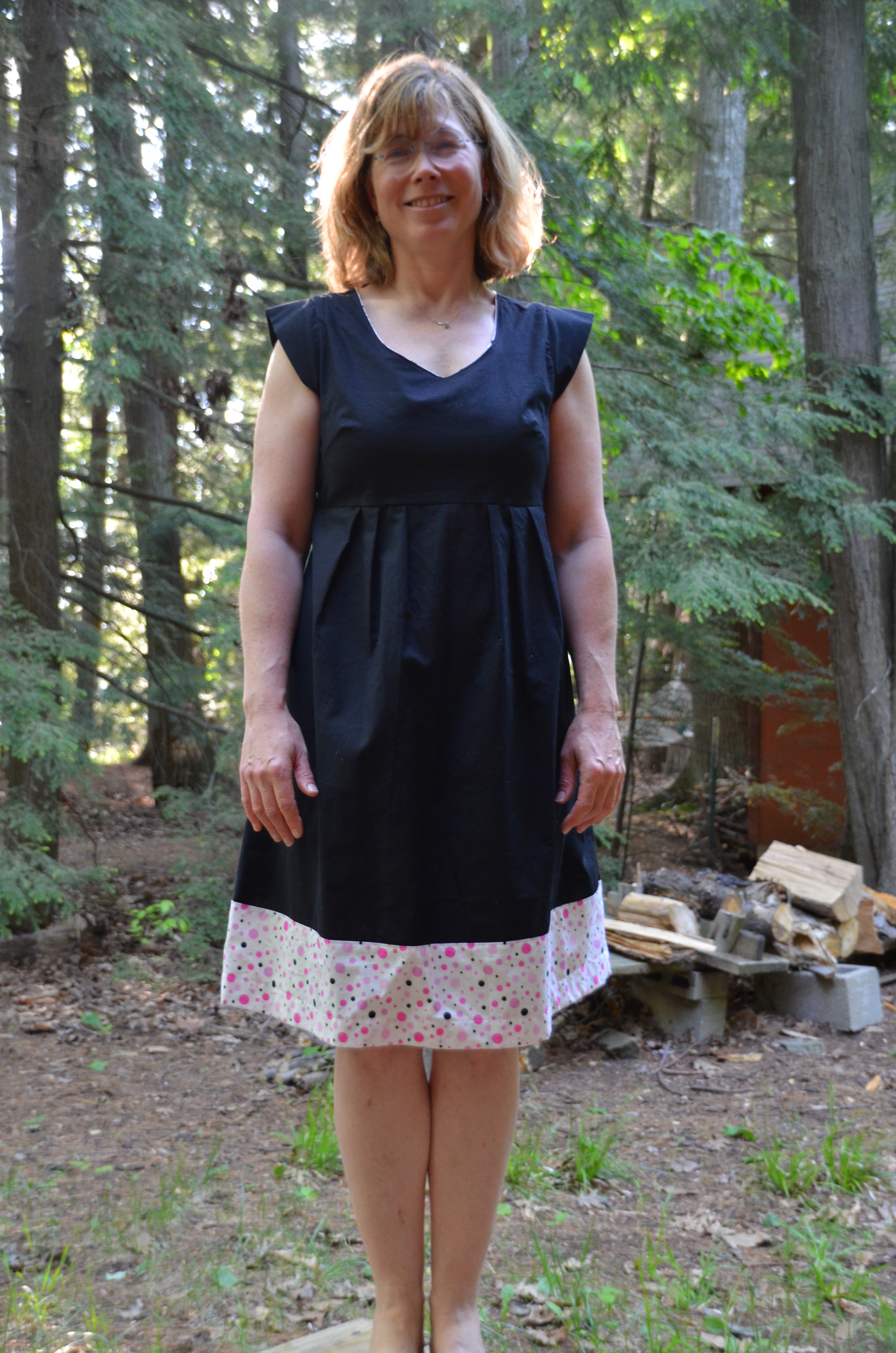
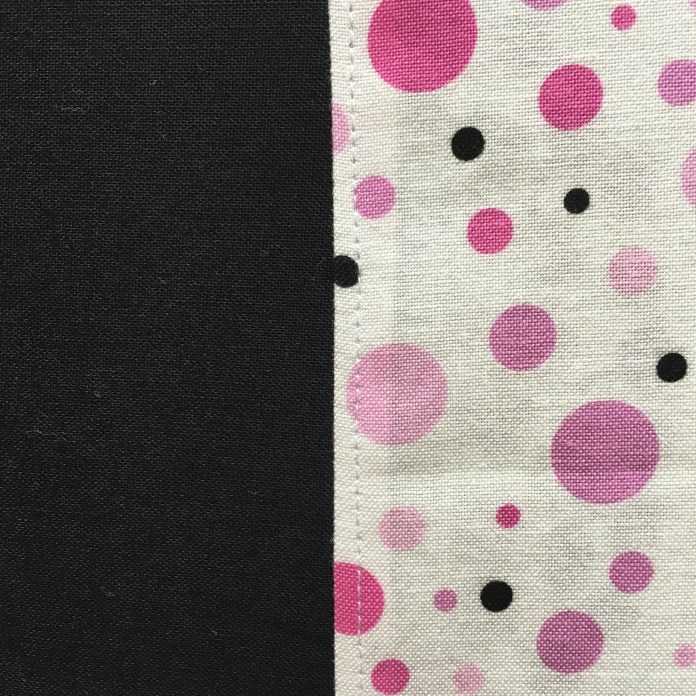
 I wanted to make the pattern again and decided to use some black quilting cotton from my stash to make a black Washi. I realized that I had enough black cotton to make almost two dresses but not quite so I decided to use a second fabric to make a contrasting band at the bottom of each skirt. I ended up making two versions: one for my daughter with polka dots and for myself, I used fabric leftover from my younger daughter’s grade school Invention Convention project, which was a “puppymobile”. Details of the two dresses can be seen here in my original post.
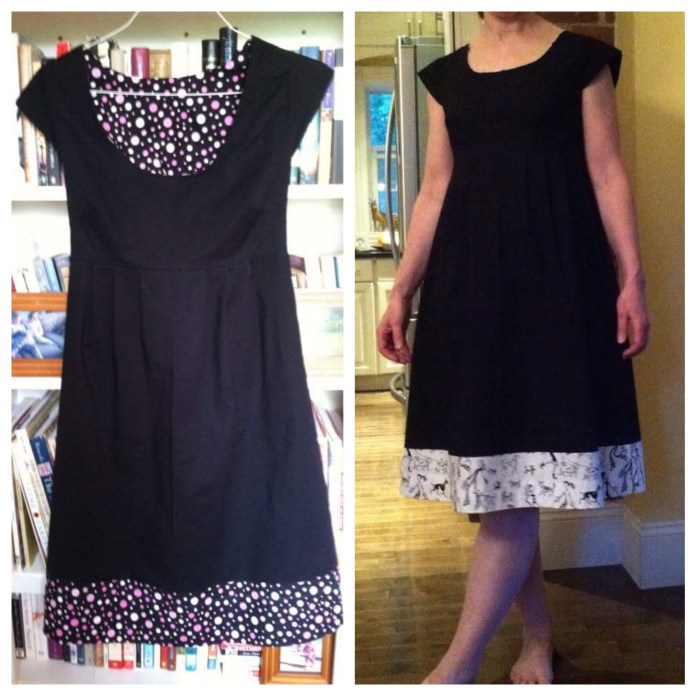 I was really happy with the effect this little change made to a basic black dress and I was happy to be able to make two dresses using fabric I already had. My sister saw the polka dot version I made for Sarah and said she really liked it. I happened to have the polka dot fabric in a different colorway so I offered to make her one.
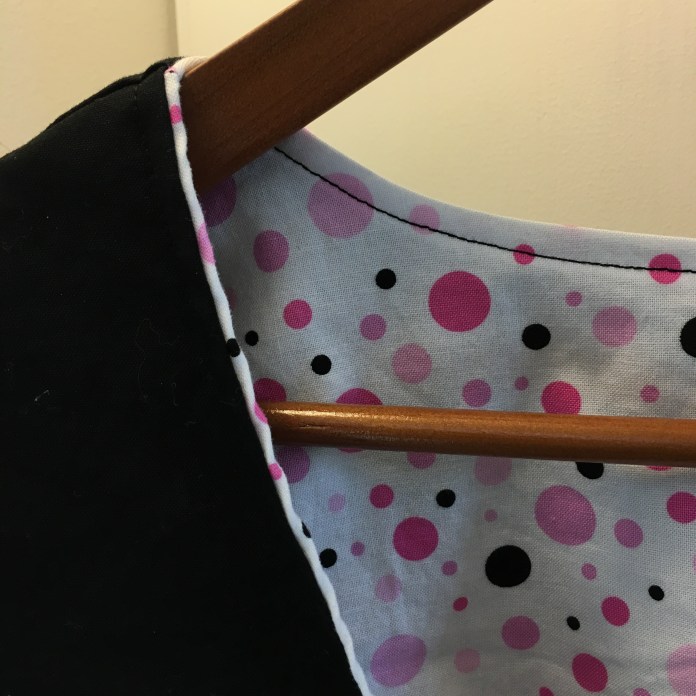 When I made my own black washi with the puppy fabric lining, I must have cut the lining a bit bigger than the bodice pieces for the dress dress and when I went to topstitch the neckline, it shifted a bit.
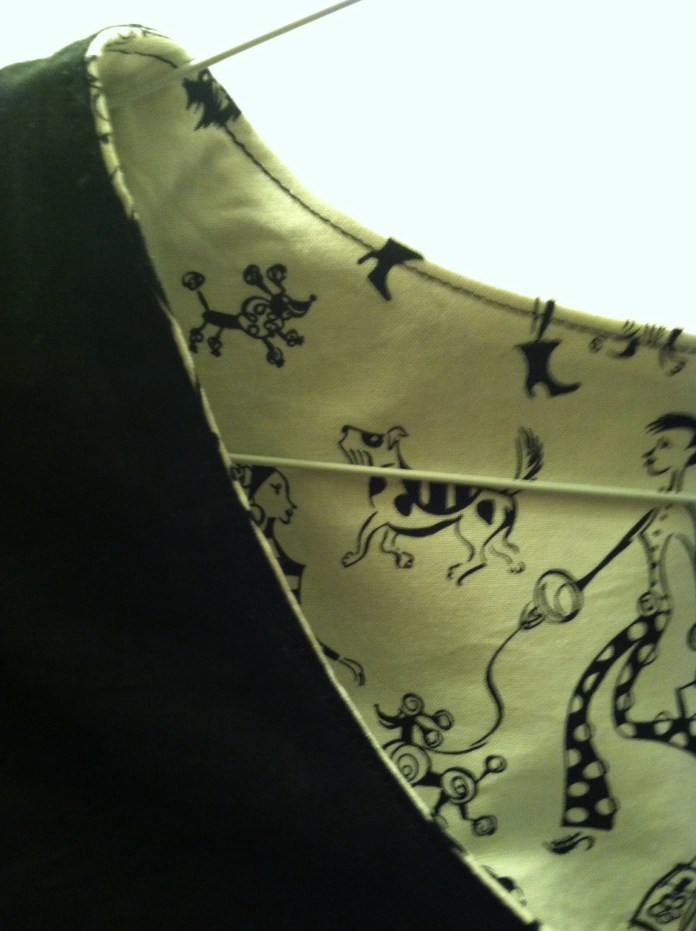 I ended up doing it on purpose to create the effect of piping without actually having to make piping. I did that for Madeleine’s dress as well. It is such an easy thing to do and I love the effect.
 Once again, I used the wonderfully clear Made By Rae videos to walk me through the sausage technique to get a clean finish for the lined bodice-finished dress inside out above. Sausage in process below.
 I used the cutting lines for the Washi tunic and added several inches to create my seam line for the main part of the dress. I sewed all the side seams and added the contrasting border at the end lining up the seam in the border with the side seams of the dress.
 After sewing on the border, I ironed the seam and then topstitched for a more finished look and for durability, something that is important to me as I machine wash everything. Dry cleaning costs are just not in my budget.
 I am really happy with the way it turned out. The polka dots add just enough cute to be fun.
  And here is the finished dress which was mailed out to Michigan for the birthday girl.
 The puppy version (slightly rumped) below. I wear it often.
Pink Polka Dot Shift for Spring
 Earlier this year I wrote a post about modifying New Look 6095 using techniques I learned by doing the Made By Rae Beatrix blouse Sewalong.
 When I saw this great Cotton and Steel polka dot fabric (from the Lucky Strikes collection designed by Kimberly Kight), I knew it would be perfect for this pattern. The fabric is called Dime Store Dot. I bought it at fabric.com where, as seen below, it is apparently No Longer Available, but it is likely to be found elsewhere and those Cotton and Steel gals have several other dotty fabrics which would work just as well.
 In my previous post, I went though the details of my muslin making process. My first shift was mostly a great success but I wanted to lengthen the sleeves a bit and fix the gaping in front on this version and I accomplished that by doing the same tiny fold I use when I make a Beatrix blouse. It is amazing that this tiny adjustment makes such a difference but it does.
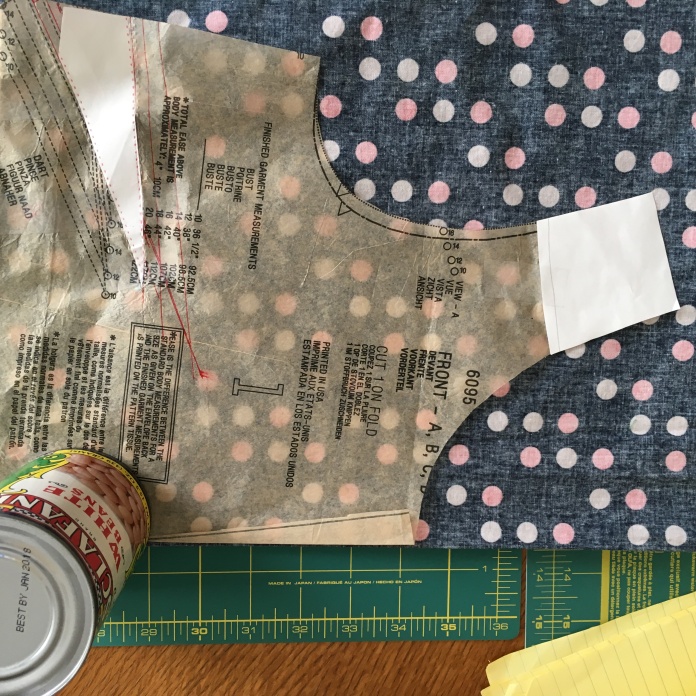 This was a relatively quick sew and it was worn to church today for Me Made May day 22. It was a cold, grey day here and the polka dots were a great contrast. Not much else to say without repeating my previous blog so I will leave you with pictures. I drafted the facing using the Beatrix directions as my guide:


I was careful to staystitch the neckline and understitch the facing as instructed in the Sewalong. I hemmed my dress using a hem facing as I have done for most of my dresses.
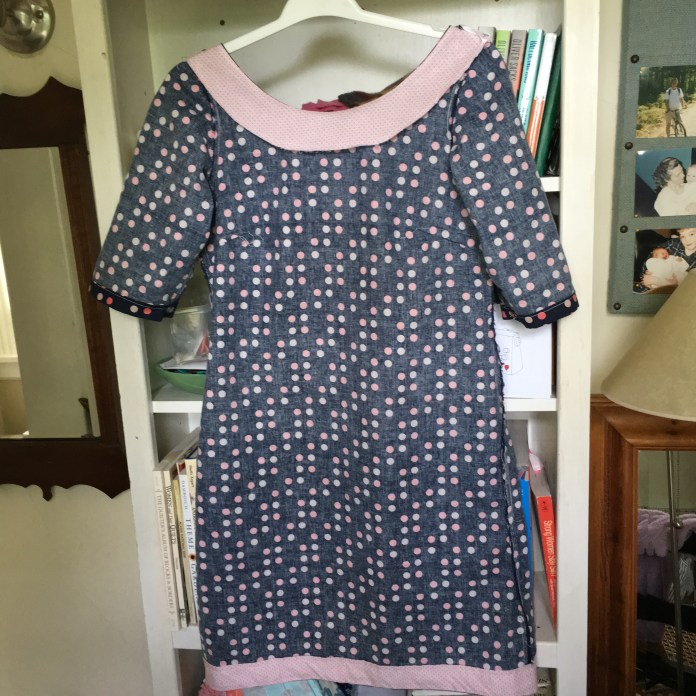 I used one row of hem stitching because the first row of stitches was pretty straight and my motto is “good enough is good enough” which is a good rule to follow in most situations.
 I used a button from my stash of tag sale buttons.
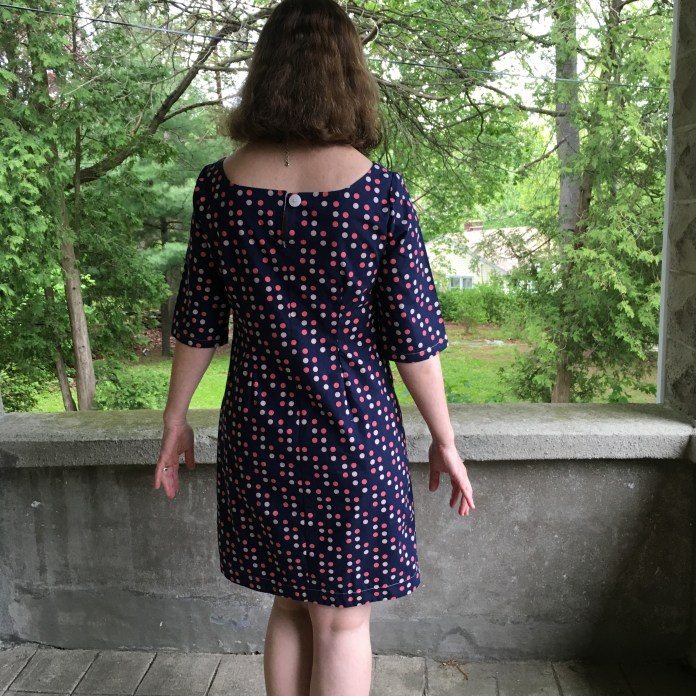
 Back view.
 I created a thread loop using Tasia from Sewaholic‘s wonderful book: The Sewtionary. I love her clear instructions and photos on so many helpful techniques.
 And here is the finished product. Many views because my husband was available to take pictures. This was a relatively inexpensive, fun dress to make. It feels like spring which makes me happy, even though our weather has been a bit drab.
 I am pretty happy with the fit. The back gapes a bit so I may move the button or shorten the button loop but it is otherwise quite wearable.
 With the obligatory cardigan (still cold in Connecticut).
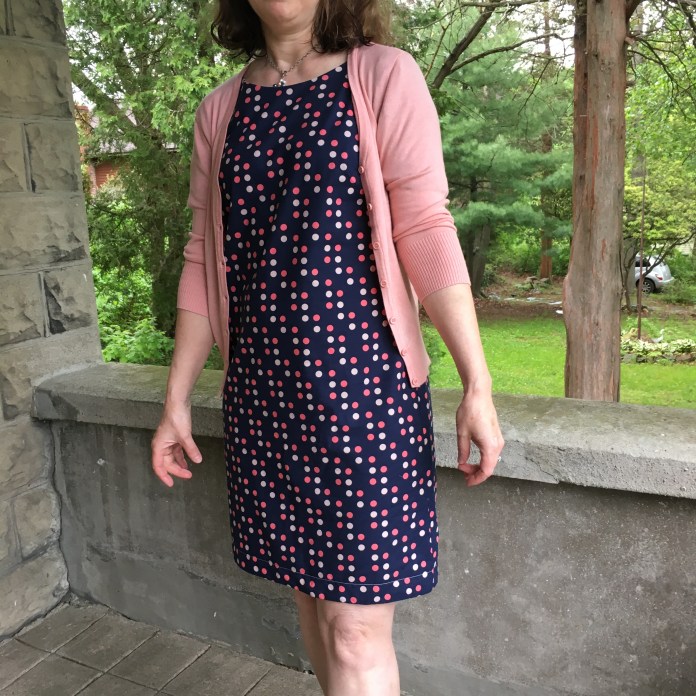 I do not knit so this fall I bought a basic, inexpensive cardigan in multiple colors. I love this muted pink.
 Happy Spring!
A Paisley Washi for my Mother
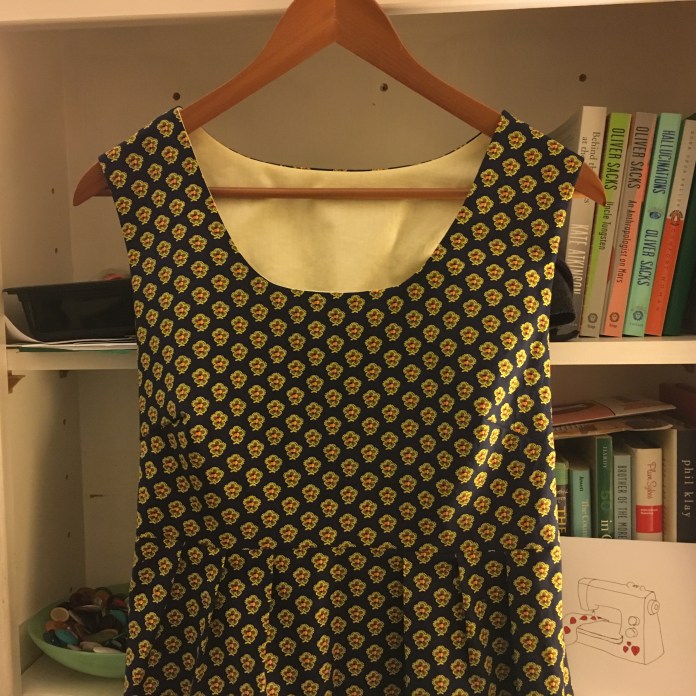 I decided to make a dress for my mother for Mother’s Day with one of my favorite patterns, the Made-by-Rae Washi dress. With so many amazing fabrics out there, I wasn’t sure what to use until I remembered that I had this beautiful paisley-like lightweight cotton that I bought years ago at the wonderful fabric store in Brooklyn where I learned to sew. I love the deep navy with the contrasts of yellow, green and red. It feels very French.
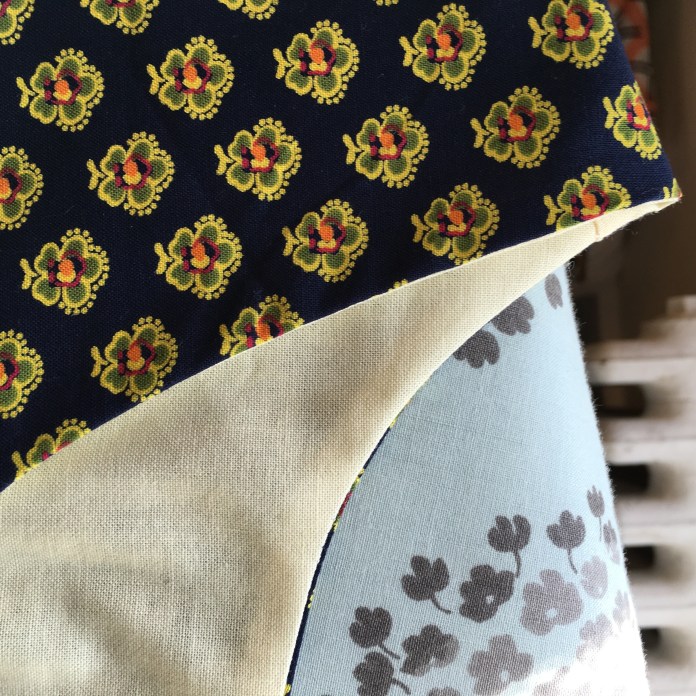 This felt like the perfect fabric for my mother because she is a Professor of French Literature and has studied and lived in France. I made a medium and lengthened it by 2 inches because we are pretty much the same size. The fabric was a dream to work with.
 I lined the bodice using the sausage technique that Rae teaches in her videos.
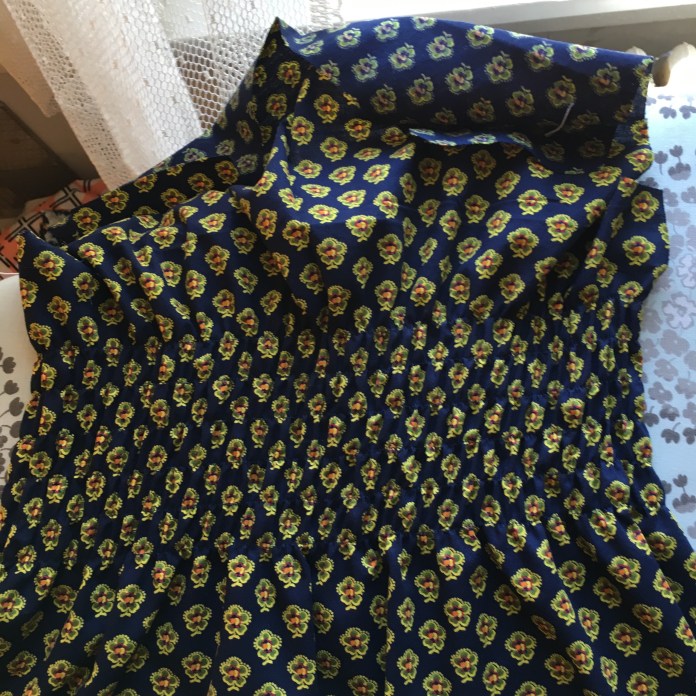
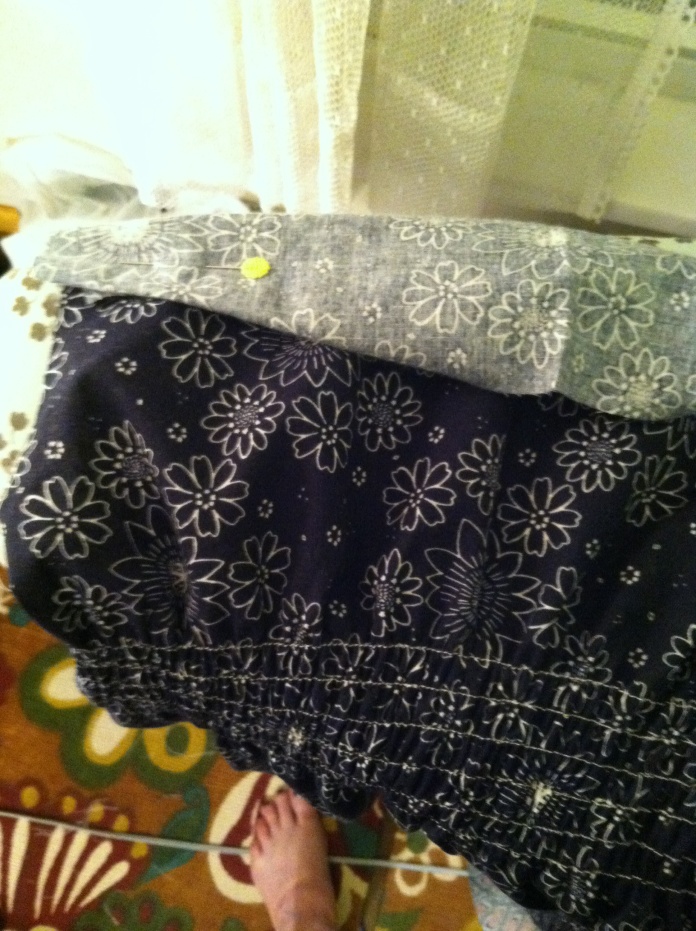
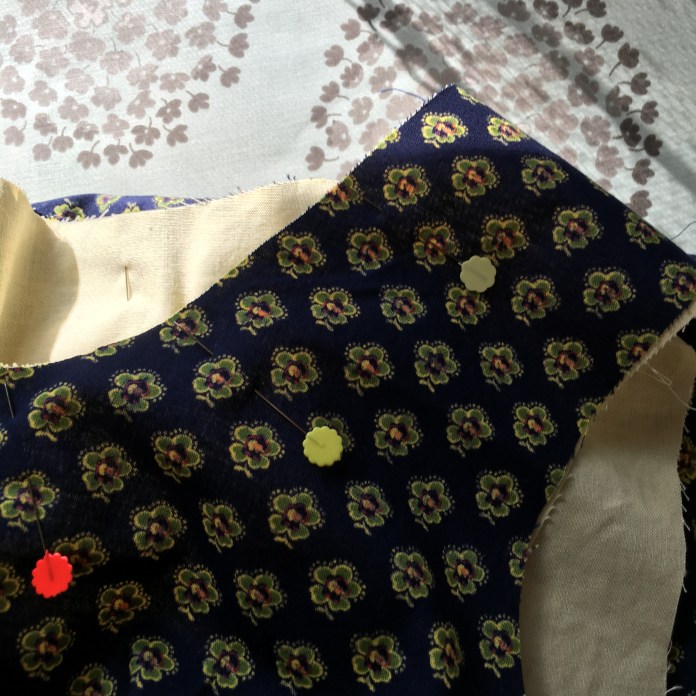 I shirred the back. Rae has a great shirring tutorial here. The nice thing about dark fabric is that you can use a chalk liner to mark your shirring lines. The top of the back is folded up out of the way with wonder clips.
 It is always a good idea to pin or clip the top part of the back before starting to sew the shirring so you don’t catch the top of the back in the shirring seams. (I learned this the hard way.)
 I lined the bodice with a pale yellow cotton that I had in my stash.
 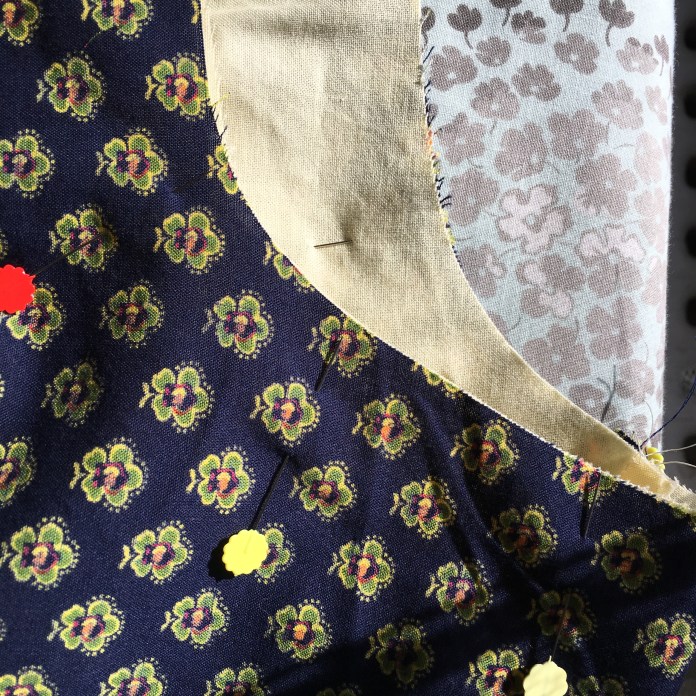 The contrast is so pretty.
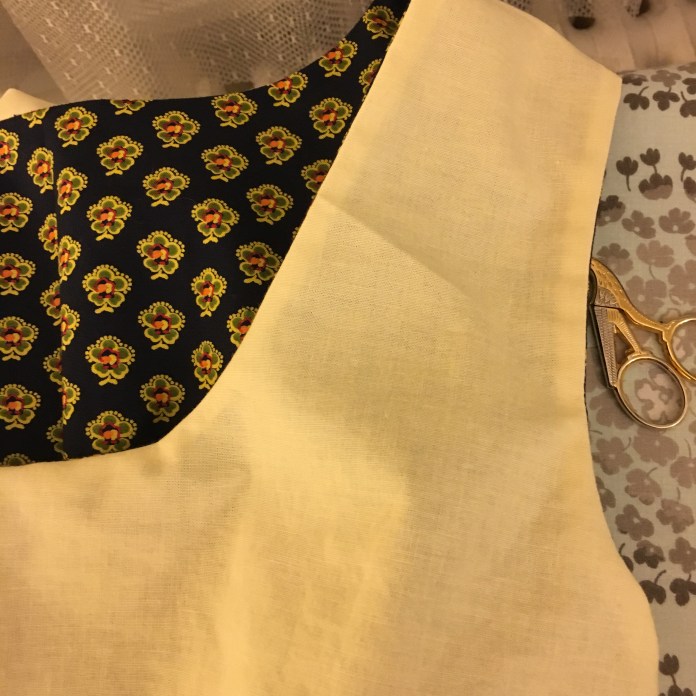 Picture of the inside of the dress. I love the clean finish that you get when you line the bodice.
  I added loops of ribbon for bra straps, a little touch that makes a huge difference for those of us with sloped shoulders. (inside back view below)
 I used the navy fabric and made a hem facing. I generally use hem facings to get a cleaner finish as I wrote about here and here. I didn’t have enough of the yellow or I would have used it to make a contrasting hem facing as I usually do.
 I am really happy with the final product and hope that she will enjoy wearing it all summer. She actually has already worn it to the theater in New York. Check it out! Beautiful, am I right?
 I may have to make one just like it for myself! I will have to check and see how much of this fabric I have left. 🙂
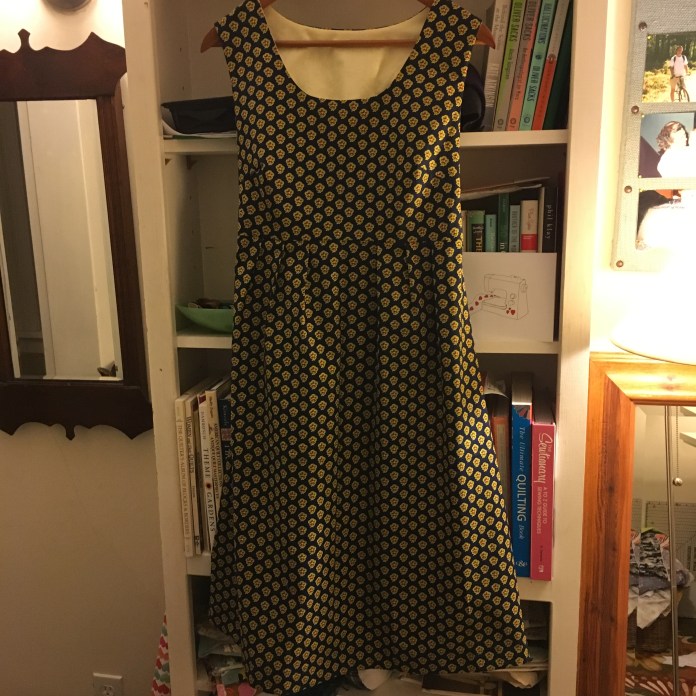 The Washi-such an awesome pattern! Next up, a polka dot Washi for my sister. 😉
Nani Iro Washi Dress
I bought this beautiful Nani Iro double gauze fabric at The Cloth Pocket back in October when I visited my son in Austin. I had originally planned to make a blouse but I was inspired by this beautiful dress that Cherie made for her little girl. It is just perfect. I finally got brave enough to cut into the fabric and decided to make another made-by-rae Washi which is a tried and true pattern for me. I cut the sides a little wider to allow for french seams since double gauze frays. I had good luck with this approach when I made my Charm double gauze washi dress. I realized as I lay the pattern pieces out that I hadn’t allowed for enough fabric to match the stripes. It is actually a tricky thing to line up stripes on a Washi because the front of the dress is made of two separate pieces and the back of the dress has shirring which affects how things line up. Realizing that there was no way to do this easily with less than three yards of fabric, I decided to just line the pieces up with the darker stripes around the waist and hope for the best.  I used chalk to mark the shirring lines but I usually end up just using one chalked line and then using the first sewing line to guide the rest of my seams. Shirring using elastic thread is actually amazingly easy. Rae’s tutorial here.
 I used organic natural colored cotton batiste to line the bodice using Rae’s helpful videos. The lining is understitched, a technique I learned from the Beatrix Sewalong.
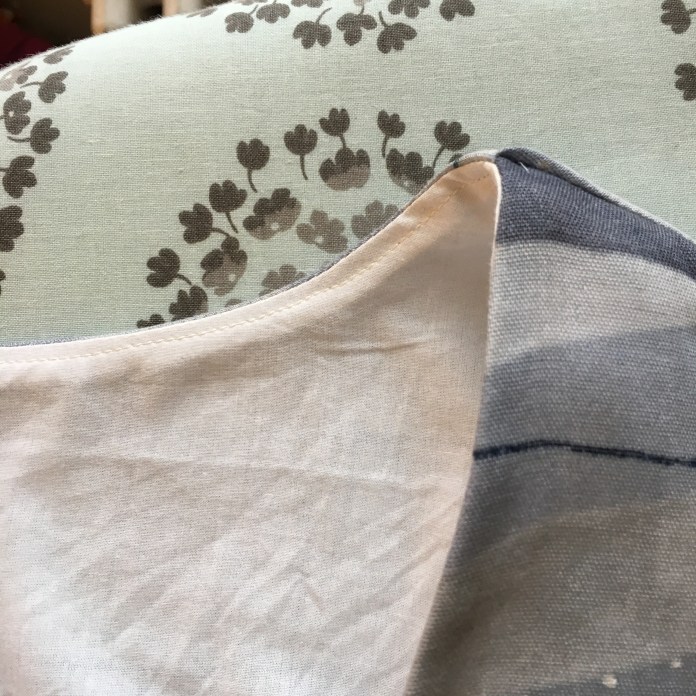 I added a ribbon with snaps for bra strap holders as I sewed the fabric sausage.
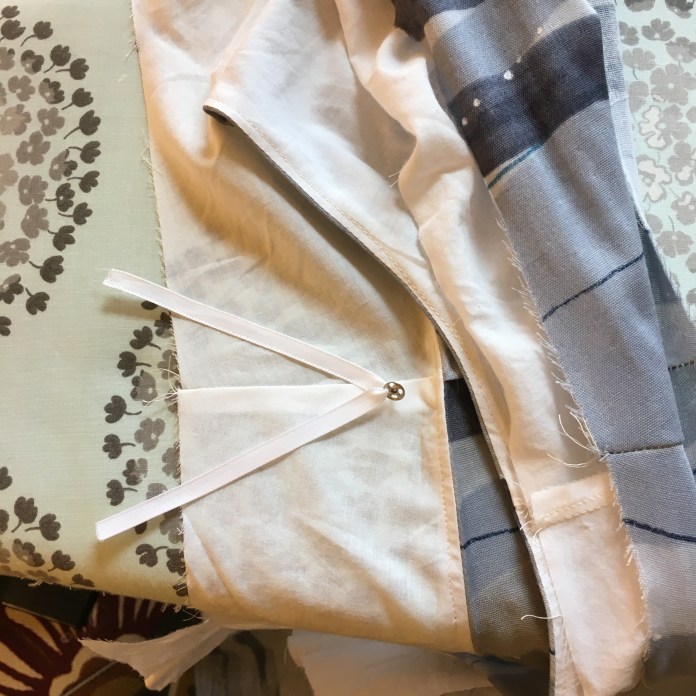 A fabric sausage pinned and ready to be sewn.
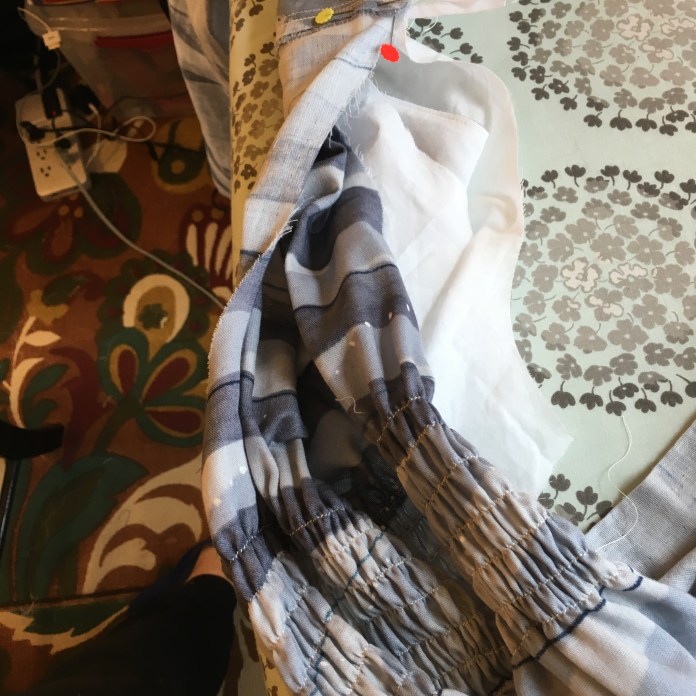
 Finished shirring visible as I sew the bodice lining.
 Once again I used a lightweight quilting cotton in a neutral light pink for hem facing. I have used it for several garments. I have almost run out!
 Hem pinned and ready to be sewn.
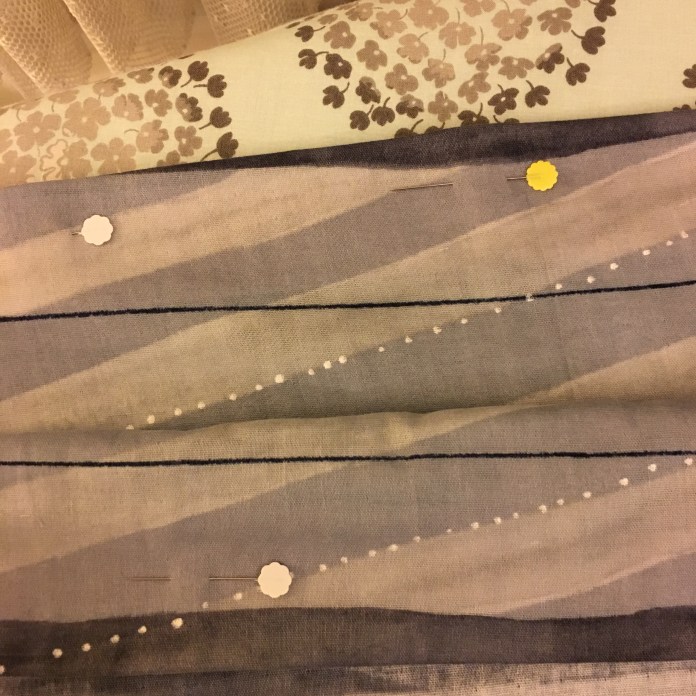 Hem.
Hem. Finished dress back view. The stripes don’t line up on the side but I am happy with the way the back stripes ended up. The photo bomber is my sweet dog Sadie.Close up of the beautiful nani iro fabric.
 Shades of grey can be beautiful!
Drops and Dots for Spring
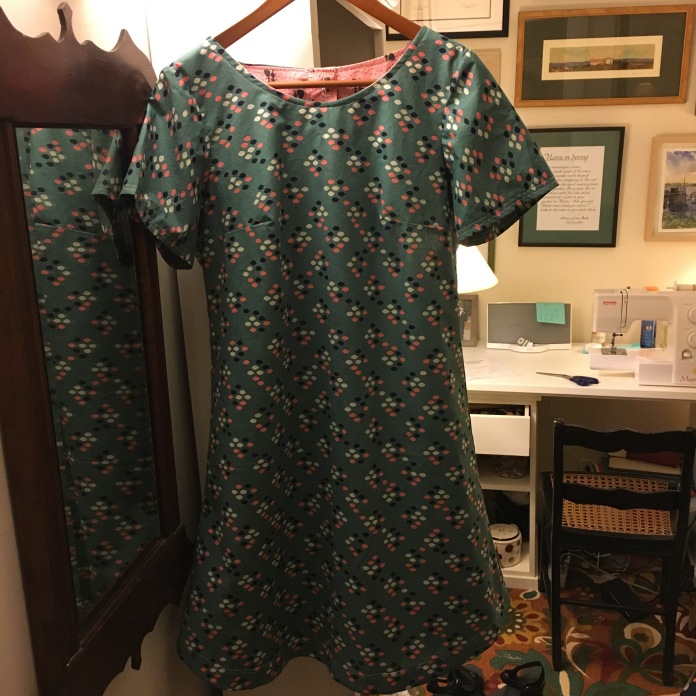 I have had this Cookie Drop Beatrix Tunic in my head since I made my Mochi version several months ago.
 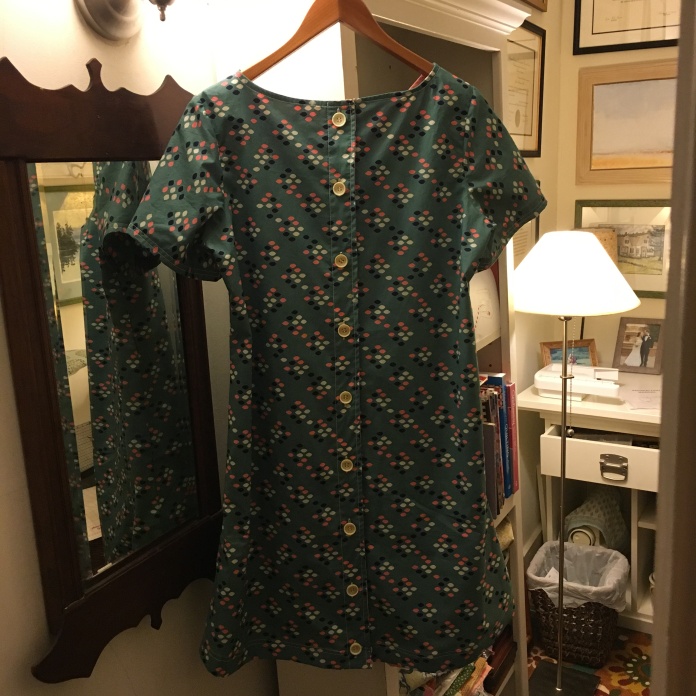 I have always loved this green color. It reminds me of the greens used in so many of the depression era quilts and of my grandparents’ house in Louisville, Kentucky. The mirror below hung in their front hall for over 60 years.
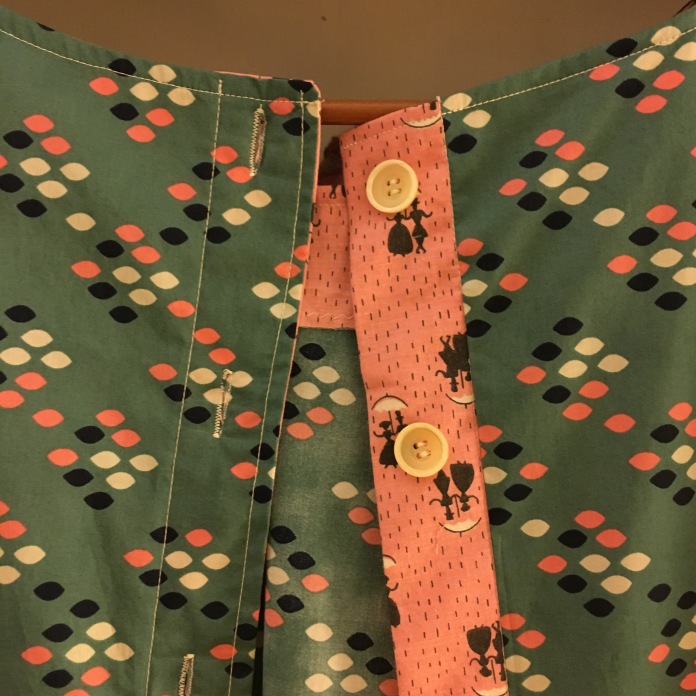
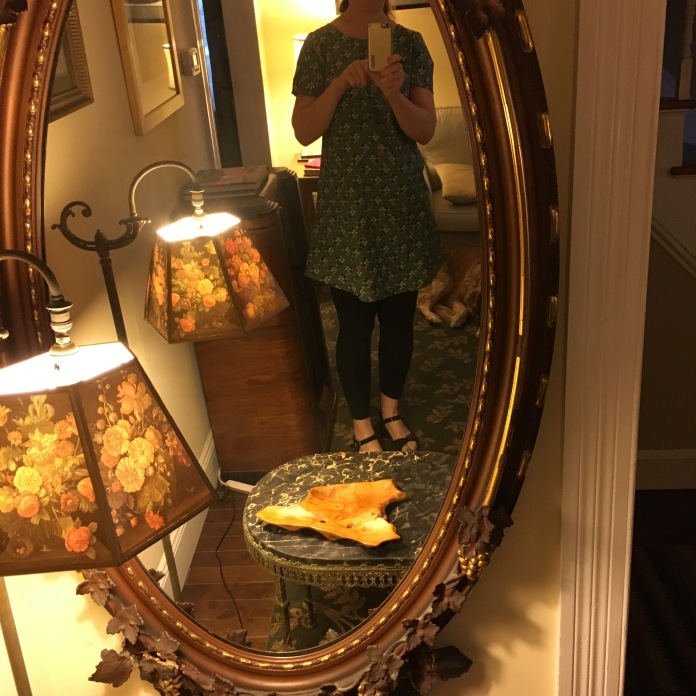 My grandmother loved soft blue greens and those colors predominated in their home. I had the idea for the pop of pink and used this fun fabric for contrasting facings.
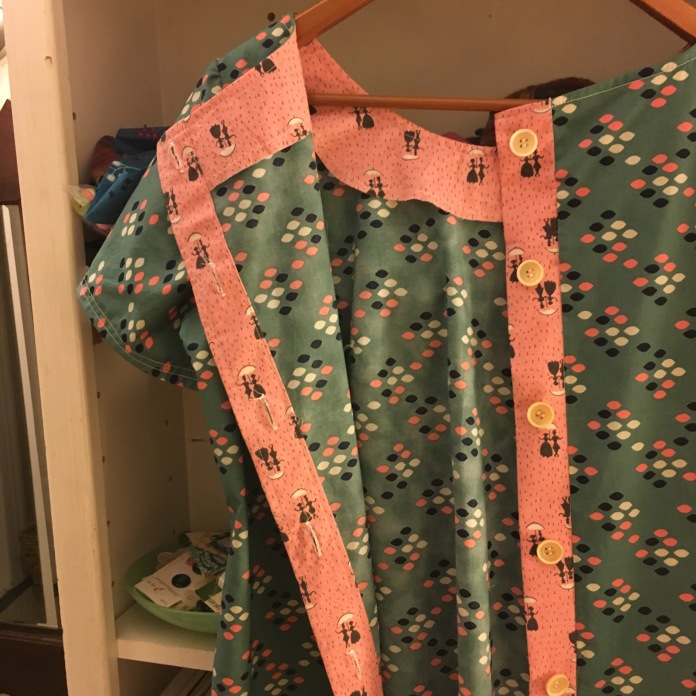 I don’t remember where I got this pink fabric but a friend recognized it. I think she may have given it to me years ago when I had an idea for a quilt with lots of pinks because it was my daughter’s favorite color. That quilt never got made because life got in the way. It may end up being a future project. I still have quilt sized scraps left over.
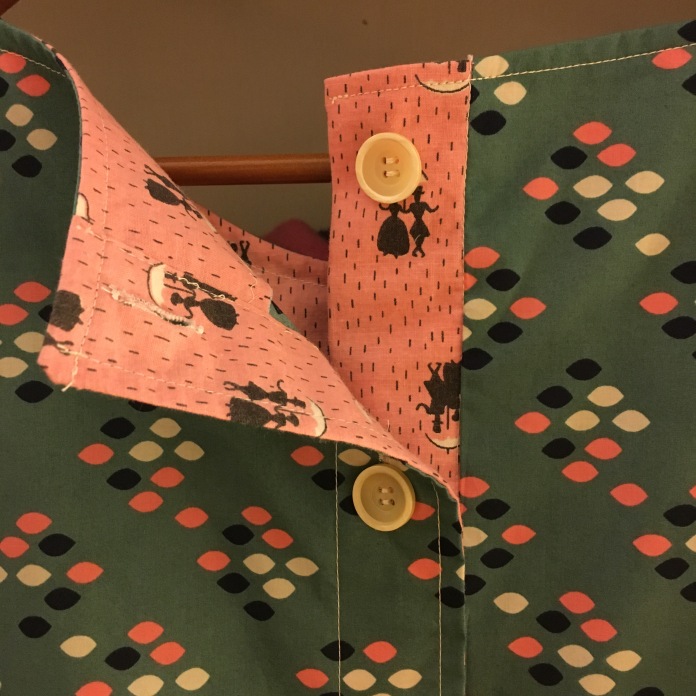 An online friend on instagram commented that the pink fabric reminded her of Mary Poppins. I hadn’t thought of that before but once she said it, I could totally see it. I love Mary Poppins. Who doesn’t? I read all the original books as a child and with my children.
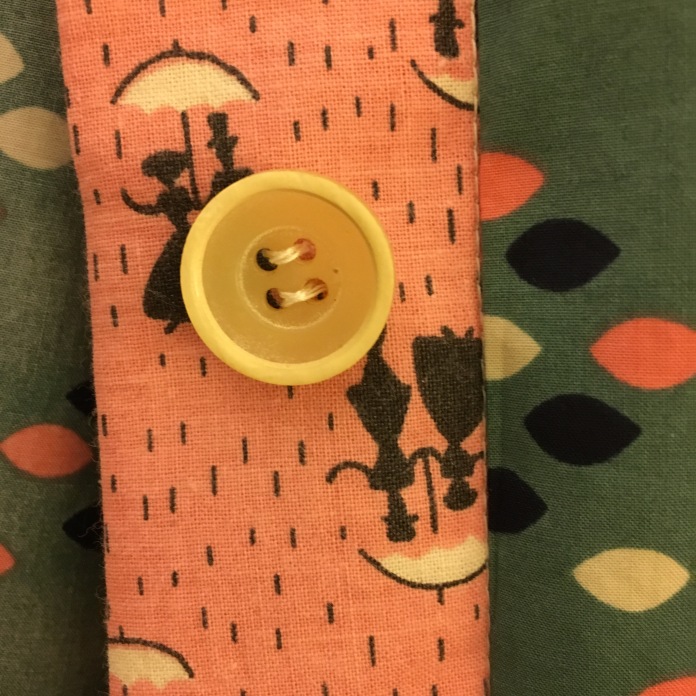 I love the versatility of the Beatrix Pattern by madebyrae. I have made and blogged about several versions. It is relatively straightforward but Rae has a great series of blog posts that walk you through the tricky parts like set-in sleeves.
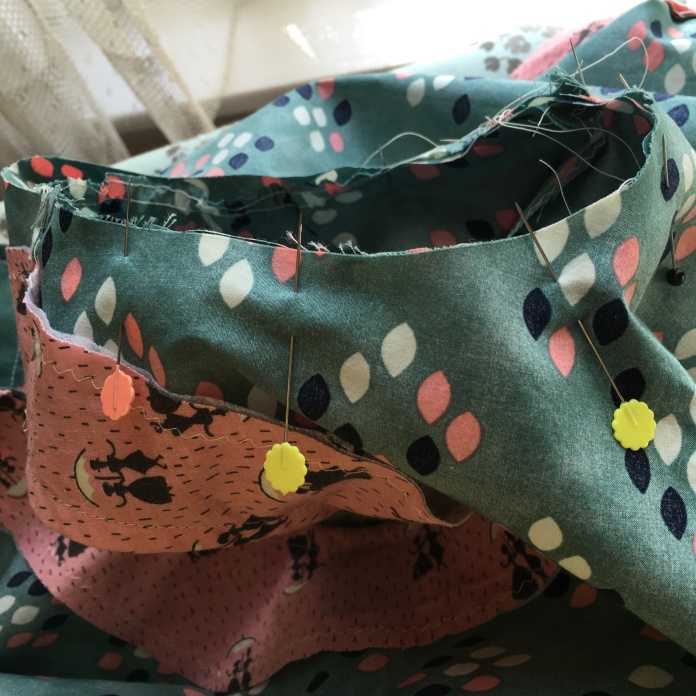 This time, I modified the pattern to use the contrasting fabric just on the inside of the garment. I used Rae’s instructions as if I was going to do a contrasting button placket using the standard measurements on the side with the buttons and then on the side with the button holes, I made the green portion wider and the pink portion narrower adding a seam allowance to each, folding the fabric at the seam where the two fabrics are sewn together, a technique I use for most of my hems. I am really happy with how it turned out. I think the pink on the outside was a little bolder than I wanted to go but I love the way it peeks out. In order to make Mary Poppins and Bert upright, I had to piece the placket facing but I think it came out fine. Waste not want not! The people are sideways on the hem facing which was necessary given the long strip that I needed for the hem facing.
  This fabric is a cotton lawn so it drapes well but was really easy to work with. Although I originally planned to use these green buttons:
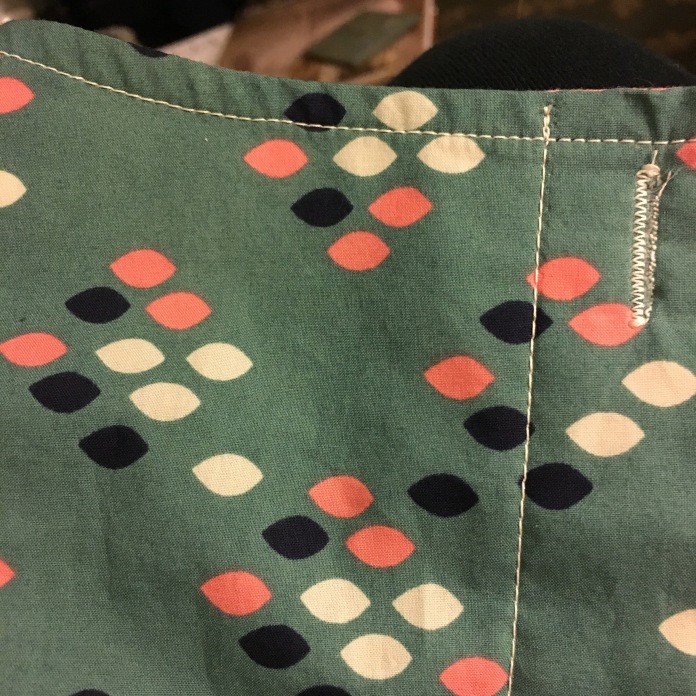
 I decided instead to use these slightly worn, older, cream colored buttons that I rescued from a button jar that I picked up at a tag sale when I first moved to Connecticut in 1995 (buttons seen below with all of my long threads after sewing button holes. I left the threads long deliberately in order to pull them through to the underside and knot them. It didn’t take that long and it looks so much neater.) I like the fact that the buttons have variations in their colors and aren’t exactly matching. I used a cream colored thread which is much softer looking than bright white. I like to sew the two rows of stitches on my button plackets because they help me line up my button holes and I like the look of the stitching.
 I used more of the pink fabric for the facing and hemmed the tunic using the facing technique that I explained here.
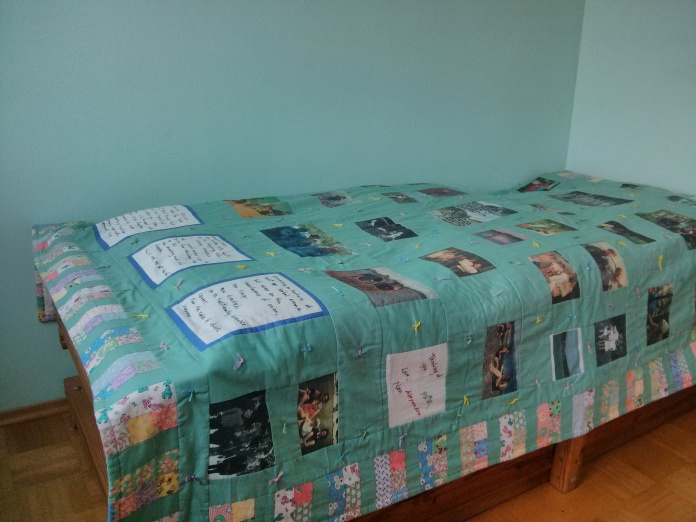
 In that same house where I found the button jar, I also found a little package of fabric held together with rubber bands in a pile of old towels in a linen closet. The price was less than $5. That package turned out to be 20 hand pieced quilt blocks. I later used them together with another 25 or so I pieced over the years to make a quilt for a very loved cousin who was going through treatment for cancer. My amazing teacher and professional quilter Judy assembled those blocks and figured out the best way to display them We used a lot of this same green color in that quilt.
 On the back, we created a collage of family photos and messages.
 Next up in my quest to finish the works-in-process is a shift dress in cotton and steel polka dots. Drops and dots. What could be better? The cotton and steel cotton lawn fabrics that I used for my Beatrix tunics are still available at fabric.com as of this writing. Happy spring!


A New Look for Beatrix

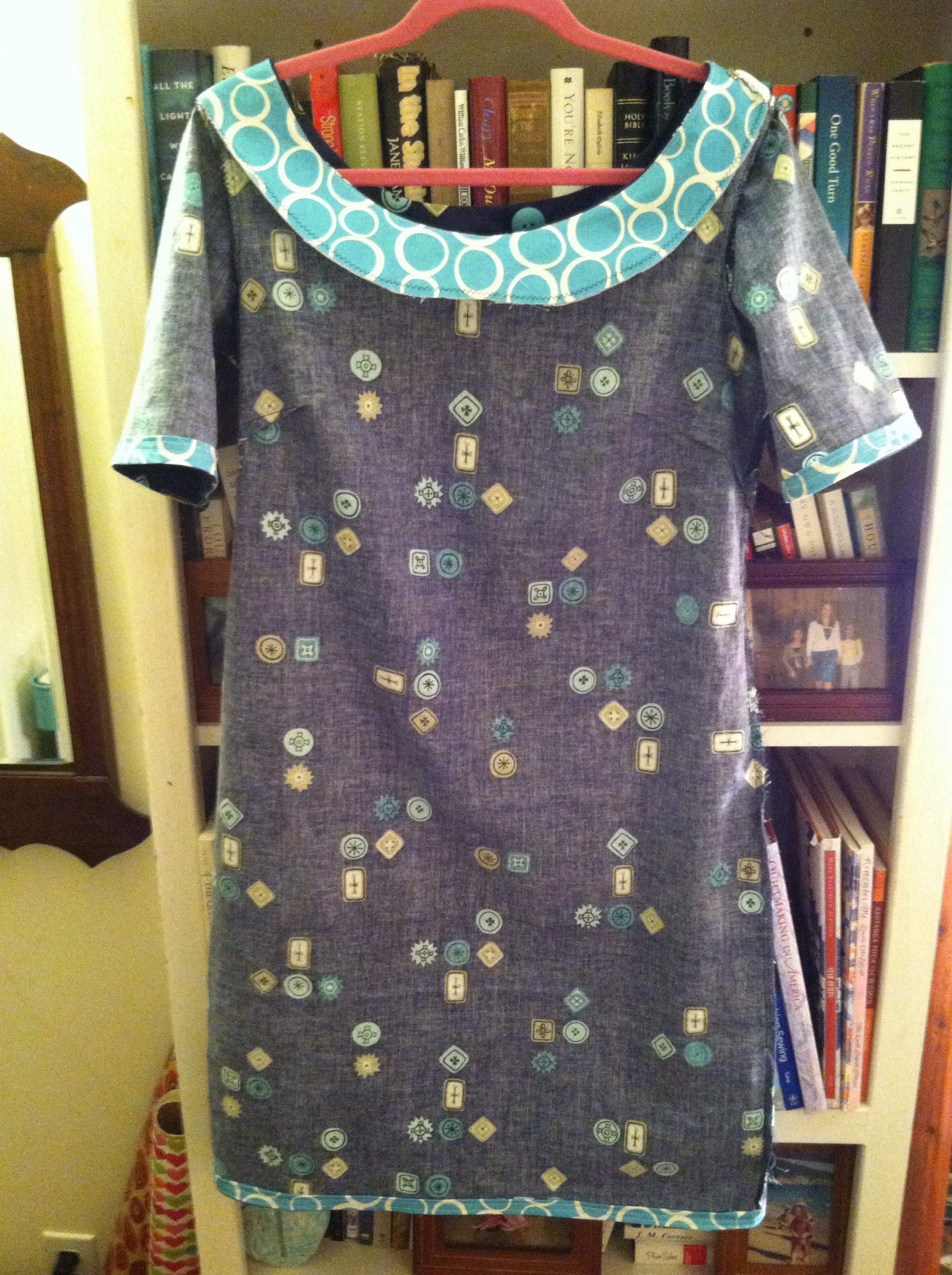
Last summer, armed with new found knowledge of facings, buttons and sleeves from the MadeByRae Beatrix sewalong, I decided to tackle a basic shift dress pattern that I bought many years ago and never used, New Look 6095.
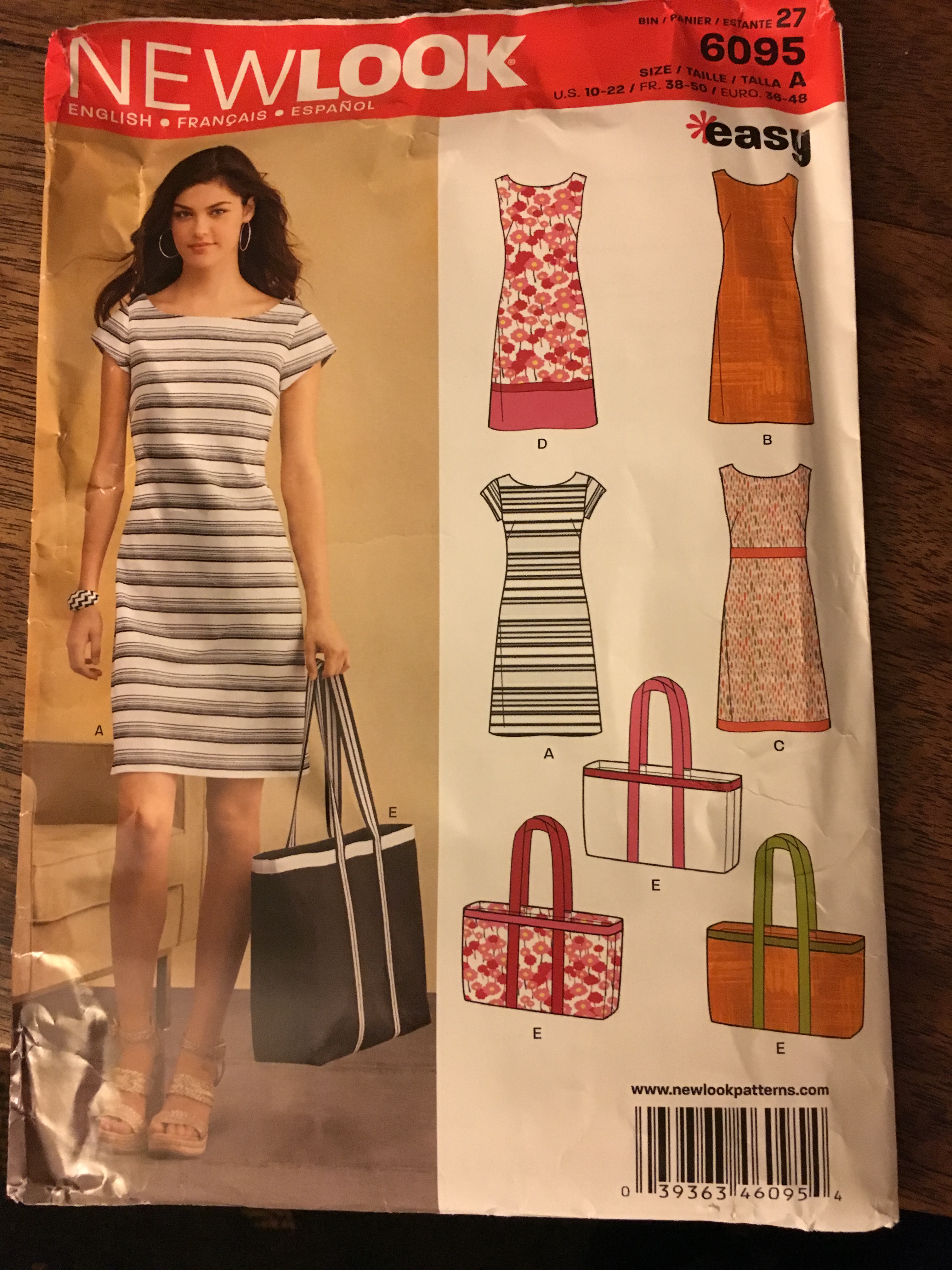
The pattern appeared to be very straightforward with one exception: I took the directions out at some point in the last year and misplaced them. Yikes! So I had pattern pieces but no instructions. This didn’t end up being a big problem although later this year I found the pattern online and bought it again so as to be better equipped before I make it again. The dress is a very simple shape with darts in the front and a neckline that is very similar to the Beatrix style and with two diamond shaped darts in the back to create shape and make the dress somewhat more fitted than the other styles I have made this year. I made version A but I took the sleeves from the pattern and added length to them using the Beatrix sleeve as my template.
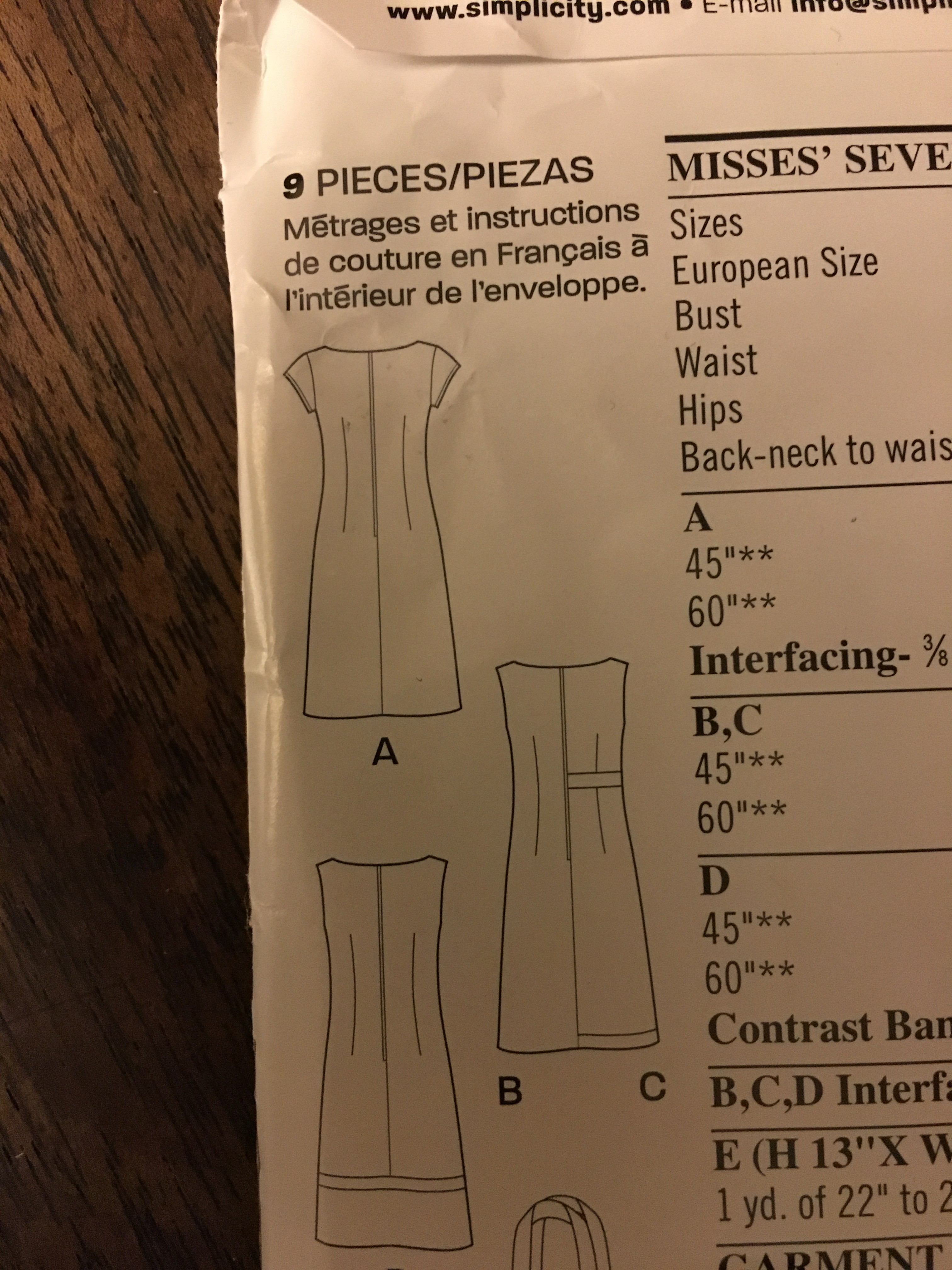
The front is one piece cut on the fold and the back is two identical sides which I ended up cutting on the fold as one piece by mistake (I tend to do this) and then cut into two separate sides.
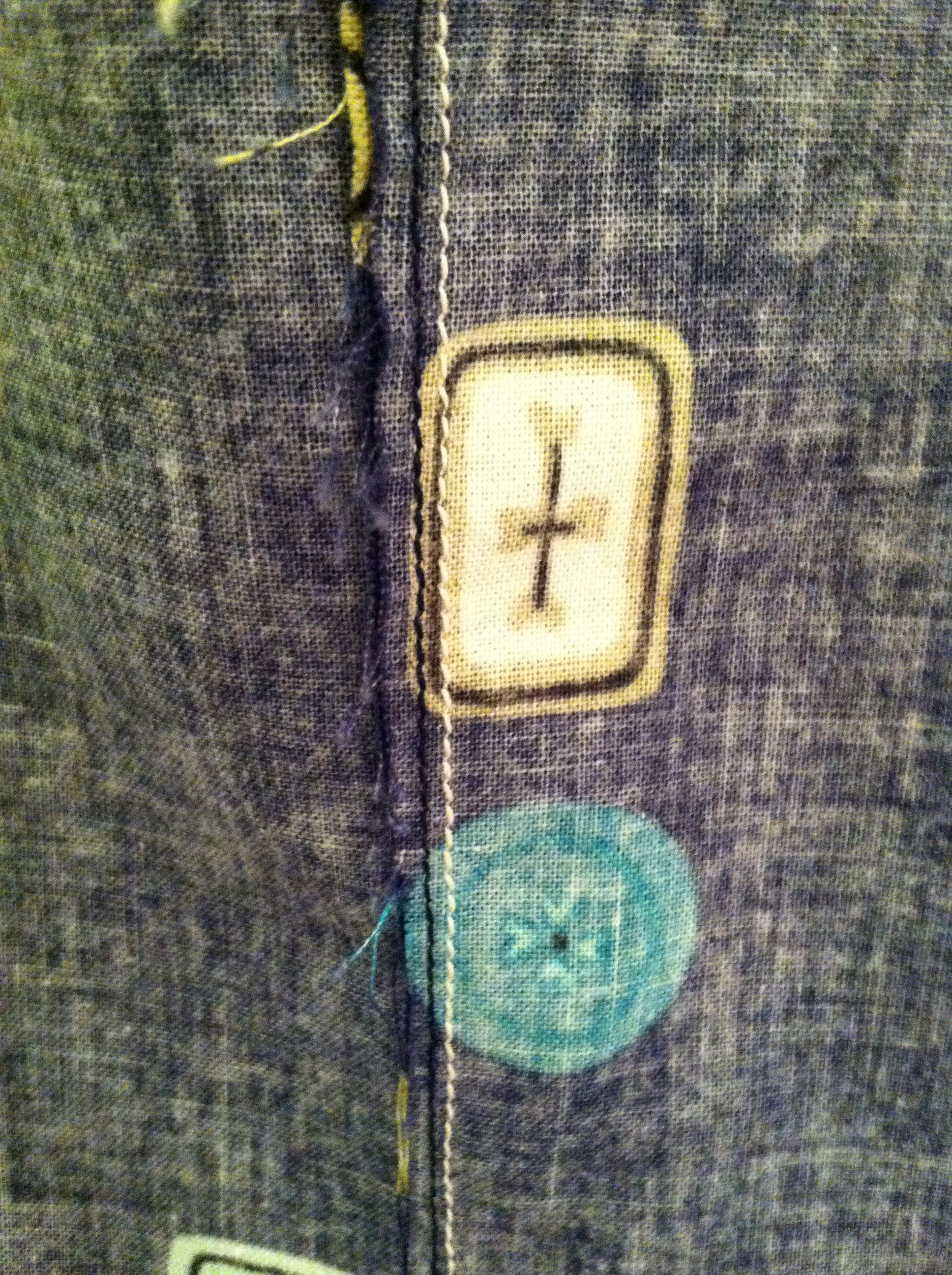
The advantage is that the pattern matching is awesome when you do it this way although I didn’t plan it. I used this beautiful Cotton and Steel fabric which I love.
I ended up making three muslins to get the fit right. Yes this was time-consuming but since the basic pattern was only three pieces it wasn’t terrible, although I did go through a lot of fabric making the muslins (I am now cutting them up to use as lining in other projects.) What I learned is that you sometimes have to play around with the fit for a while and just because your waist is smaller than the shape of the dress, it isn’t necessarily flattering to taper to the waist too dramatically because then your hips seem larger.Yes this should be intuitive but it was really interesting to make these tiny adjustments and see such a change in the shape which is why I ended up having to do it three times!
Based on the patterns measurements I should have worn a 14 or 16 which is not my normal size. I think I originally cut between the 12 and 14 lines. I ended up scaling back down closer to a 10-12 but I ended up using the dart placement per the larger size pattern placement as the darts placement is different depending on the size. When I sized down, I sewed the darts where the smaller size dictated but then found that the fit wasn’t as flattering so I ended up making a smaller size with the dart placement per the larger size. Now that I have the pattern adjusted the way I like it, what I need to do is to trace it onto tracing paper (on my long to do list) because it is currently a hodge-podge of tissue paper pattern pieces with some added paper with some of the lines re-traced. I plan to make it again at least twice starting with the beautiful fabrics below:

Sewing this pattern and playing with the fit taught me that that even small adjustments can result in a big change in the shape and drape of a garment. By experimenting, I got a nice fit for everything except the neckline which I should have adjusted as it does gape a bit in the end. I will fix it next time!

I drafted a facing for the neckline and sewed across the shoulder seam to tack it in place as Rae teaches in the Beatrix sewalong.

I used a Moda turquoise fabric for the neck facing and to face the hems.

My hem facing ended up smaller than planned because I used too narrow a facing strip. I used this Moda fabric all summer to face and line several projects and I was almost out when I got to this dress.
One could use a zipper but I decided to try a button loop because I had a large turquoise button that I thought would work well. I followed the directions for the hand sewn button loop in the Sewaholic book: Sewtionary which is a great resource. I am really happy with how it came out in the end. I drafted a little facing for the button opening. I just sort of made it up and it works.

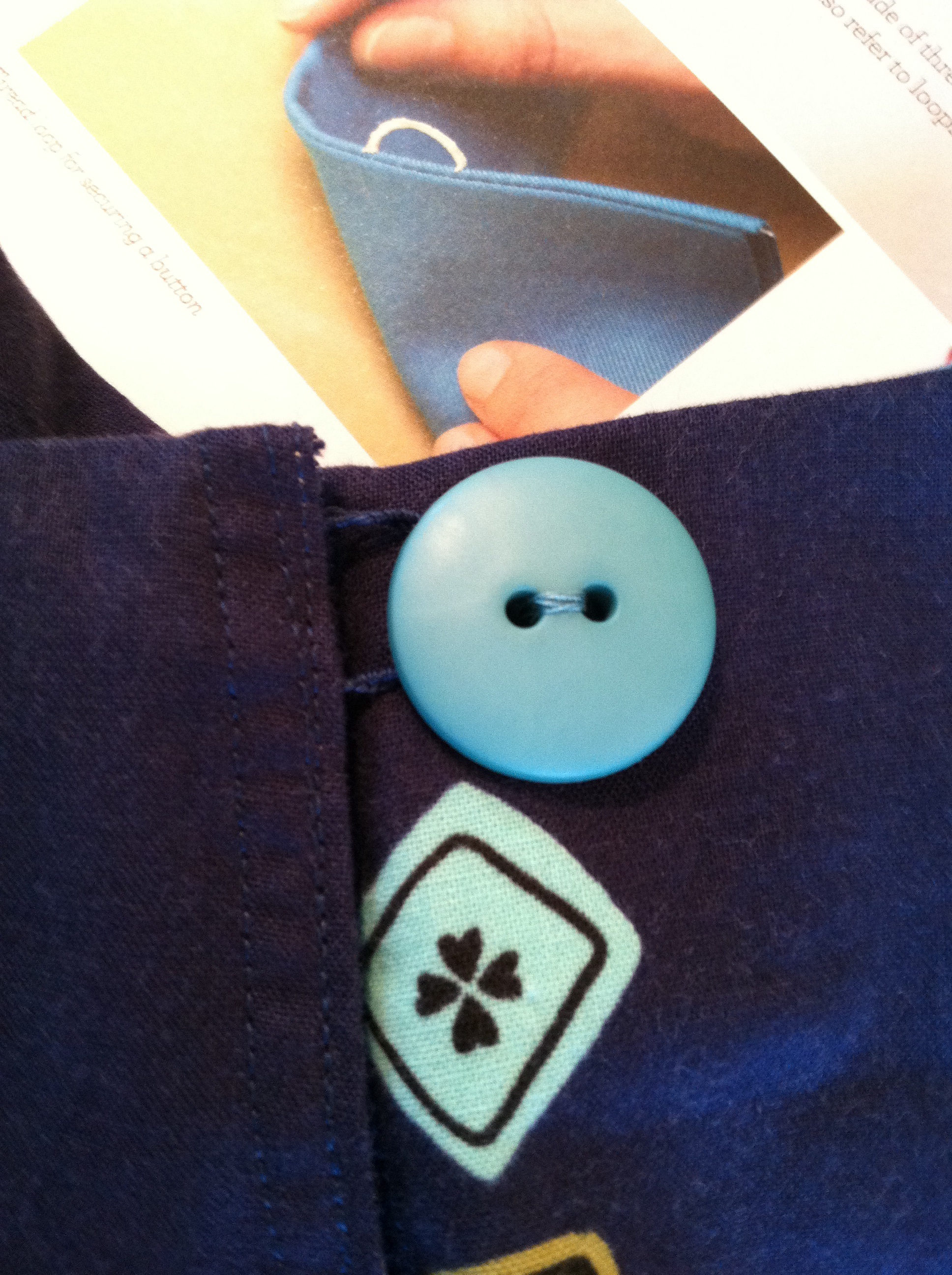
I an happy with everything except the neck gaping but I know how to fix that using the hollow chest adjustment technique that I used making the Beatrix. I will be making this again soon and this time will have the instructions. Woohoo! I am interested to see if it makes a big difference. Changes I will make to the next version: wider hem facing, hollow chest adjustment and slightly longer sleeves. Otherwise I am really happy with this. It works well with sandals in the summer and with boots and tights in the winter with an olive green cardigan.

A Week’s Worth of Rubies
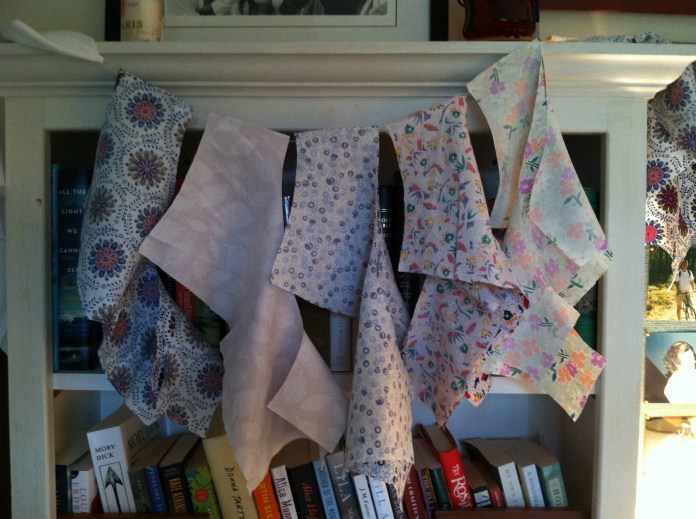
A chain of Ruby bodices lined up and ready to be made into awesome shirts!
The Ruby pattern by MadeByRae is a relatively easy pattern to sew that can be customized to create many different looks. It was the second pattern I sewed after the Washi. I dug around in my stash to find the right fabric for my wearable muslin since I never like to spend money on fabric for my first attempt. (Interestingly, all of my first attempts have ended up being garments I love to wear, but habits die hard.) I had some fabric I liked but didn’t have enough for the main parts of the blouse. Most of the versions I have seen use a white or cream colored bodice with a patterned bottom. Surfing through my sewing blogs I came across this blouse by super seamstress Ada Spragg and I realized that I could do the reverse and use the pattern for the bodice with the white for the main parts of the blouse and that is what I did. As with all my MadebyRae patterns, I made a medium and added two inches to the length. It was an easy sew, done in an afternoon, but I love how finished it looks. Rae’s technique for lining the bodice is explained in her really easy to follow tutorials. Here is a picture of the (slightly rumpled) finished product which I have worn many times.


This is a great layering piece that I plan to replicate in many other fabrics. I love how it looks under a sweater, a jeans jacket and with shorts or a skirt. I love how flattering the neckline is and how the little bit of pattern peeks out.

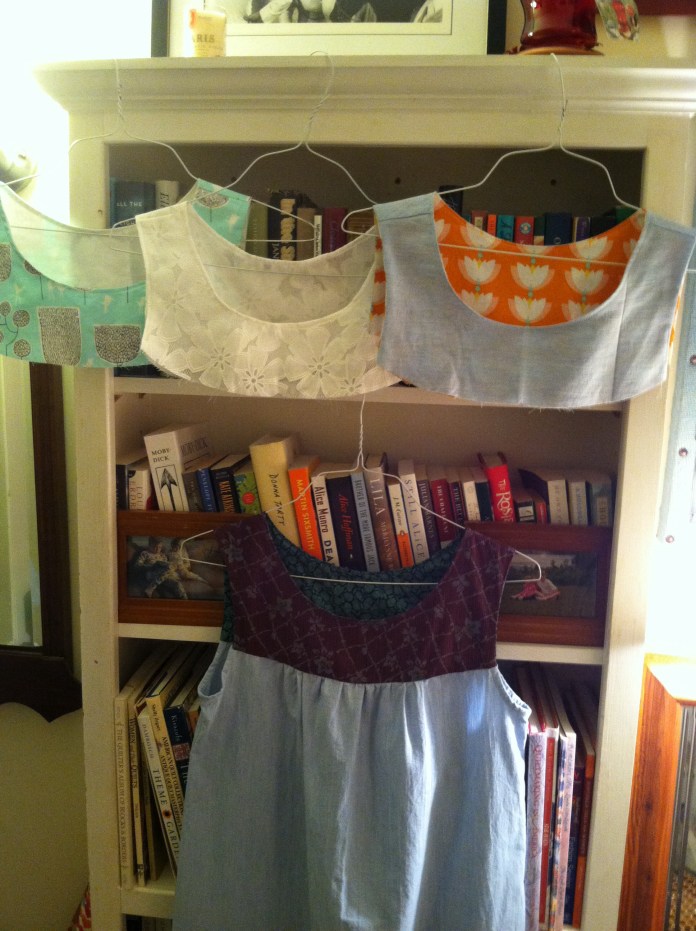
I then decided to make some Ruby dresses and made four very different versions. Version one was made with chambray material from my stash purchased over 20 years ago in Brooklyn. I dug through my scraps to find good bodice material and found some unused fat quarters also circa 1993 Brooklyn. They were just enough to make the bodice. I loved the resulting dress which I wore all summer. It is really great with a jeans jacket. I played around with the two bodice fabrics because I could have gone either way in terms of which to use as the bodice fabric and which to use as the lining. Both worked. This is the final version.

Detail of bodice:
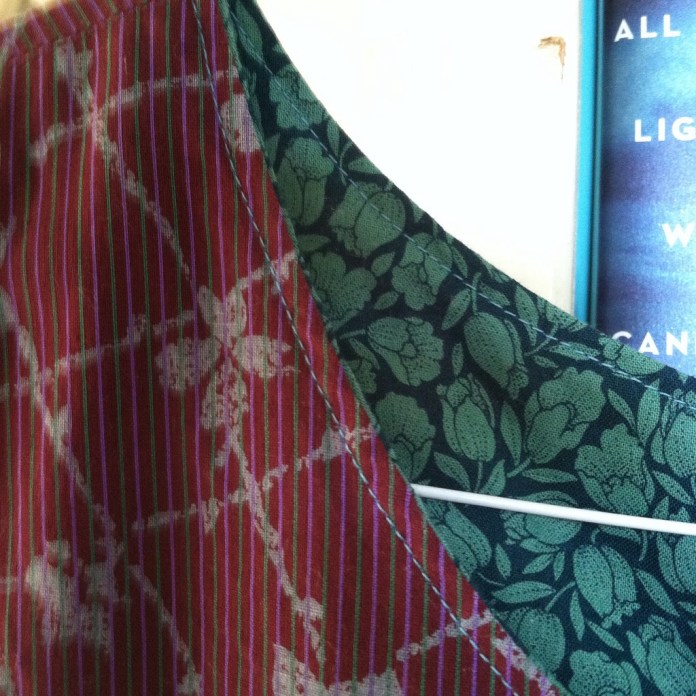
And here is how I wore it all summer:

Since my first two Rubies were basically free (fabric over 20 years old counts as free in my book!) I splurged to make some more versions. One was inspired by Rae’s version with a lacy top and a spring-like print for the main part of the dress.


I loved this fabric and enjoyed making this and it looks really pretty on the hangar:
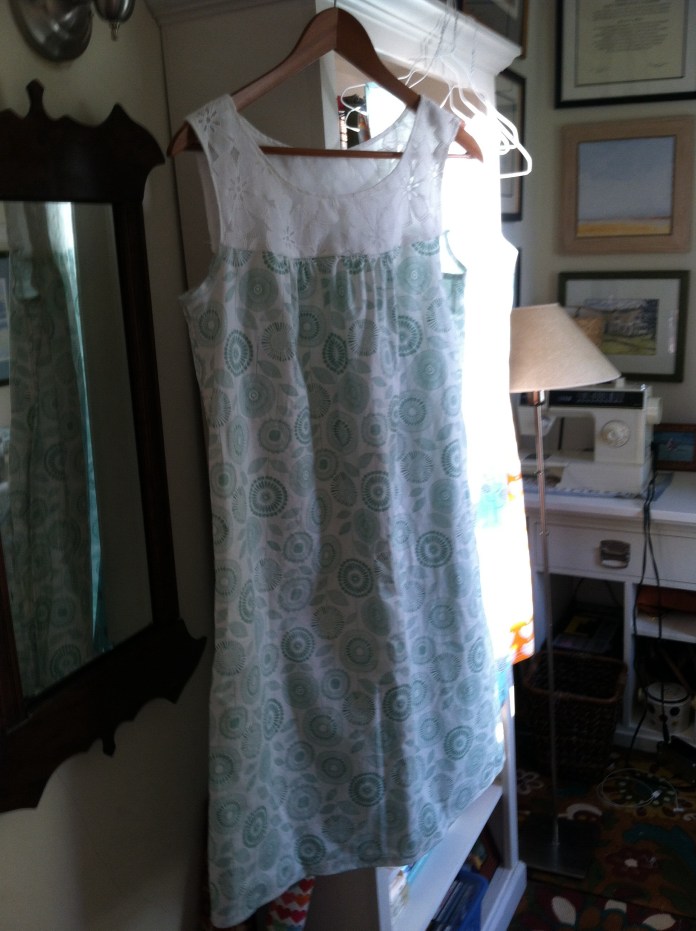
I tried it on though and between the shape and my fabric choices, on me it looks like a nightie my mom would have worn in the 60’s when I was growing up, a really beautiful nightie but still evoking more nightie than work dress. I thought about using it as a nightie and contemplated cutting it shorter and making a top which would probably have been cute with jeans but in the end I sent it to my daughter who said she would wear it with the world’s most versatile belt and here she is looking as cute as ever.

I then made a version inspired by another dress that Rae made using her Lotus Pond fabric. I used a scrap of the attic chambray for the bodice and the orange Lotus Blossom fabric for the dress. This fabric is really soft when washed and this made a great dress. I like the more structured feel of the chambray which I lined with more of the orange fabric for a more casual summer dress (although this got worn to the office as well.) Also very cute with a little cotton sweater which dresses it up a bit. This is how I wore it to work.
 Finally I decided to make a Ruby all in one fabric. I was inspired by Allie from IndieSew whose Ruby is adorable. I love this bright turquoise print with little birds. The name of the fabric is Tokyo Trees and I think it made a great dress. Wearing it made me happy.
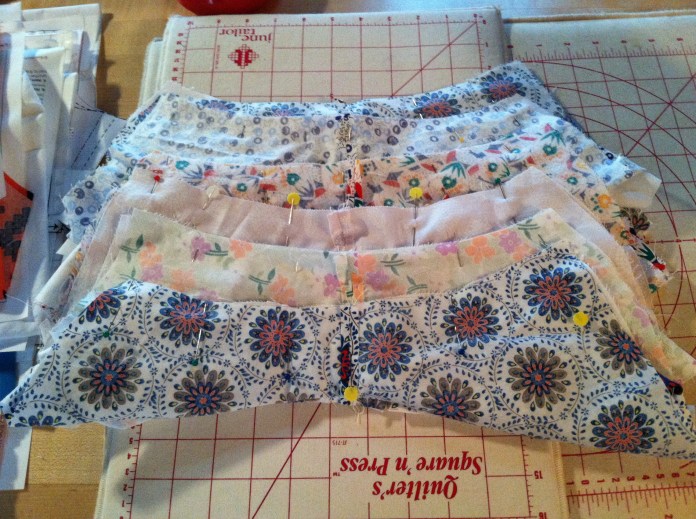
 Once I realized that a fat quarter was all it took to make the Ruby bodice, I rummaged around in my stash and found several unused fat quarters to make a week’s worth of Ruby blouses. These will be great all summer and since I had leftover white cotton fabric, making these is basically free. Since I usually make two things at a time, I cut the fat quarters and chained pieced the bodices as one would a quilt.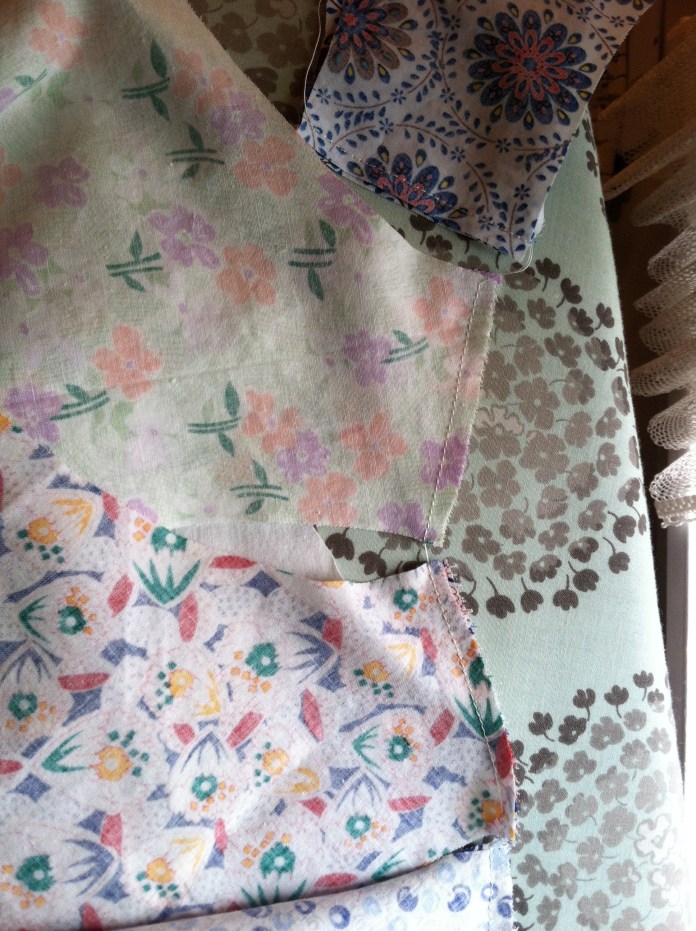
Here are some of the bodices after lining them all ready to be attached to the shirt pieces:

They are still unfinished as of this writing but are high up on my list of WIPs to be finished in the new year. I know that they will be great come summer.

Overall, I can’t recommend this pattern more highly. Easy, cute, versatile. Here are some detail pictures showing some of the steps.




Washi Details
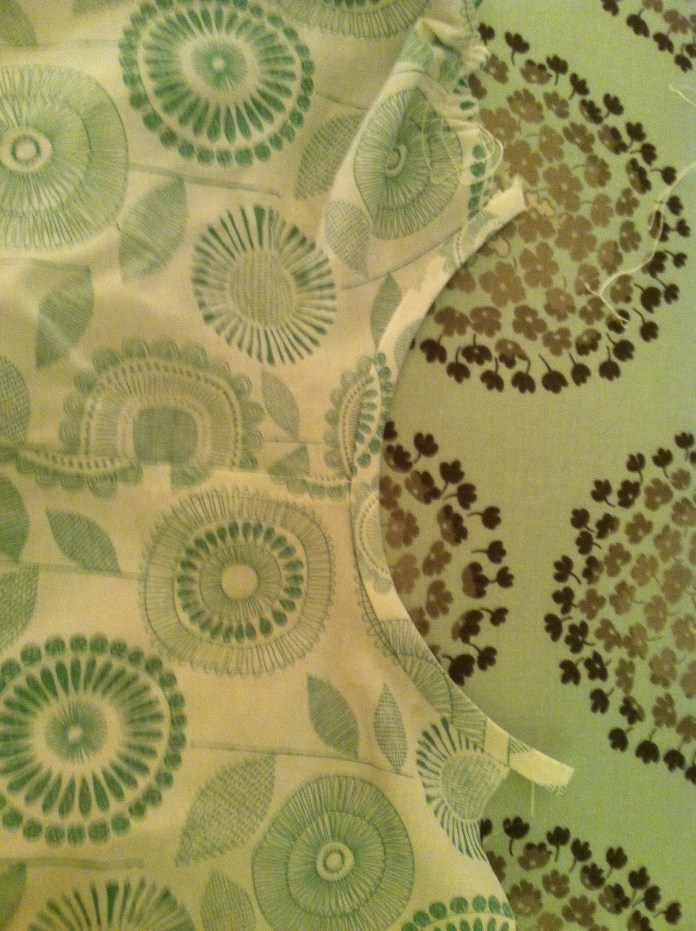
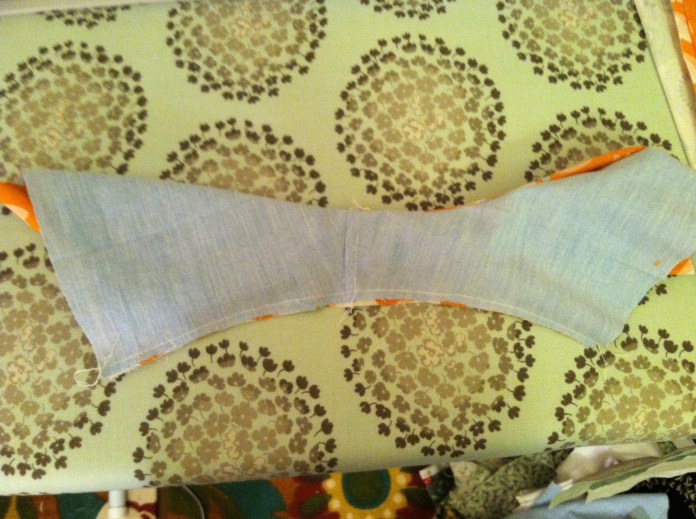
A few pictures of the insides of my Washi dresses. I have started lengthening the front bodice lining a bit so I can turn more under to get a cleaner finish. I generally finish the hems with a 3 inch facing that I turn up and finish with two rows of stitching but when I sewed my most recent Washi, I stitched one row and caught the edge of the facing perfectly-a first! and decided not to chance a second row of stitches as they might not have been even and I was happy with how it looked. I generally use scraps for facings. I enjoy the challenge of finding something that works. It is the quilter in me. This Pat Bravo fabric was somewhat sheer so I lined it with white quilting cotton. I like the structure the lining gives to the bodice and the hem.


This Cotton and Steel Washi was lined with wonderful mustard mustang fabric. Love this fabric. I should have probably bought a bolt! I used it to make a Beatrix blouse that I wear all the time.


Most recent April Rhodes Washi with lining and sleeves. I used Rae’s sausage method successfully although there was a lot of fabric in the sausage! I pinned the bulk of it away from the seam line so I wouldn’t catch it when I sewed.


Speaking of pinning. A word to the wise. When sewing the shirring, pin the top of the bodice together. I have caught the top of the bodice in the shirring more times than I care to admit. I just get carried away and don’t notice! This helps. Another tip: make sure you have enough elastic thread in the bobbin before you sew each line of shirring. You don’t want to run out in the middle of a seam because you will have to pick the whole line of stitching out. Happy sewing!
 nursebeansews