
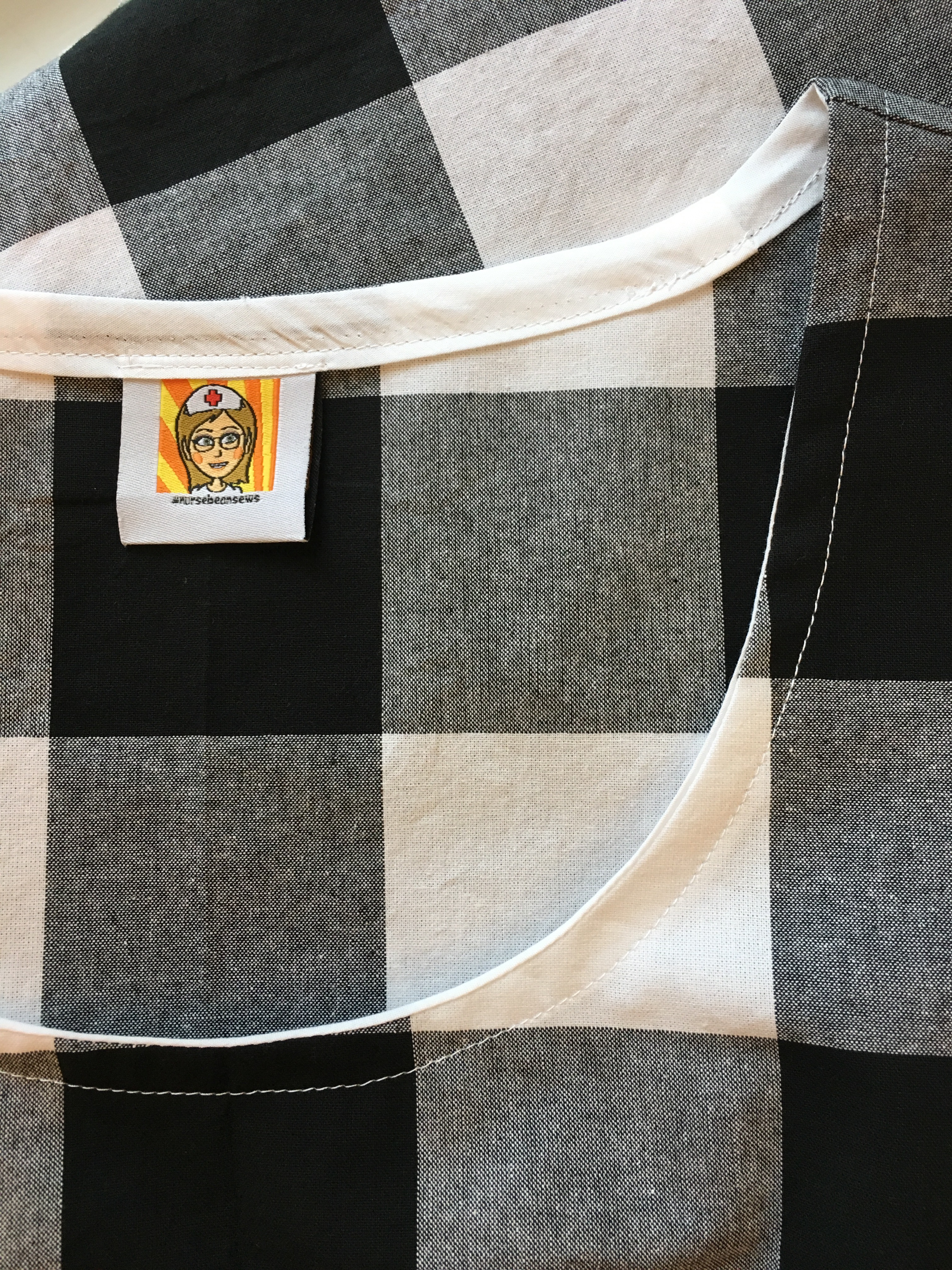
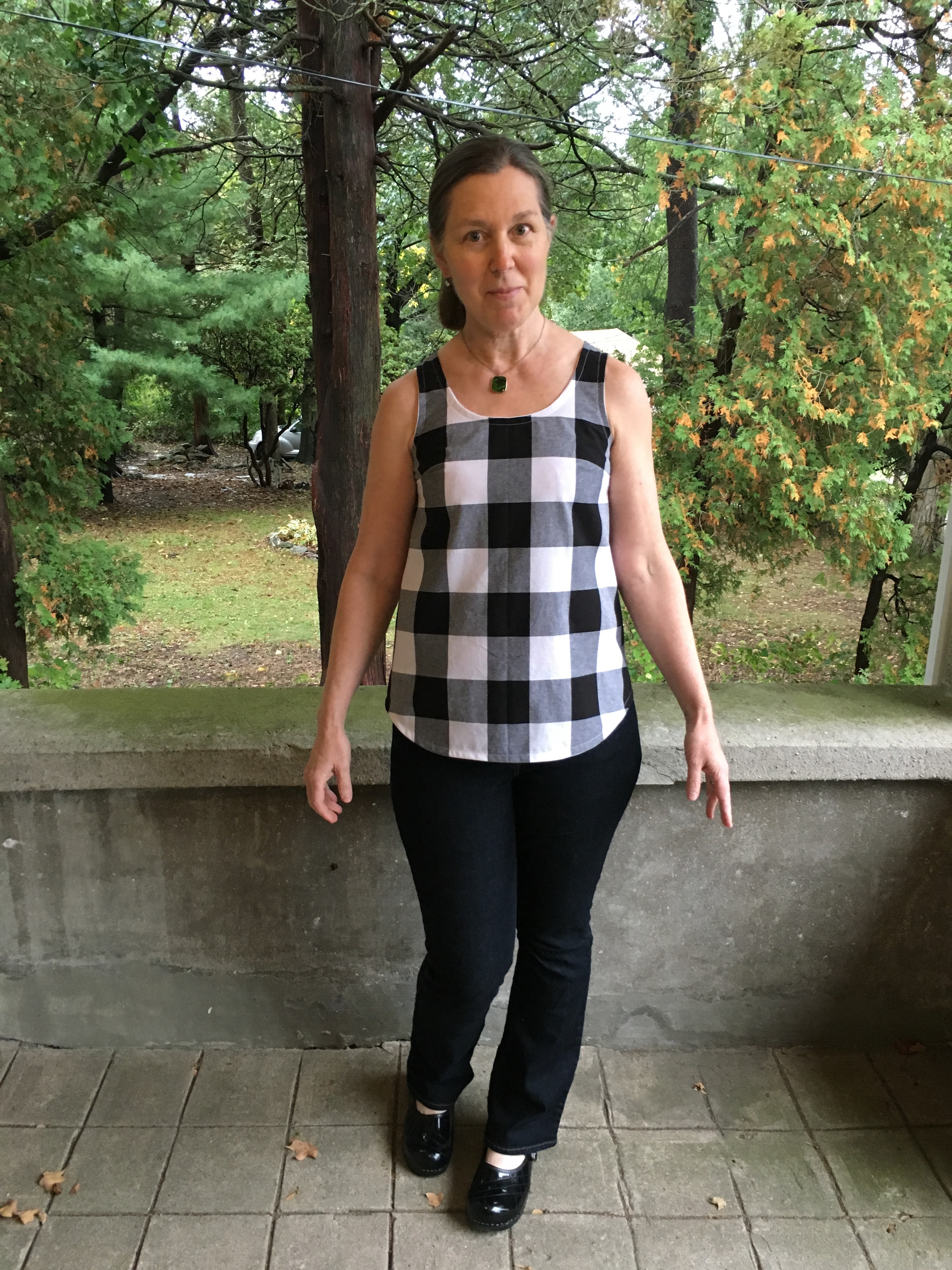
 Most of the Made By Rae Gemma Tanks I have been making over the last several weeks have been from fabrics in my stash. I have had a great time trying this pattern with many different types of fabrics as you can see in my previous posts. This fabric, however, I purchased with this pattern and the Pearl Shift in mind. I cut both out last week and today, I had time to finish binding the Gemma in this black and white Checkers fabric by Cotton and Steel. It is a woven, medium weight cotton. I decided to use the large check print since I thought it would be a great basic to layer with different colored sweaters. I cut between the medium and small lines on the pattern and added an inch in length.
 I did add a bit of extra seam allowance because I planned to finish the edges using my variation of the french binding technique.
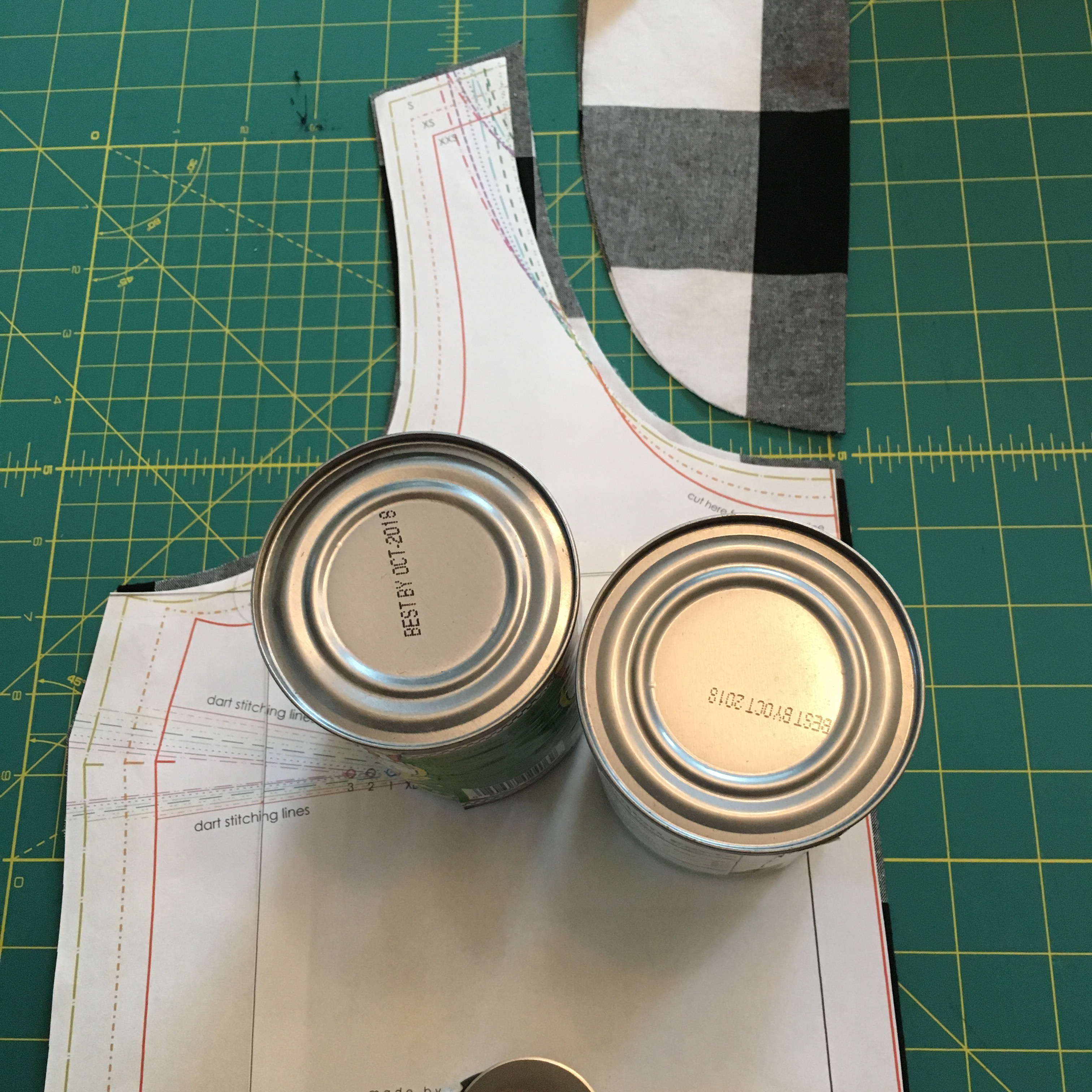 I used scraps of the white cotton batiste fabric that I used for the lining of my Gemma dress to bind this tank.
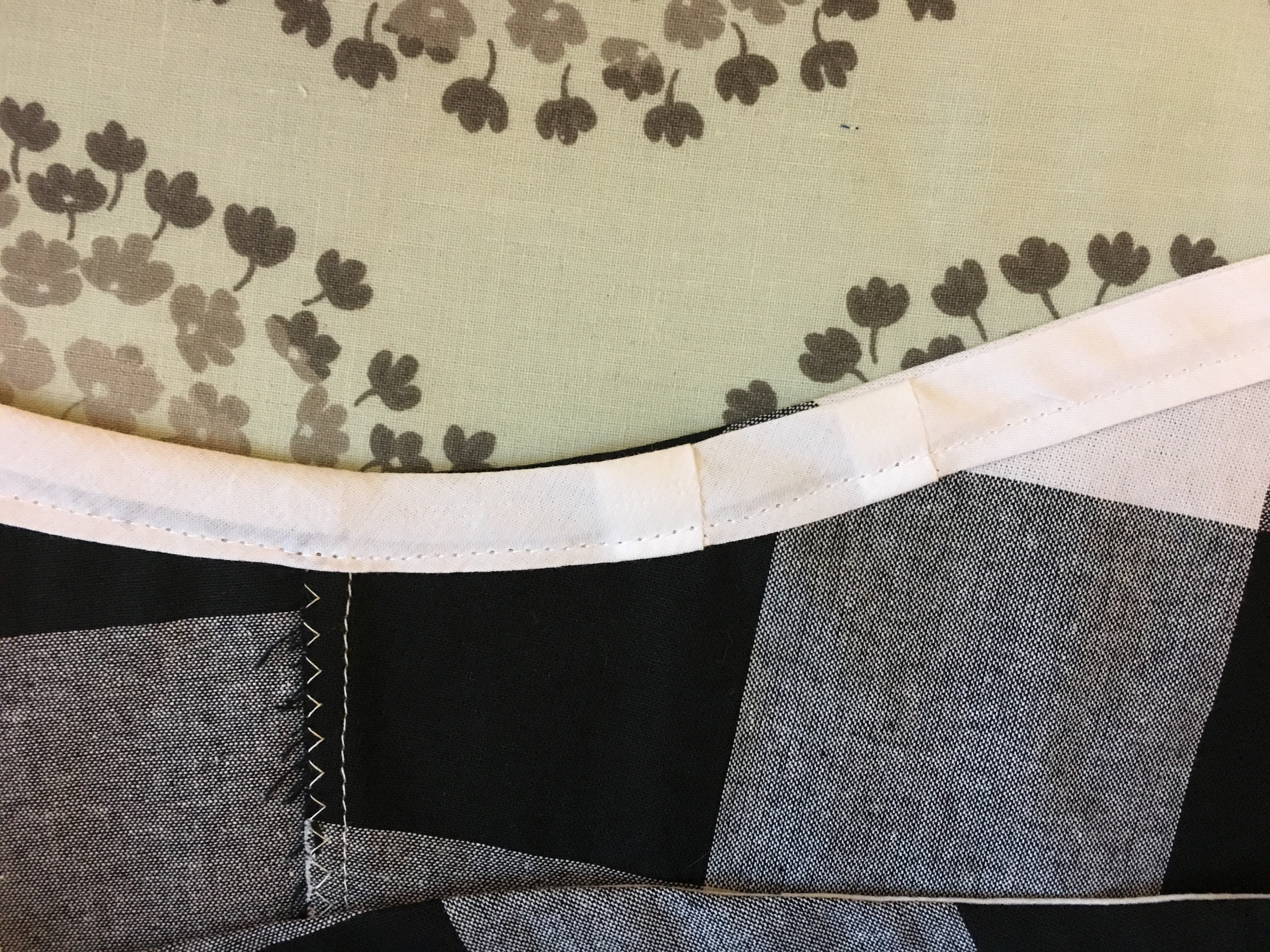
  The armhole binding below.
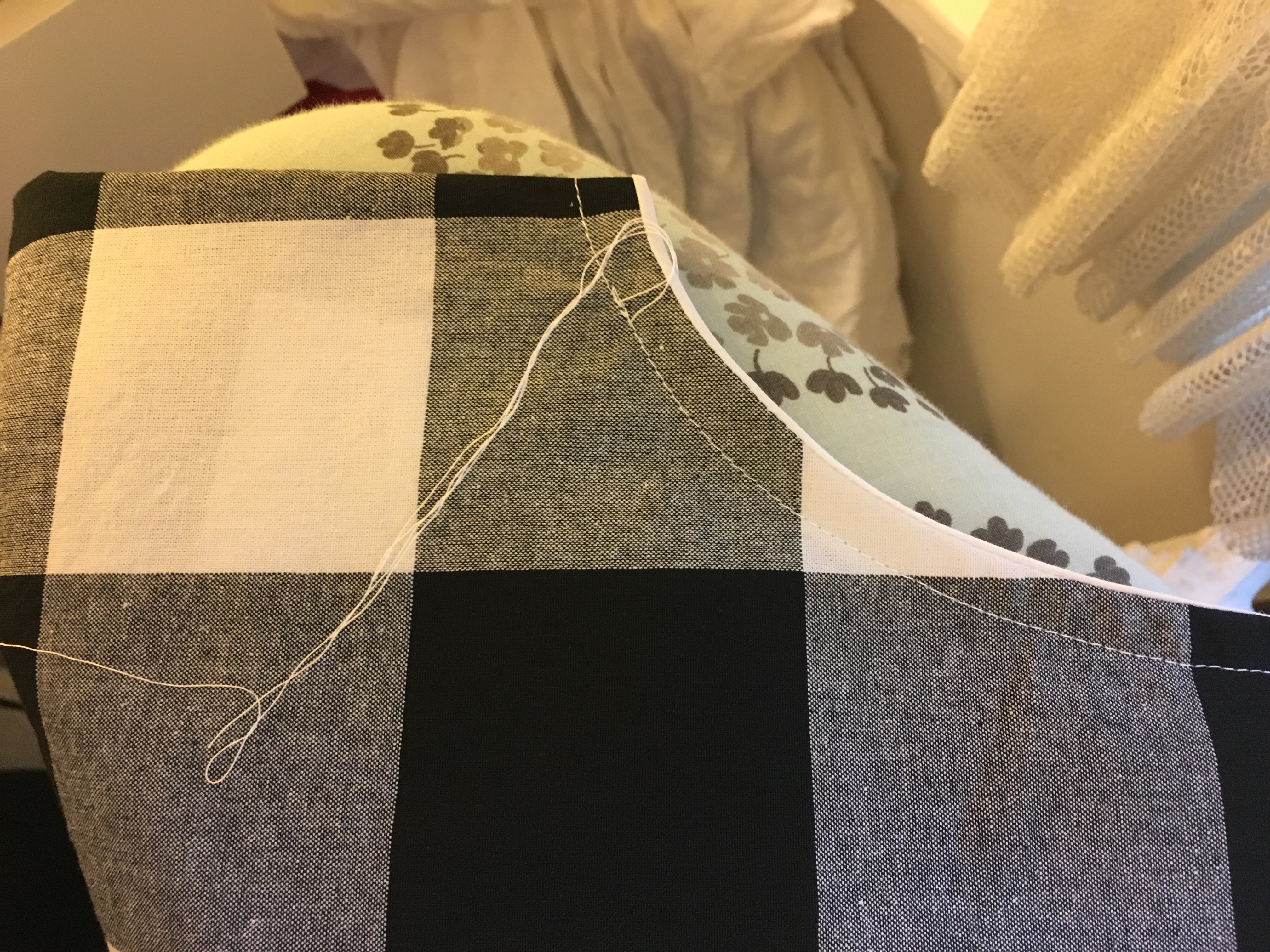 I bound the seam of the hem the same way.
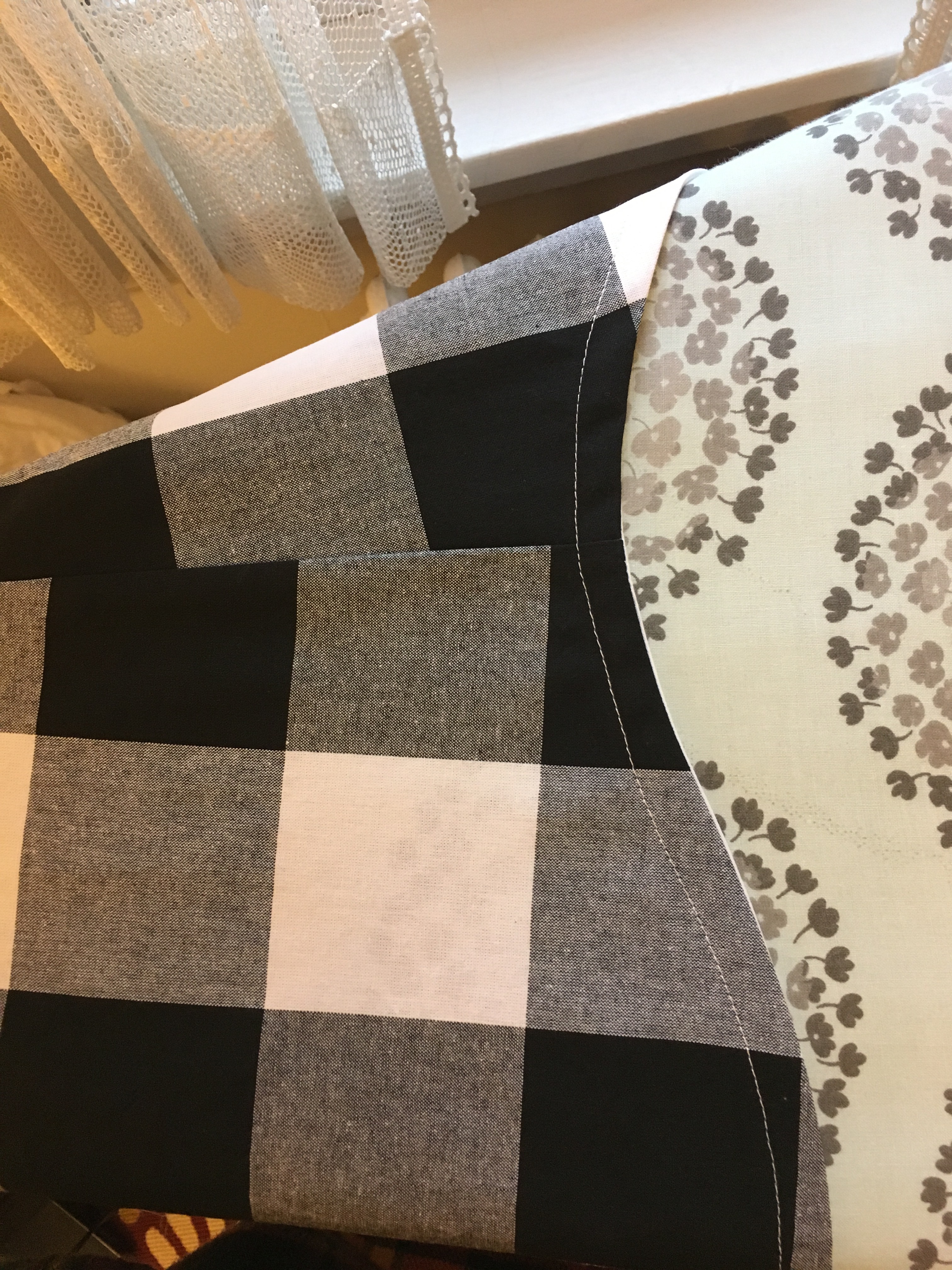 The inside of the hem binding.
 Finished tank on the front door.
 Back of blouse.
 Porch pictures courtesy of my daughter. Front.
 Side.
Side. Back.
Back.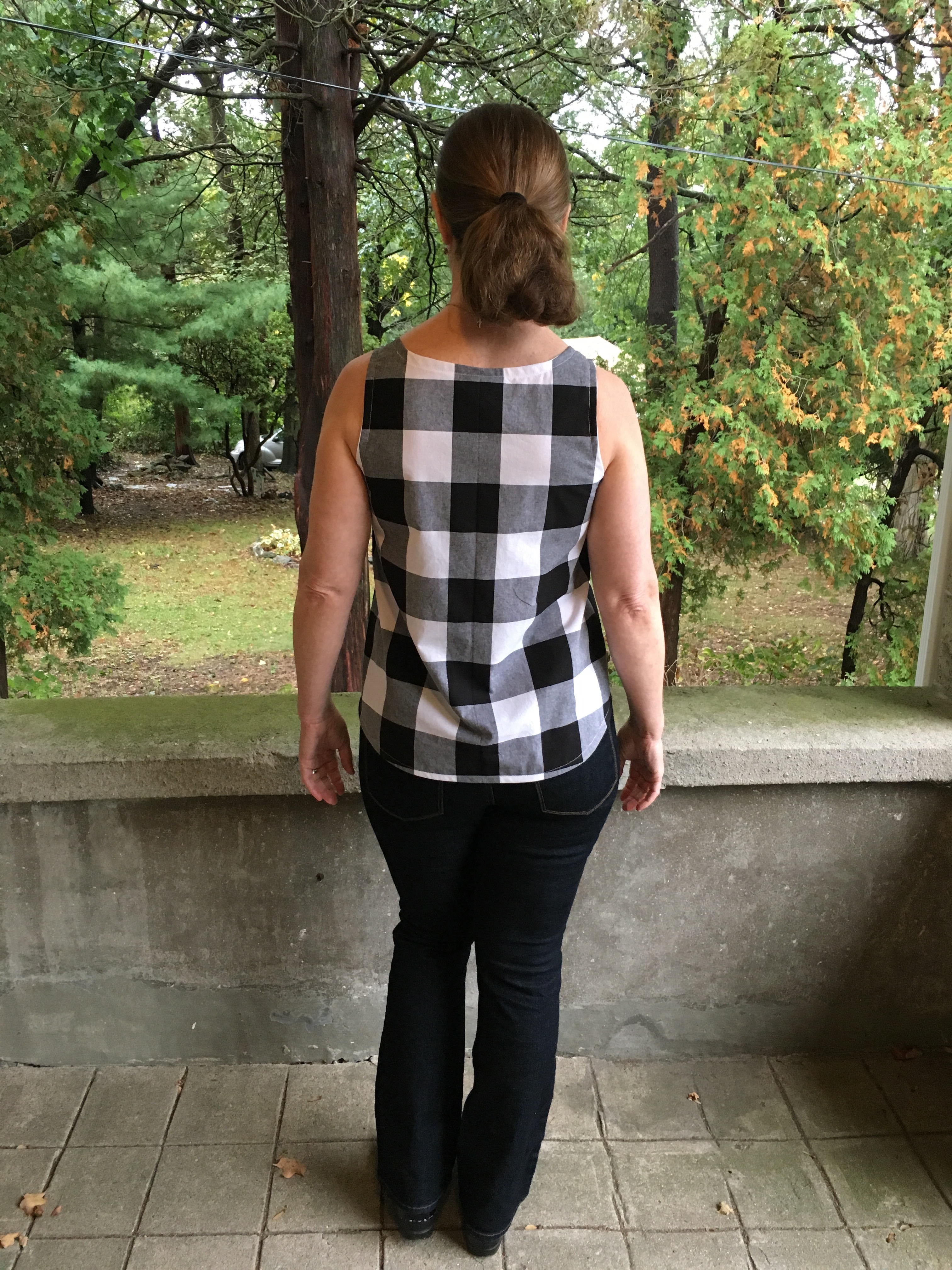 Ready for Halloween with a cardigan.
 Side. view. Great pattern + great fabric! This is going to get a lot of wear.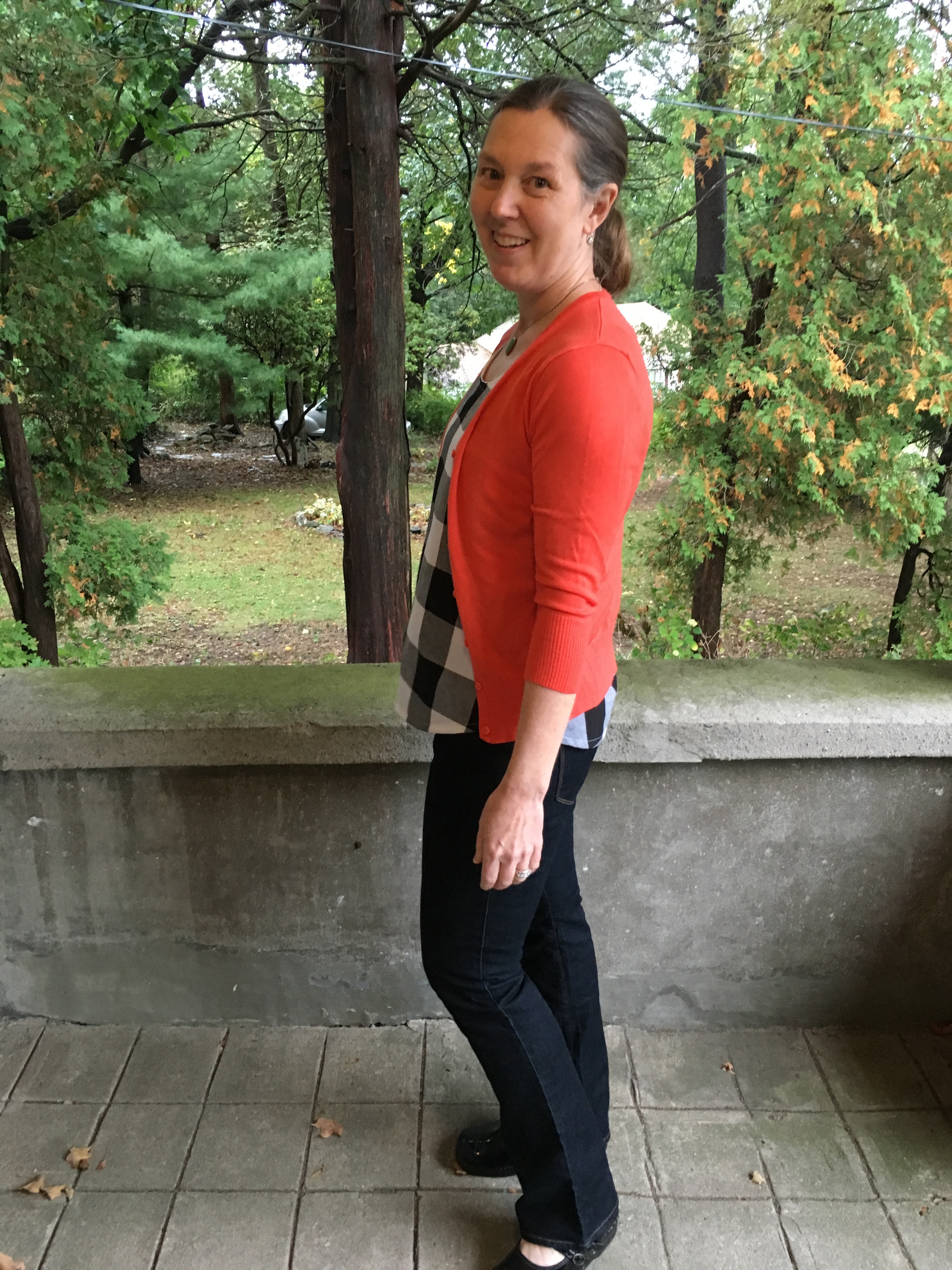
Category Archives: Bias Binding
Macrame Gemma (a pictorial post)
I have written several posts about the Gemma Tank so this will just be pictures with details/links at the end of the post. Once again, when you have fabric this beautiful and a pattern you love, the rest is easy.
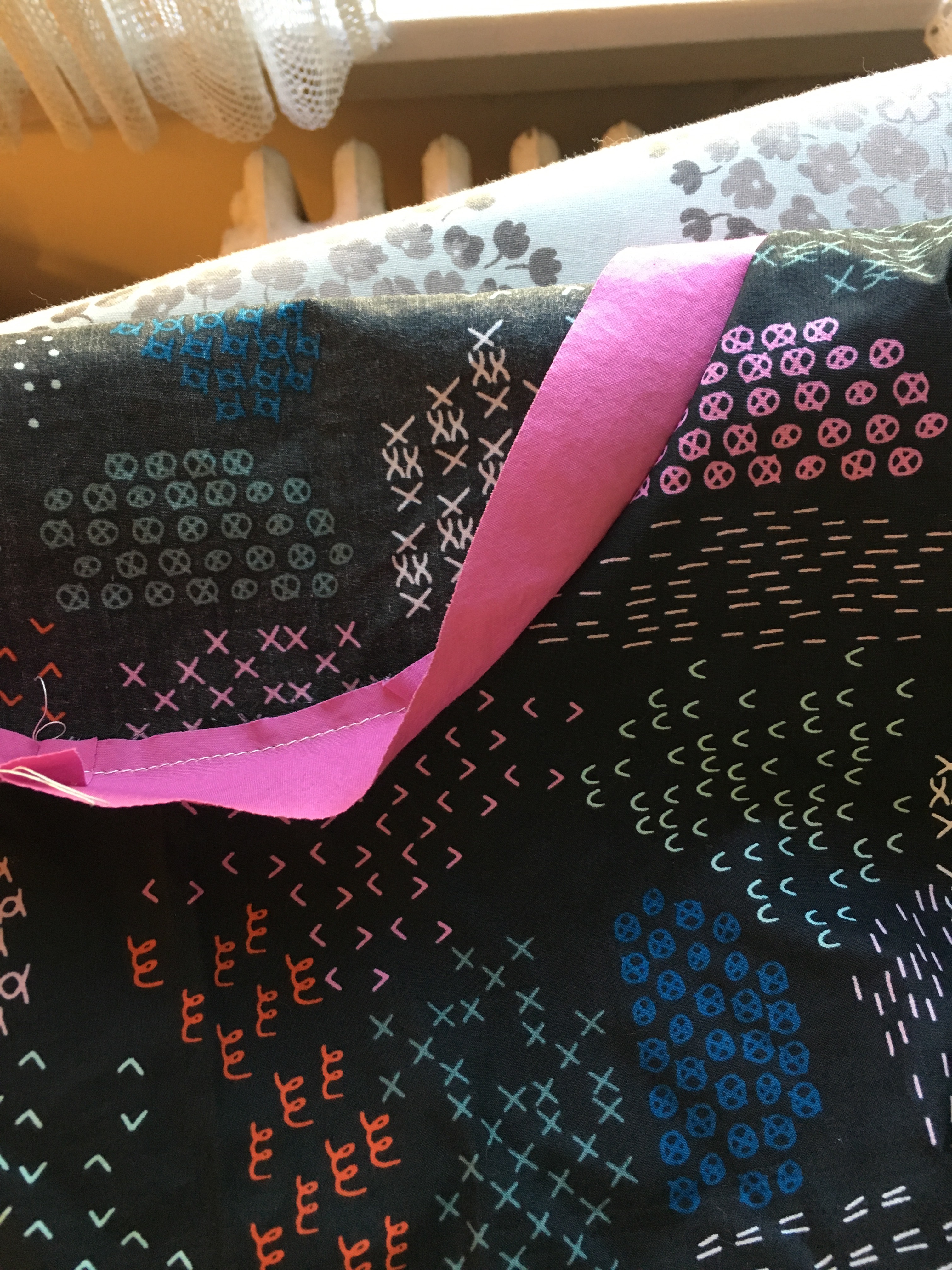

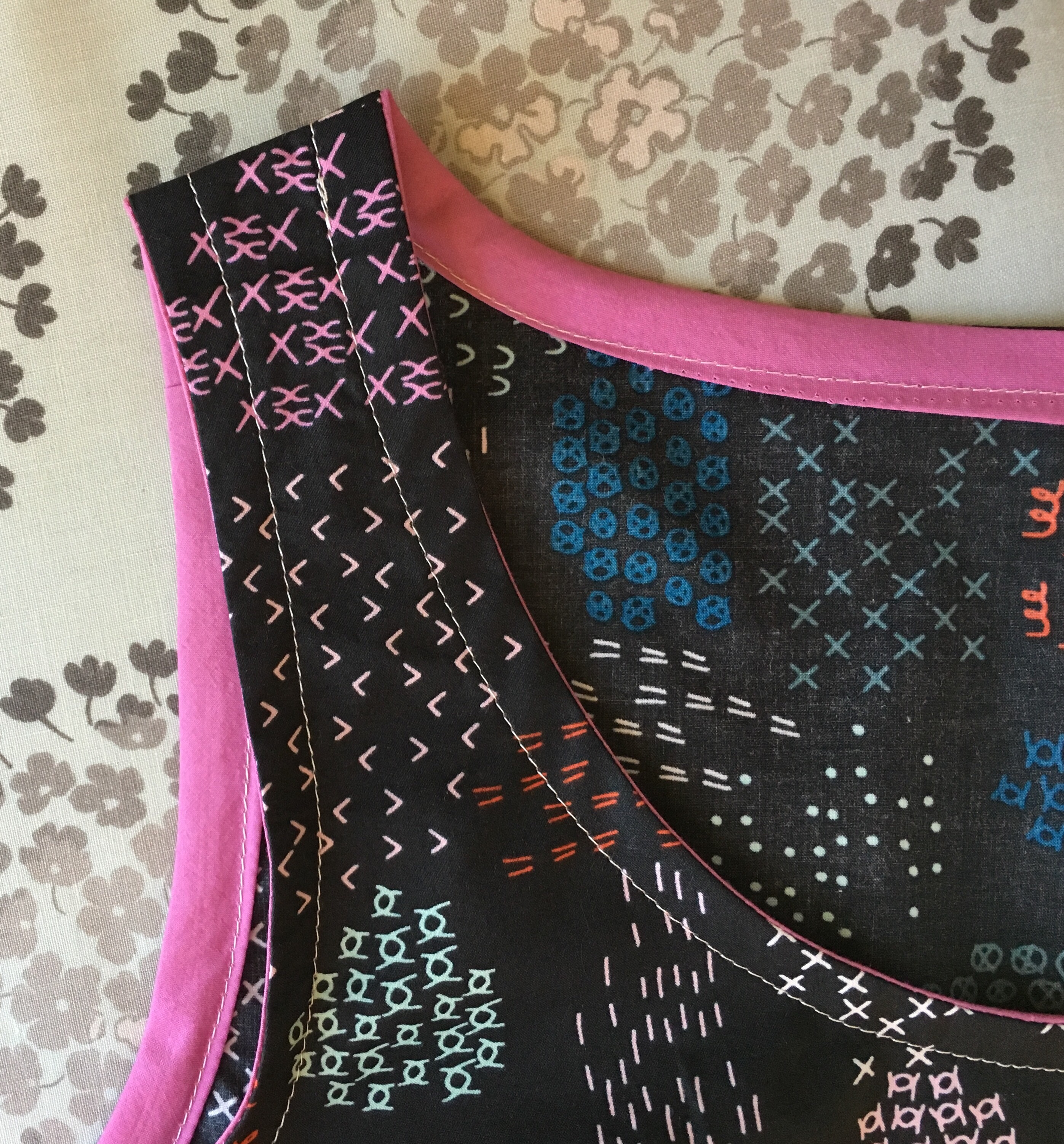
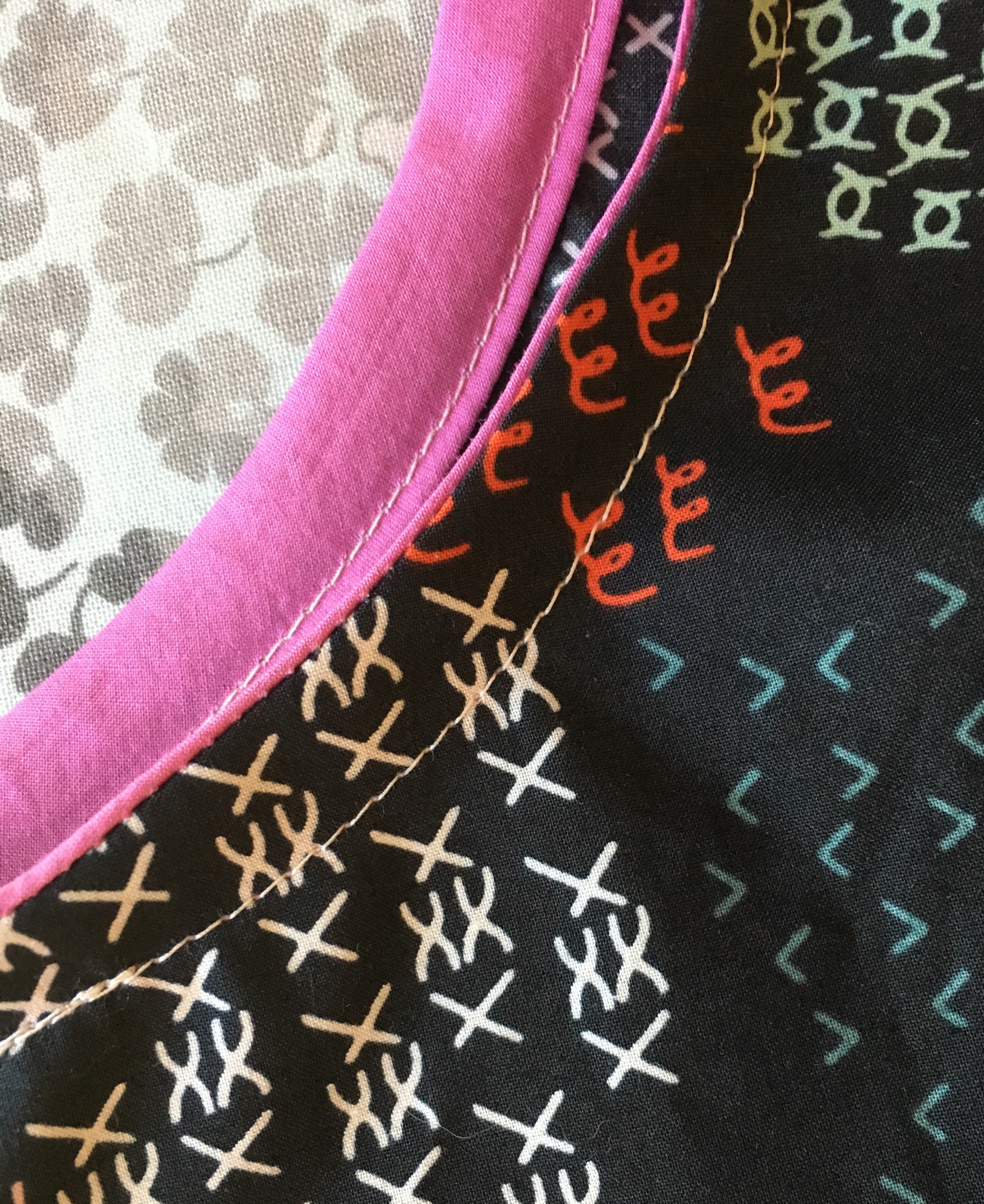
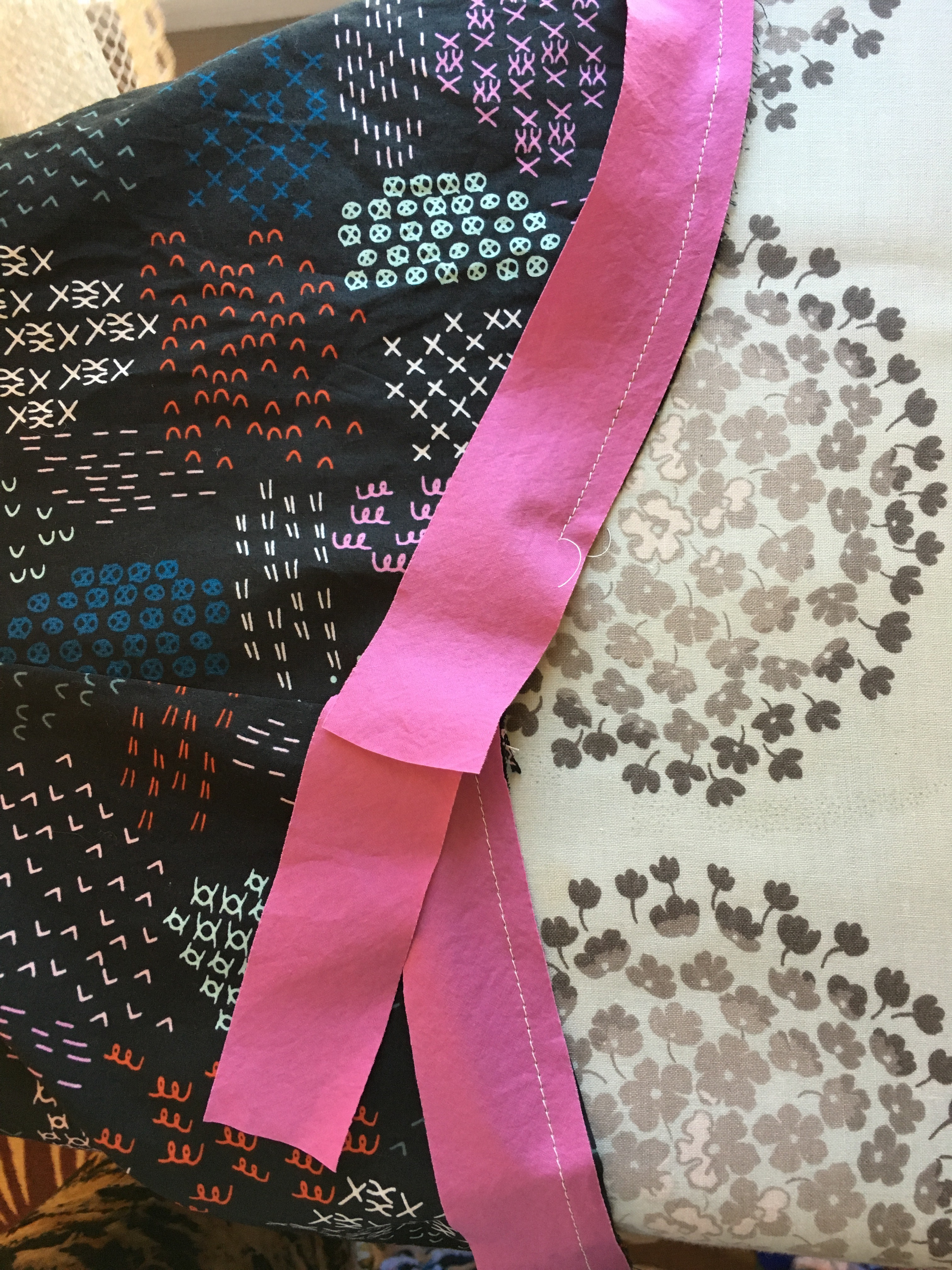


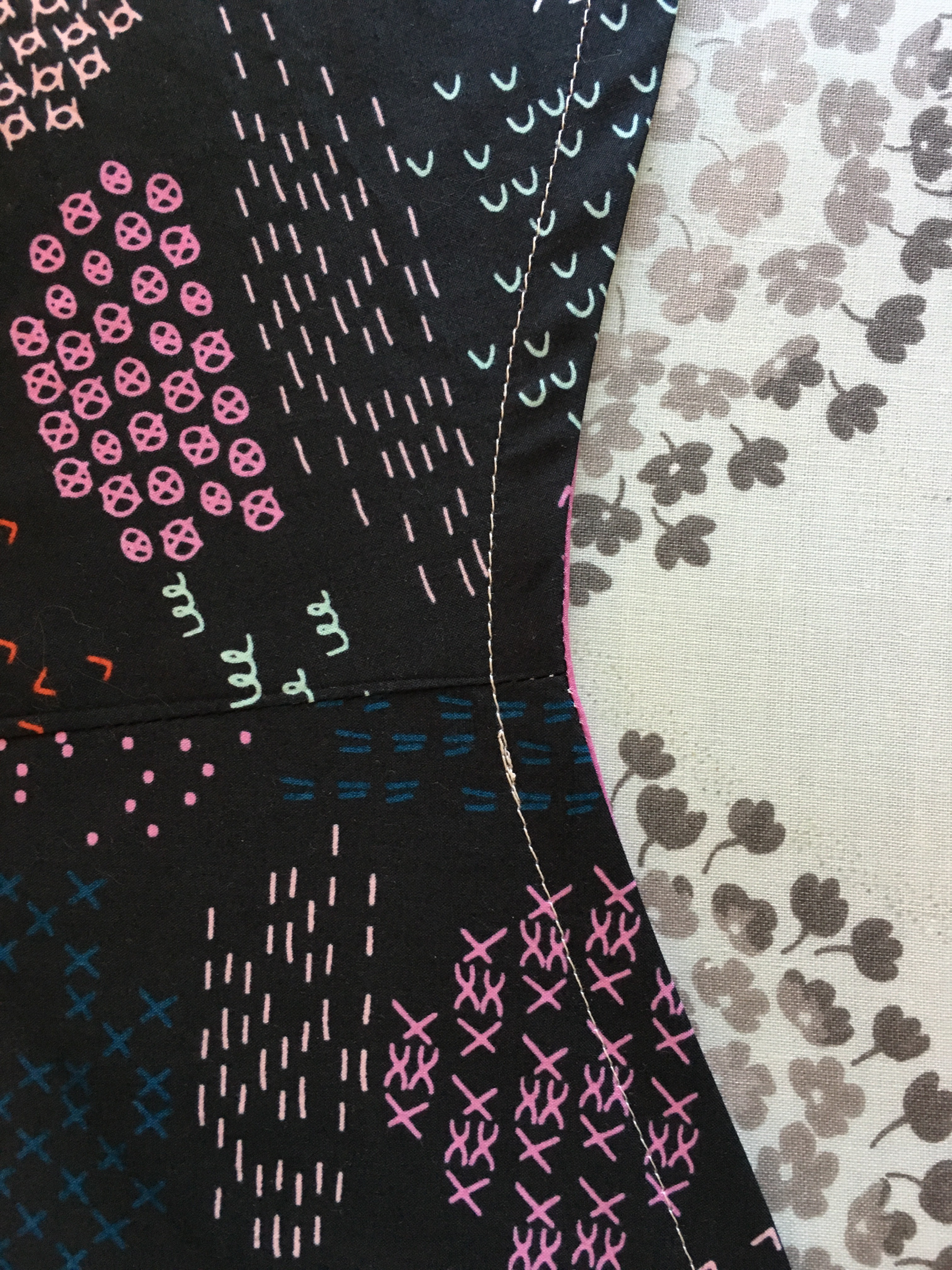
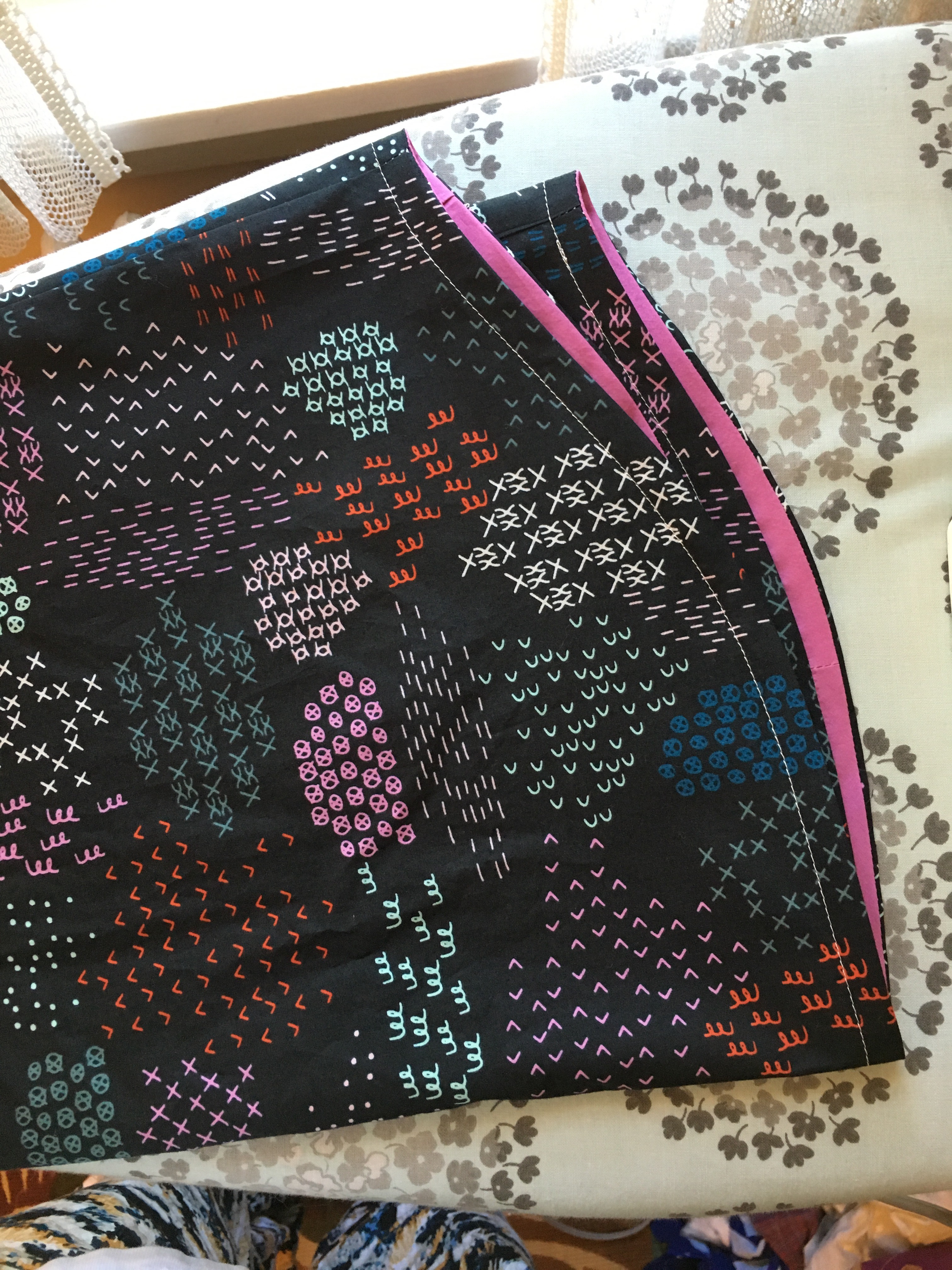


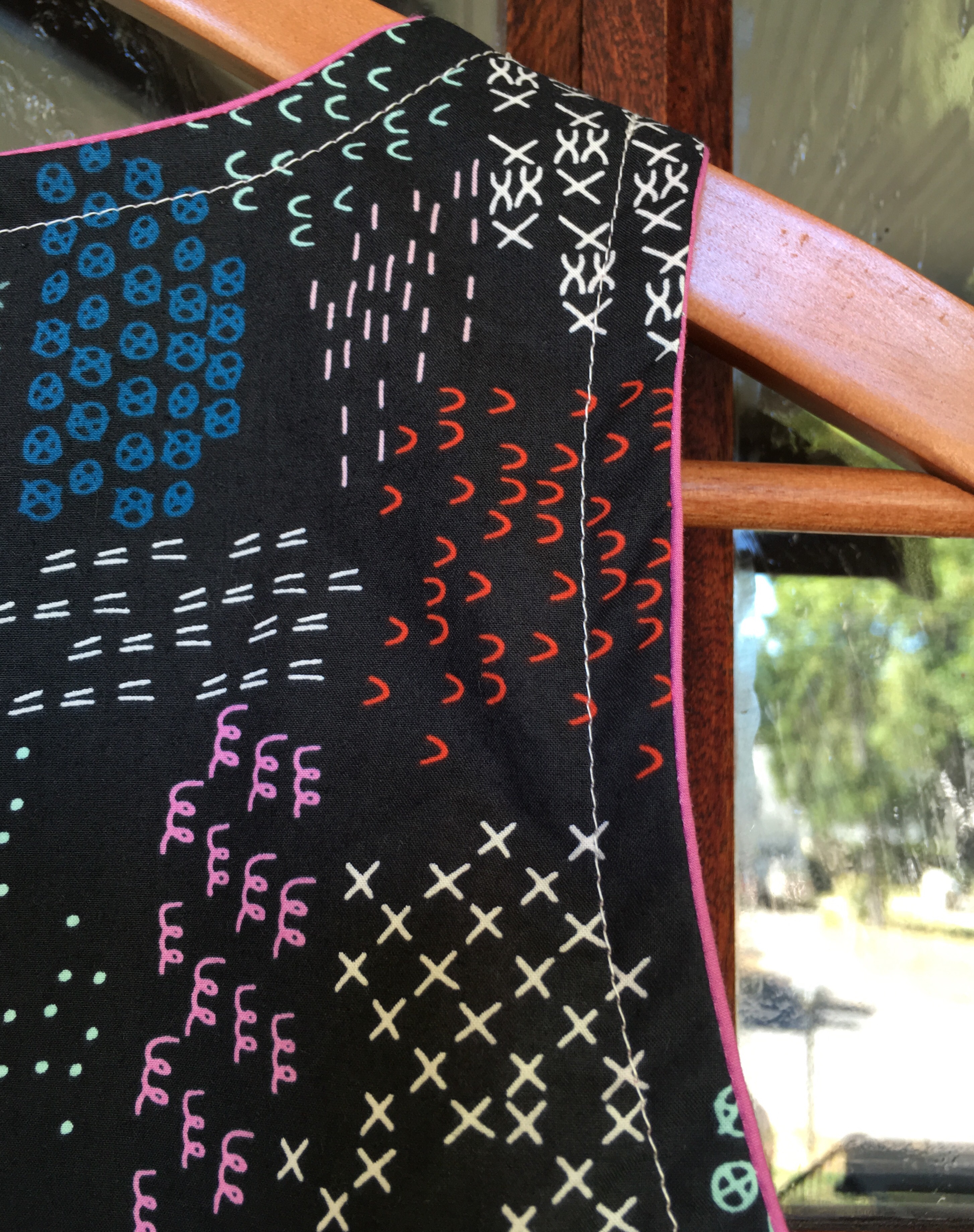
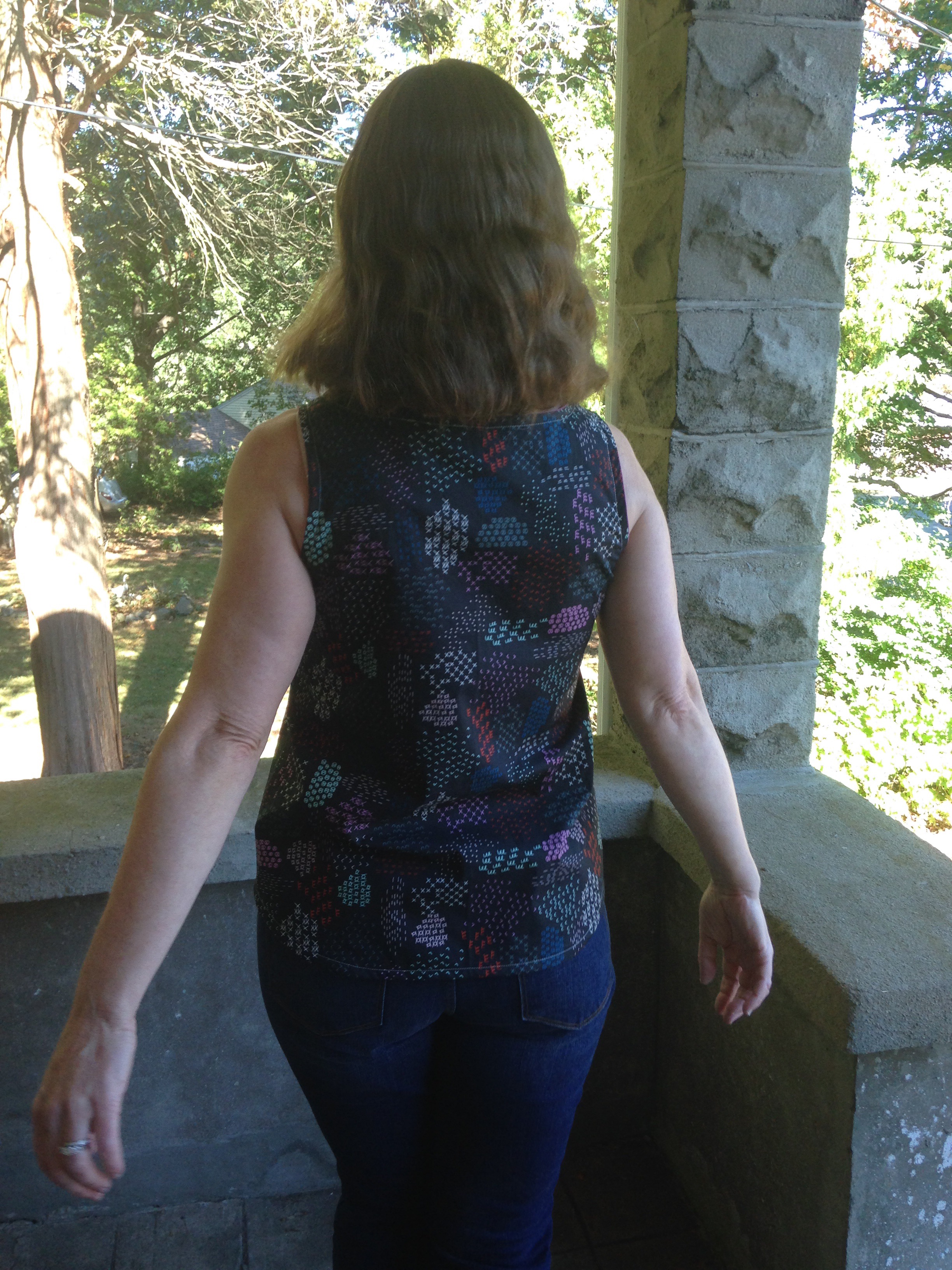


Details:
Gemma Tank pattern by Made By Rae; scoop neck version
Garment Fabric: Macrame by Rashida Coleman-Hale for Cotton and Steel in cotton lawn in color Midnight purchased at Fabric.com
Binding Fabric: Cotton and Steel Lawn in Petal purchased at Hawthorne Threads
Size: I cut between the M and S lines and added an inch to the length
Binding width: 1.25 inches
Binding Method: see here
Previous Gemma posts: many
Gemma WIPs: many
Total number of Gemmas completed and in-process: I’m not telling but we will have a celebration when I #finishallthegemmas
Loominous Gemma
This fabric + this pattern = totally awesome. I bought this beautiful woven fabric from the Loominous line by Anna Maria Horner last year to make something for my daughter. She has always loved pink and I knew she would love it and so when the line first came out I bought a couple of yards. It is called Big Love, obviously. (insert heart shaped emoji)
 I originally planned to make a dress for her but when Rae came out with the Gemma pattern, I knew this fabric would be perfect. This is the higher neck version of the Gemma in a size Medium without any modifications. I had sent Sarah a couple of muslins prior to cutting into the fabric to be sure of the fit. My front door is my new favorite place for pictures.
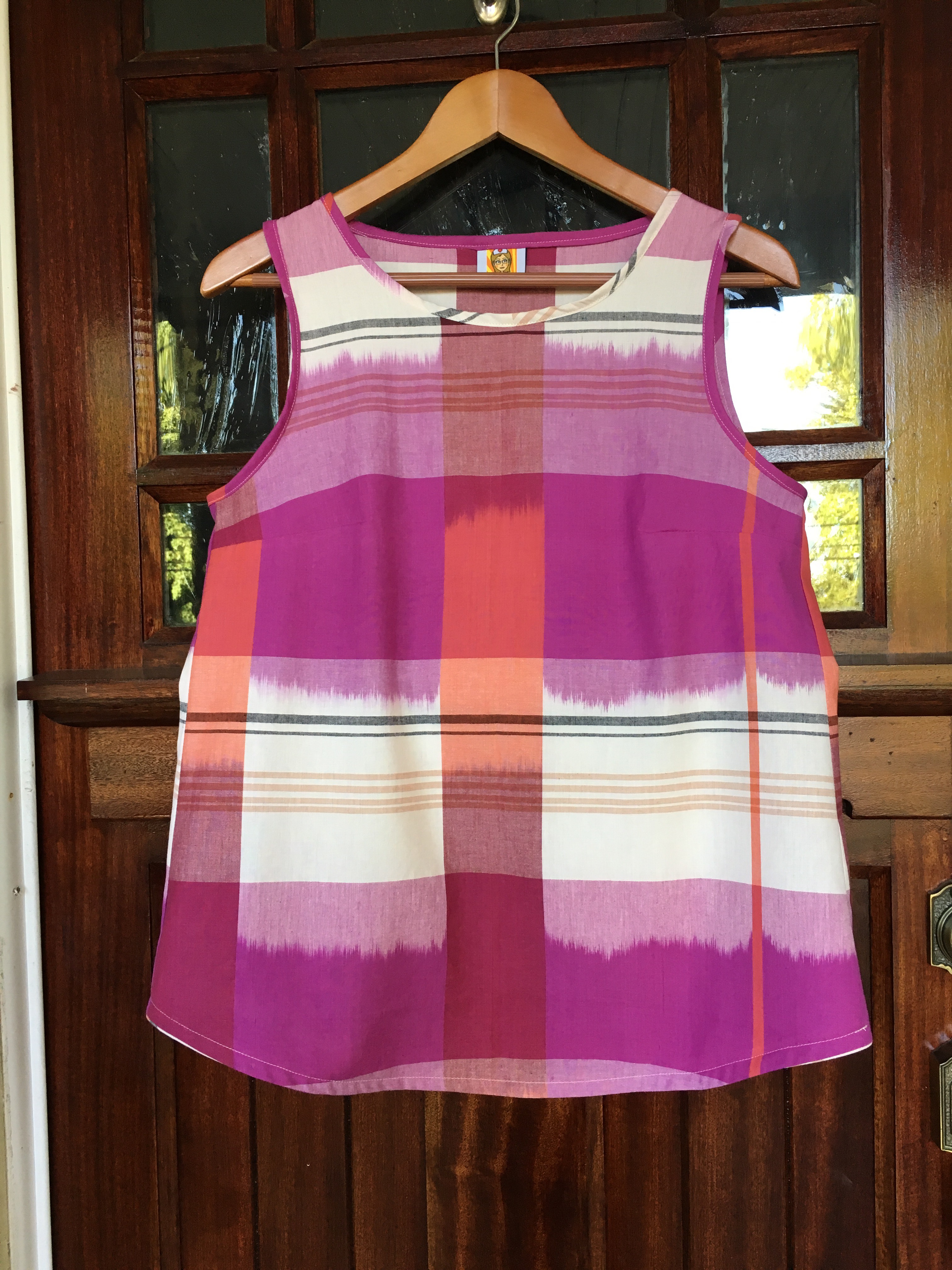 I started this project earlier in the summer (along with several other Gemmas) when I had a couple of days off from work.
  The thing about this pattern is that the initial sewing goes very quickly and then there is the bias binding which is not terrible but somewhat of a challenge for me. So now I am finishing these projects one by one and today I had time to finish this.
 I used the method I describe in this post. It worked relatively well although the woven fabric has a bit of give to it and I wasn’t as successful in getting an even binding as I was when I used the quilting cotton. But I wanted the contrast of the visible binding and I thought Sarah would prefer to have a bit more width in the shoulder since she is a teacher and has to wear clothes that aren’t overly revealing.
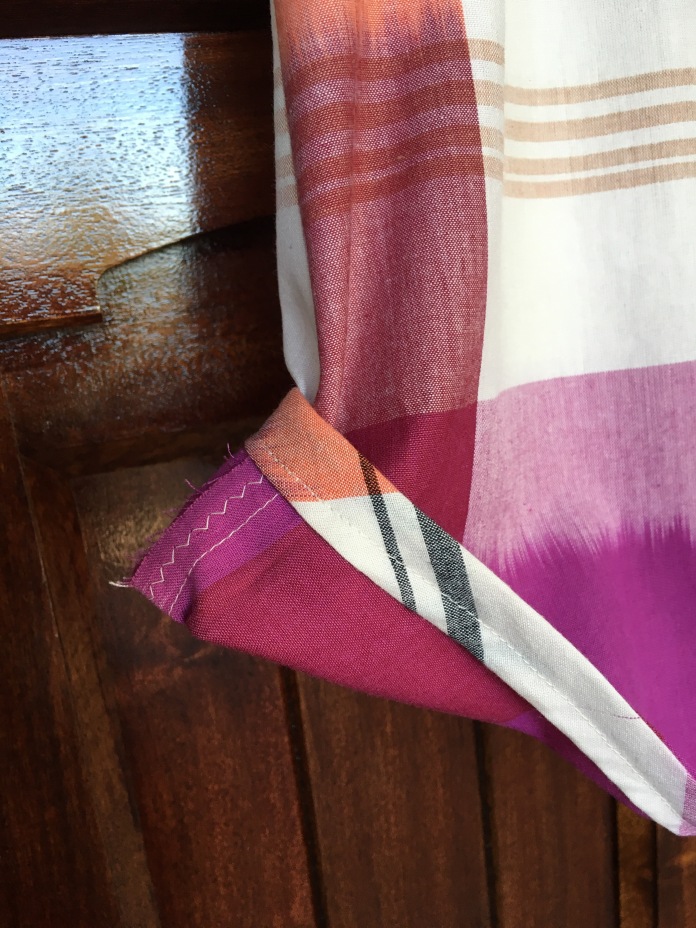
 When I uploaded the photos from my phone, I did them in the reverse order that I intended so you are sort of getting a backward looking glance at the binding process, but you get the idea. Back of the finished tank on my front door below. It gets the best light for pictures.
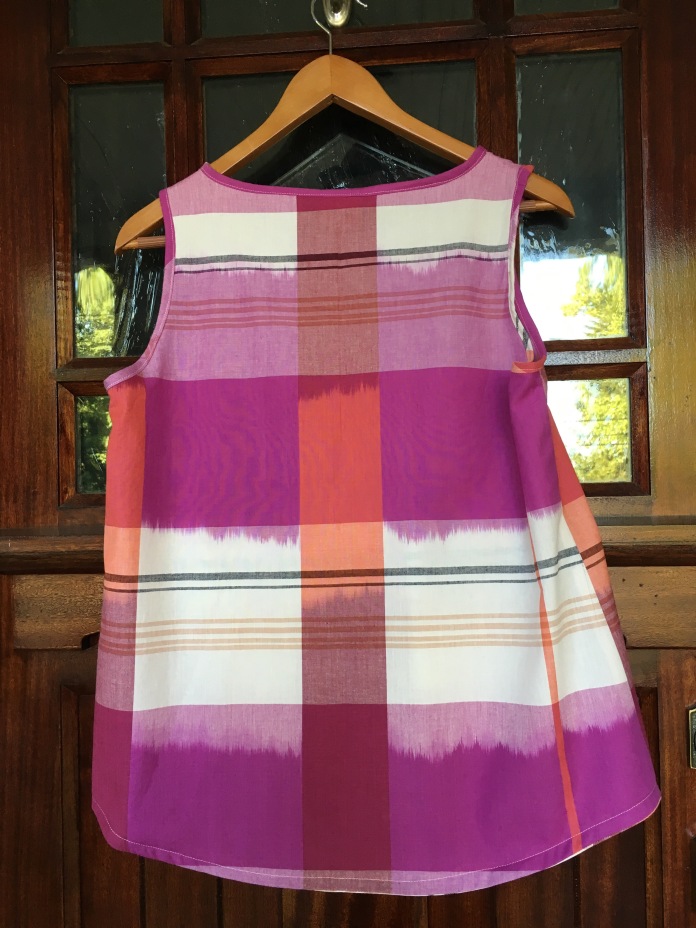 In addition to the details of the other binding method that I use explained in this post and which I used for the hem of this Gemma below, Rae has three fabulous binding tutorials that clearly illustrate several different approaches to the right way to do it here. I highly recommend them.
  #beforethebinding picture below.
 I have several other Gemmas with pink either in the main fabric or as the planned binding and will be sharing them over the next few weeks as I find time to #finishallthegemmas.
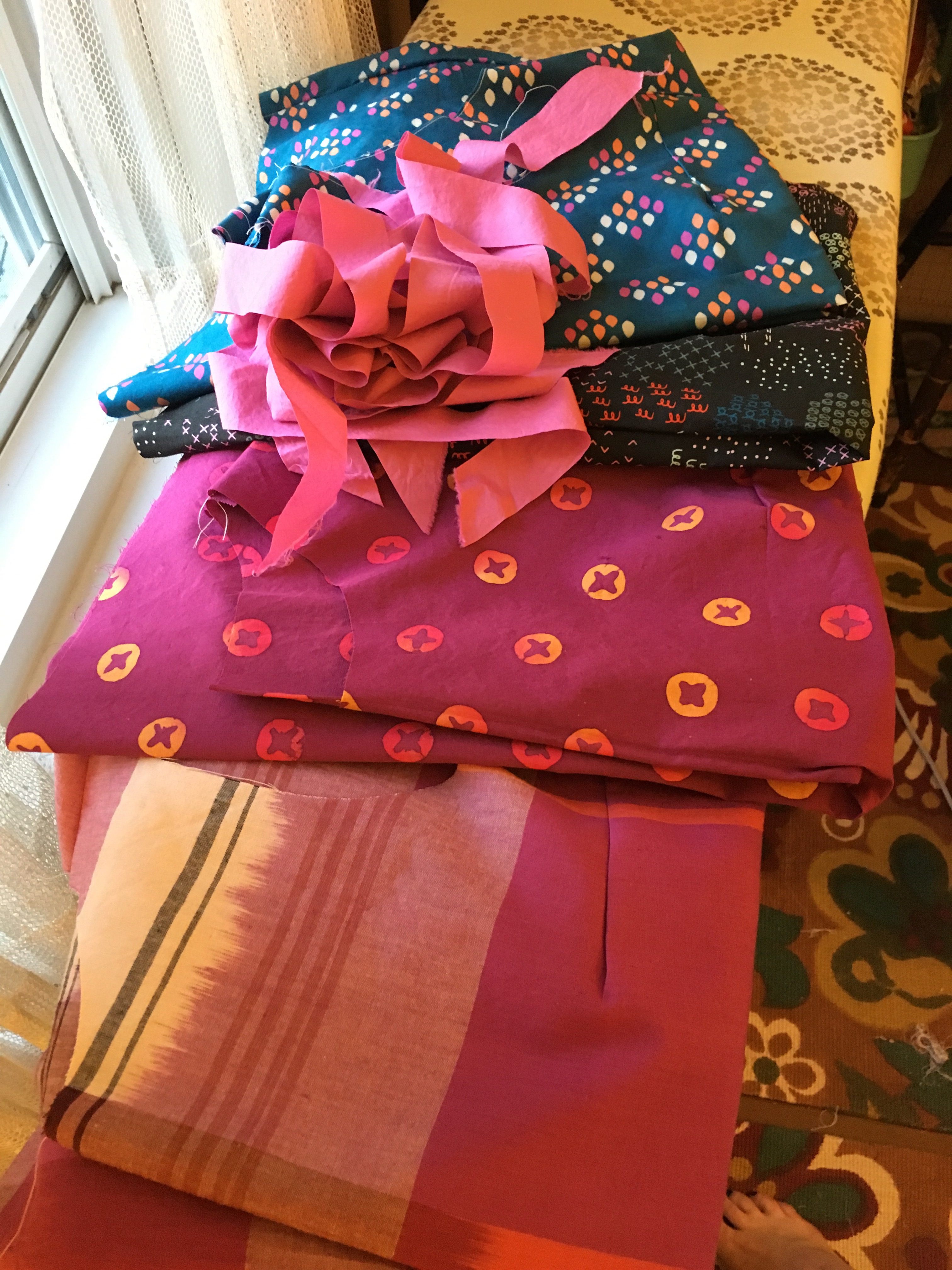 So this one will be in the mail tomorrow on its way to the Midwest. Hopefully it is still warm enough for it to get wear this season. Who needs Stitchfix when you have Stitchmom? (just kidding, Stitchfix is awesome too!)
 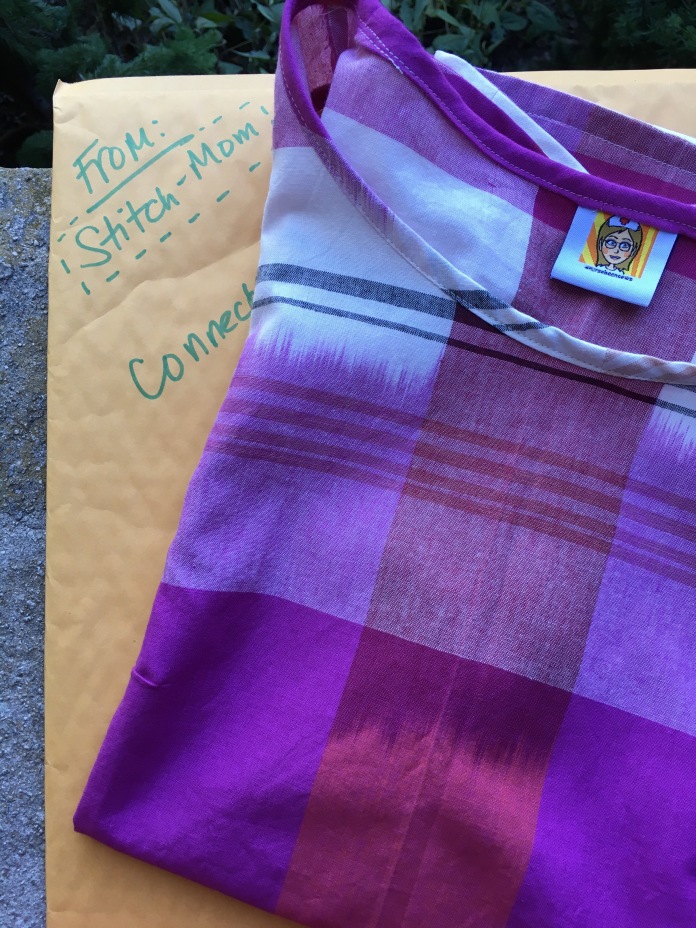 You can link to my previous posts about the Gemma Tank here, here and here.

Gemma Tanks using Upcycled Plaid Shirts
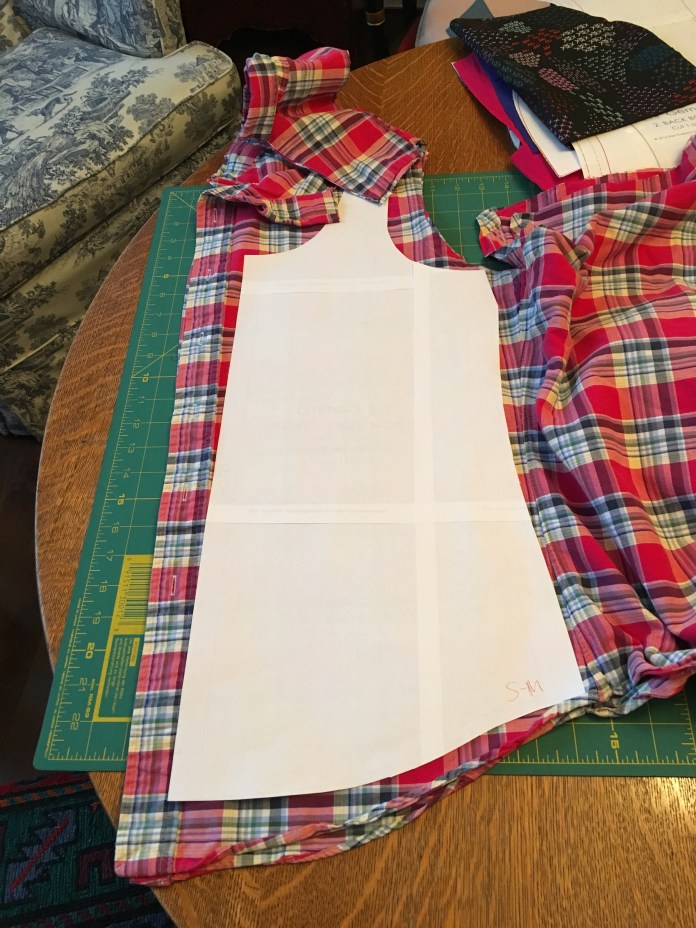
Last winter my husband and I spent a bit of time in our local Goodwill Thrift stores buying old sweaters for an afghan project for my stepdaughters which you can see in this post and I came across a plaid men’s oxford shirt in great shape. I liked the colors and thought it would be good for binding or facings and then it sat on my shelf until about a month ago when I discovered the Gemma Tank pattern by Made By Rae and embarked on a month-long tank-making frenzy that continues to this day. When I saw this linen version by Rae’s cousin Jess, I thought I would use some leftover woven cotton that has a linen-y look to it (previously purchased at Joanne’s for a Bianca dress that I wear all the time) and use the plaid for the bias binding. But then I realized that I probably had enough of the plaid to make it into its own Gemma, so that is what I did (before binding below).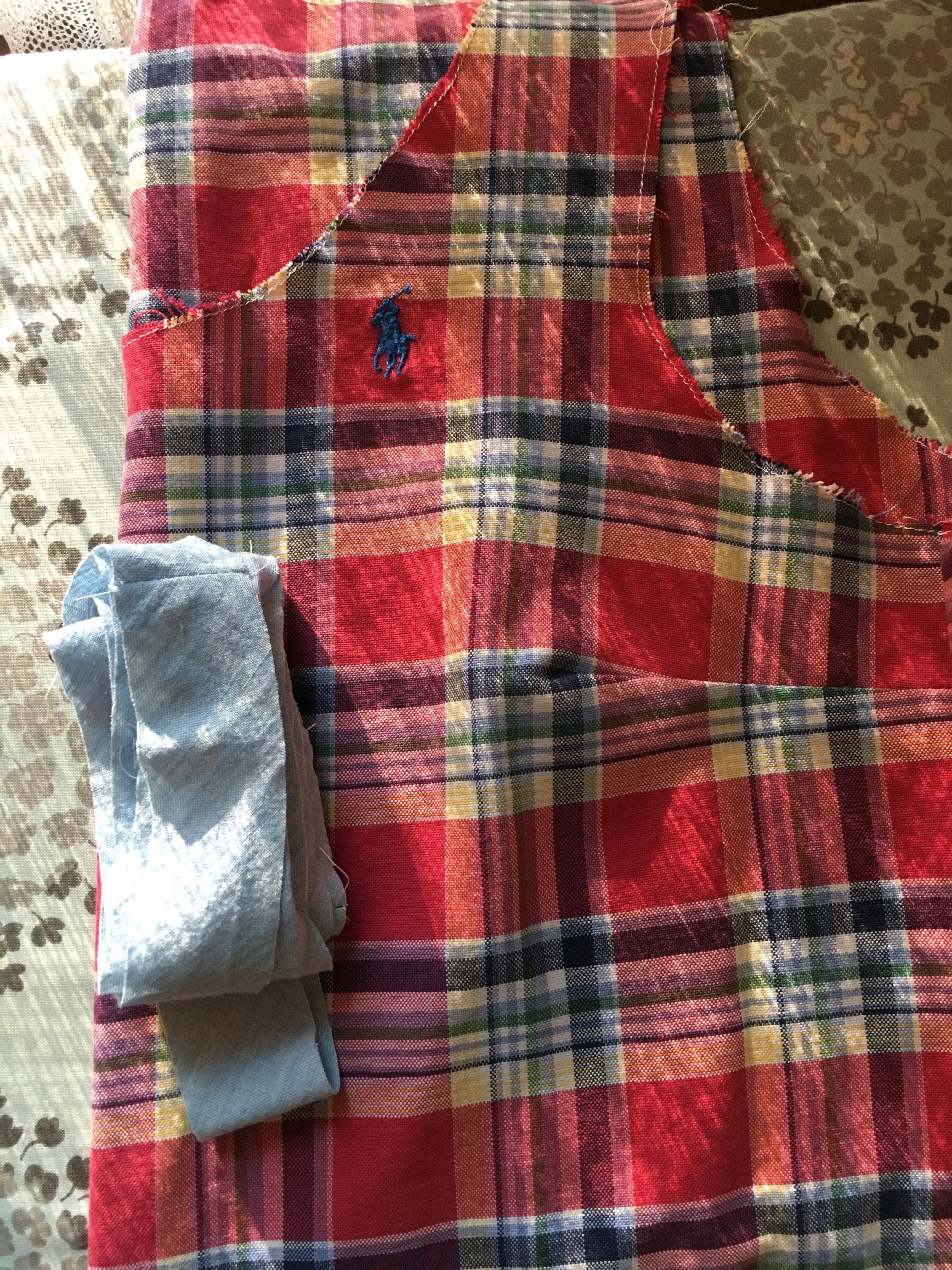 Simultaneously, almost, I cut out the blue woven material to make that version of the Gemma. Although I had planned to use the plaid shirt above to bind the blue Gemma below and some of the blue scraps to bind the plaid, I ended up with another plaid shirt in the mix.
My husband saw how much fun I was having repurposing the Goodwill plaid shirt and gave me one of his from his closet that didn’t fit him. And I liked how it went with the blue as you can see below. I ended up using a lighter blue chambray to bind shirt number one (are you confused yet?) only because I had it leftover from binding my Wood Cut Gemma seen in this post and the extra was on my sewing table and I happened to notice how nicely it went with the plaid-serendipity. My husband’s shirt below (this is the before picture.) Who knew he had such a treasure hidden among the white and blue oxford shirts? Great quality and a perfect match.
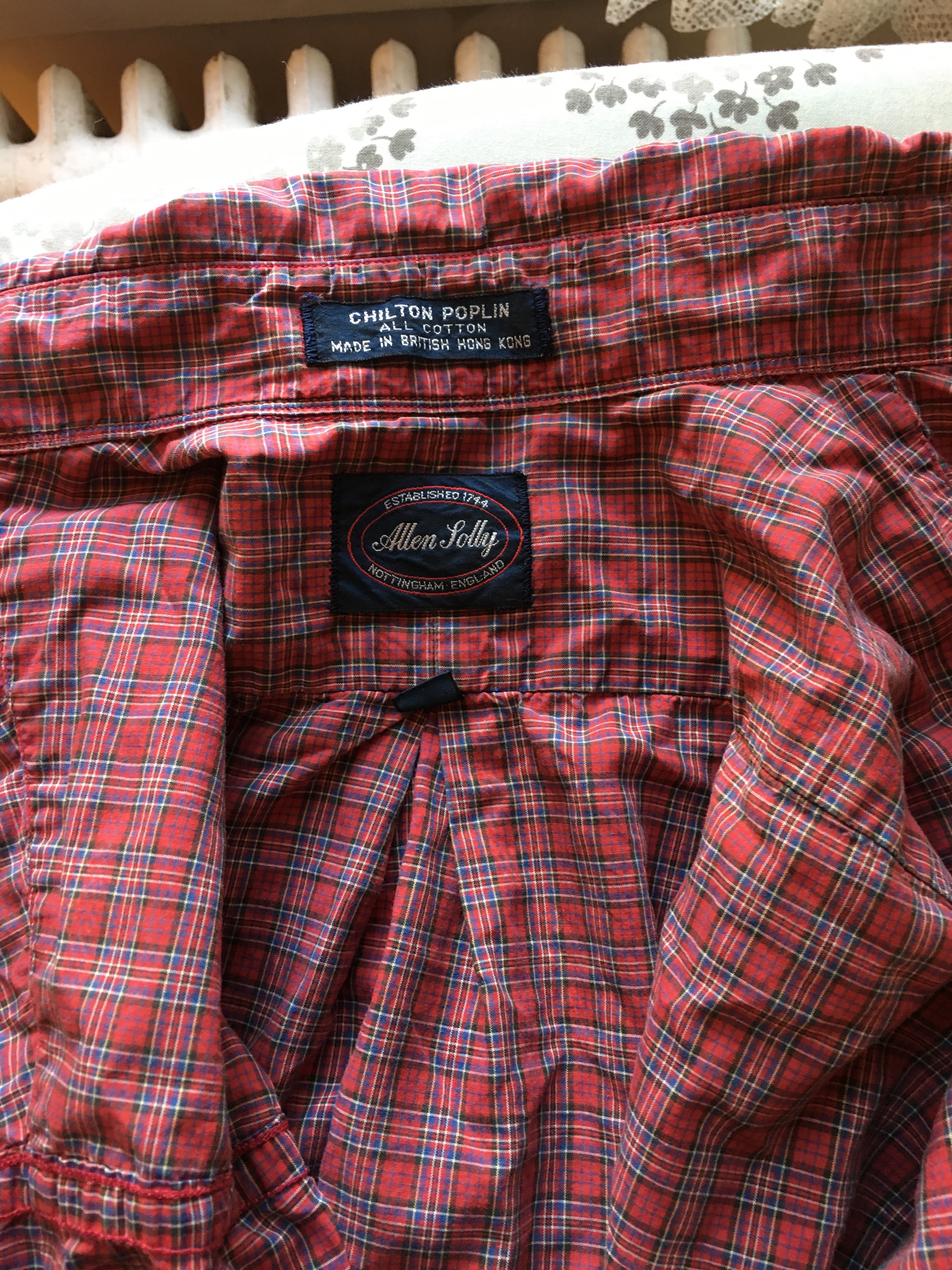 I had both these tanks sewn up and had started the binding several weeks ago but then I set them aside to make some birthday tanks for my stepdaughters (twins) which I will blog about some day. (so cute-both the girls and the shirts)


So in the process of making these shirts, and although I still have quite a few that still need binding, I have had some successes and some not-so-successful results. I previously blogged about my version of the traditional binding that ends up looking like a topstitched binding. But the binding I like best is the version I used for these plaid/chambray Gemmas and for my Wood Cut Gemma and the girls’ Octopus Gemmas seen below.


It resembles the french binding technique that Rae explains (all three of her binding tutorials are terrific) but since I just made it up as I went along, I found that I am doing something different than she teaches (I made these Gemmas before the binding tutorials were available) so I am sharing my approach in case it is helpful to others. First, I usually cut my binding strips 1.5 inches wide, although I believe the light blue chambray below is 1.25. I sew it with right sides together (a mistake I have made repeatedly as I make the Gemmas is to sew the binding to the inside instead of the outside). I don’t pin. I use the presser foot as a guide and I end up with a seam allowance that is between 1/4 and 3/8 of an inch. 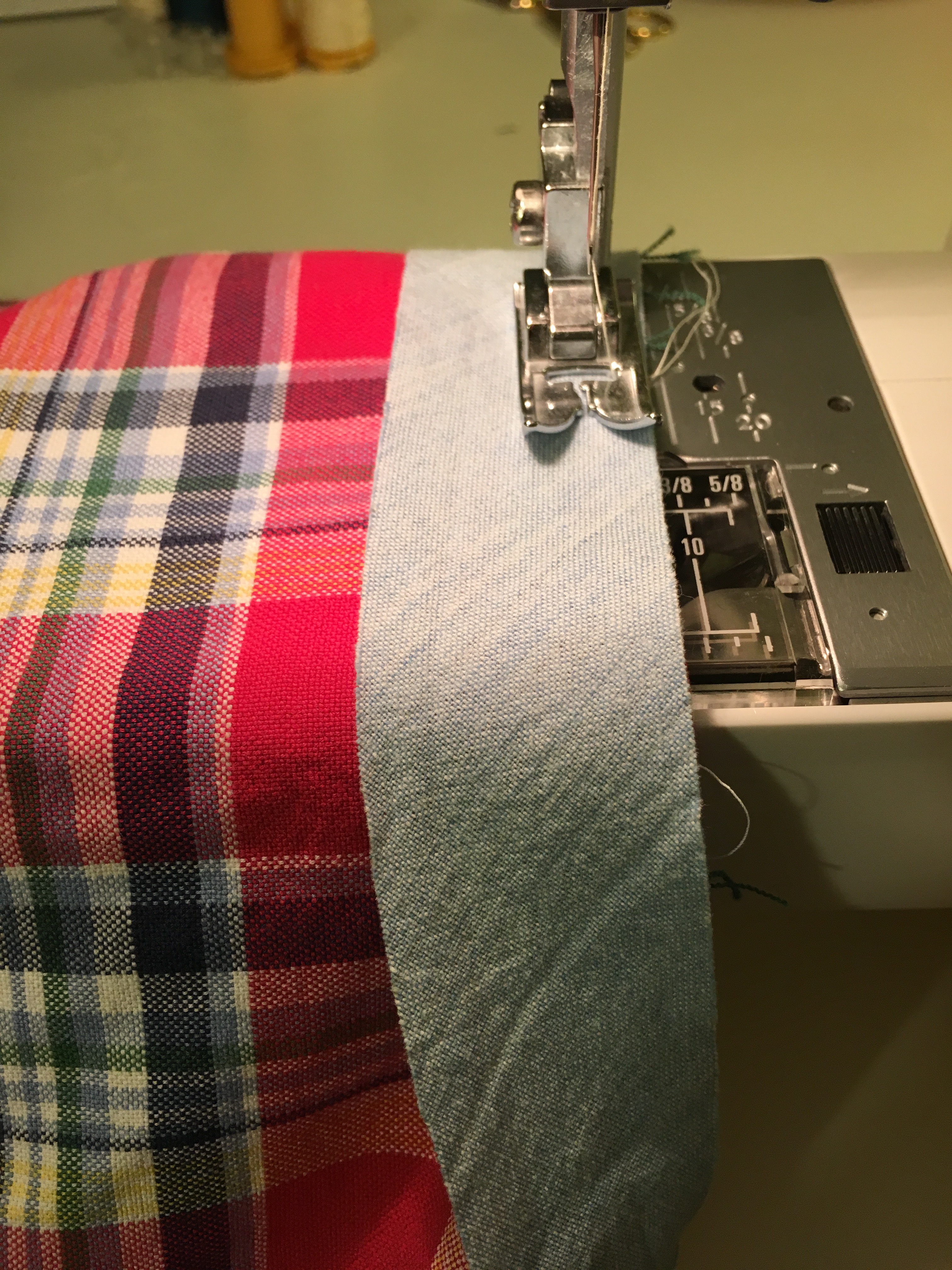 I initially tried the method of overlapping the ends that Rae describes in her pattern but I was not happy with the results so I leave a tail when I start sewing so I can stop a couple inches before the end and sew the ends together. Rae shows how to do this in her french binding tutorial. By the way, when I make binding tape, I just join the pieces using straight edges, I don’t cut the 45 degree angles that the tutorials recommend. I don’t find that there is enough bulk to bother me and it is quicker. Sacrilege I know.
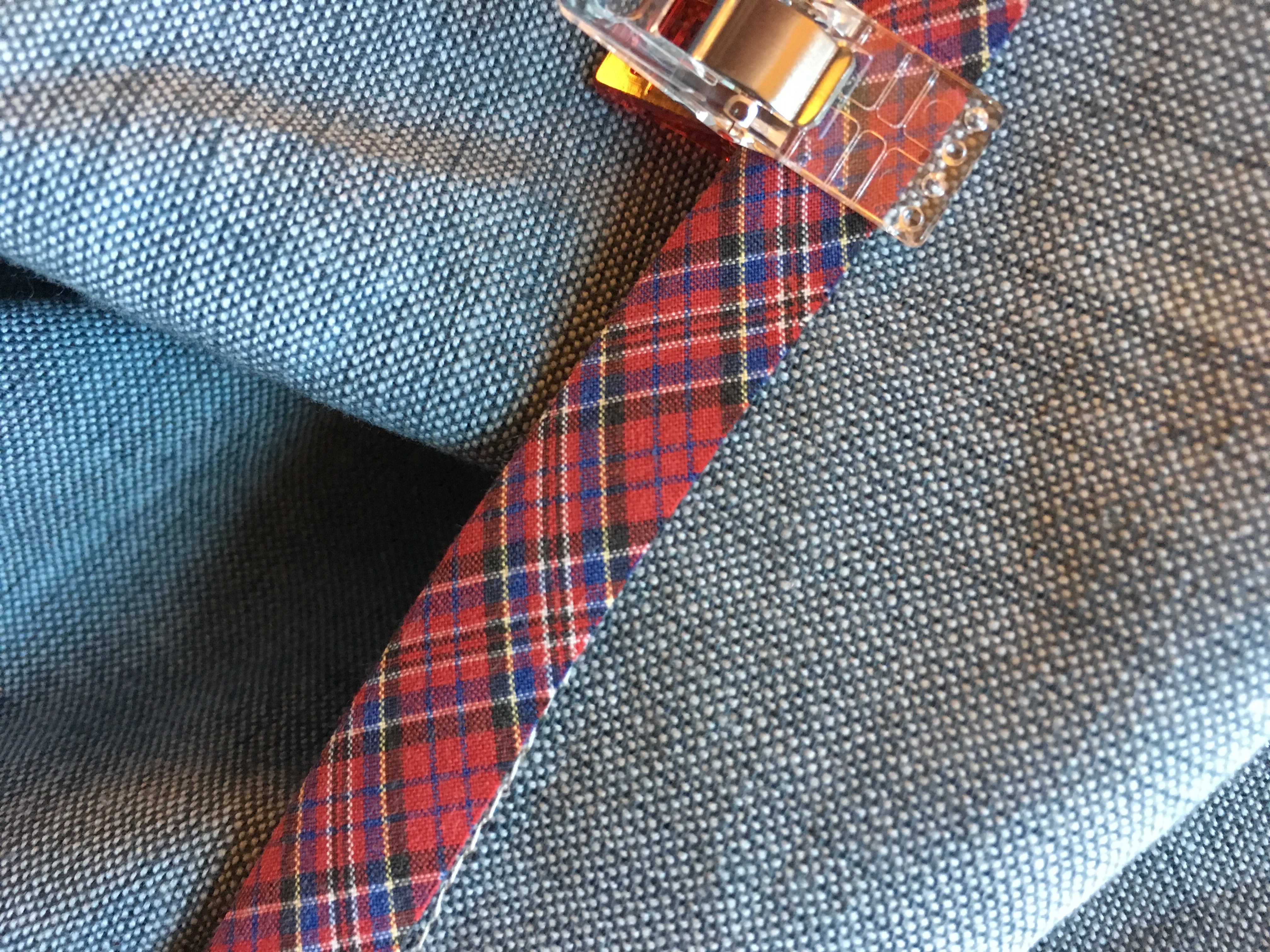
 As you can see above, I don’t iron the fold into the binding tape prior to sewing it to the garment, which is different than the tutorials. After sewing the seam, I gently press the seam and then press from the wrong side of the garment and fold the binding tape inward so the edge meets the stitching line. I will show more pictures of this below. Then I iron and then I fold again using the seam where the shirt edge meets the binding and so I have a sort of tri-fold sandwich. Then I use wonder clips to hold it in place. I try to make the width of the folded fabric even.
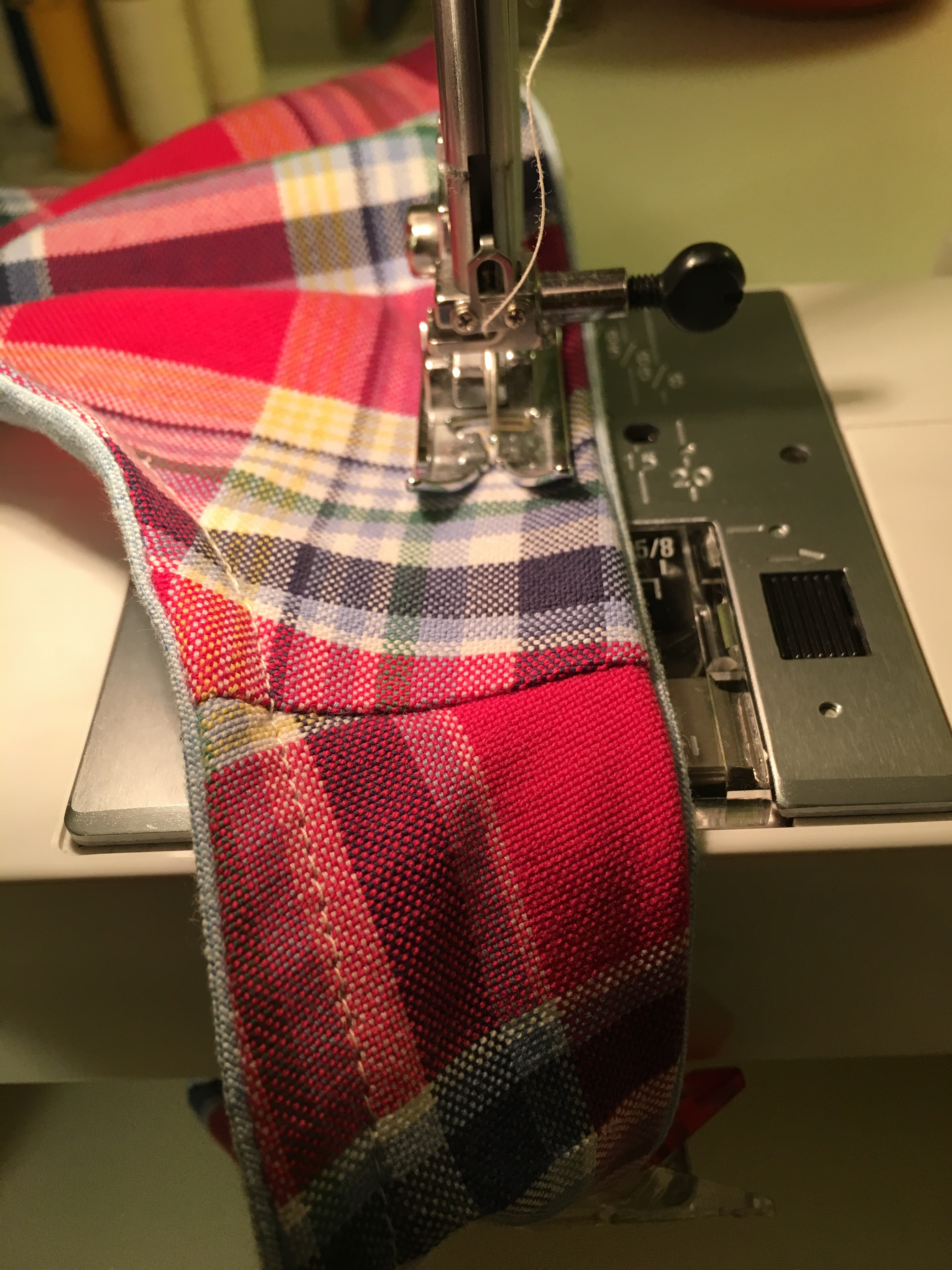
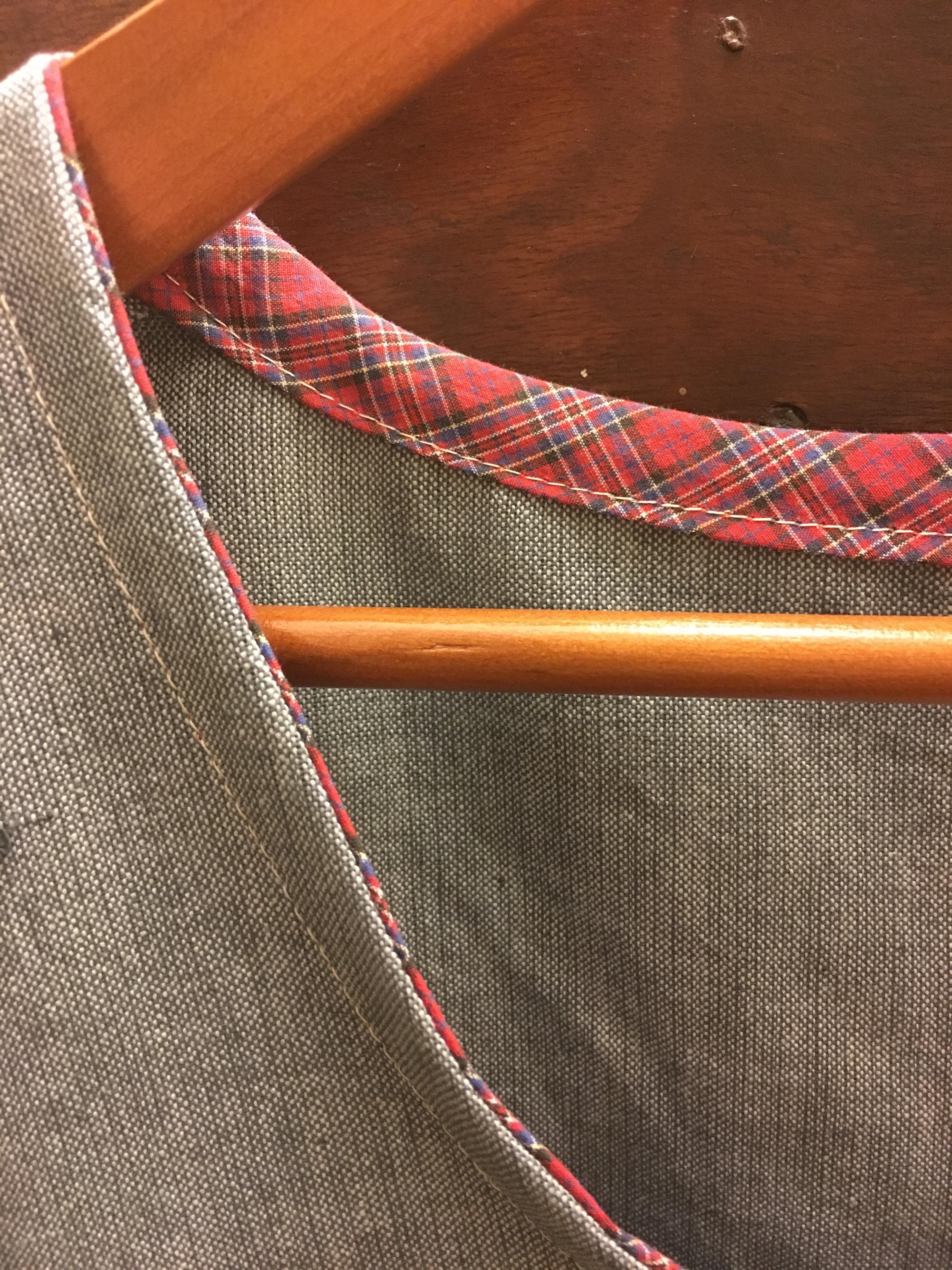
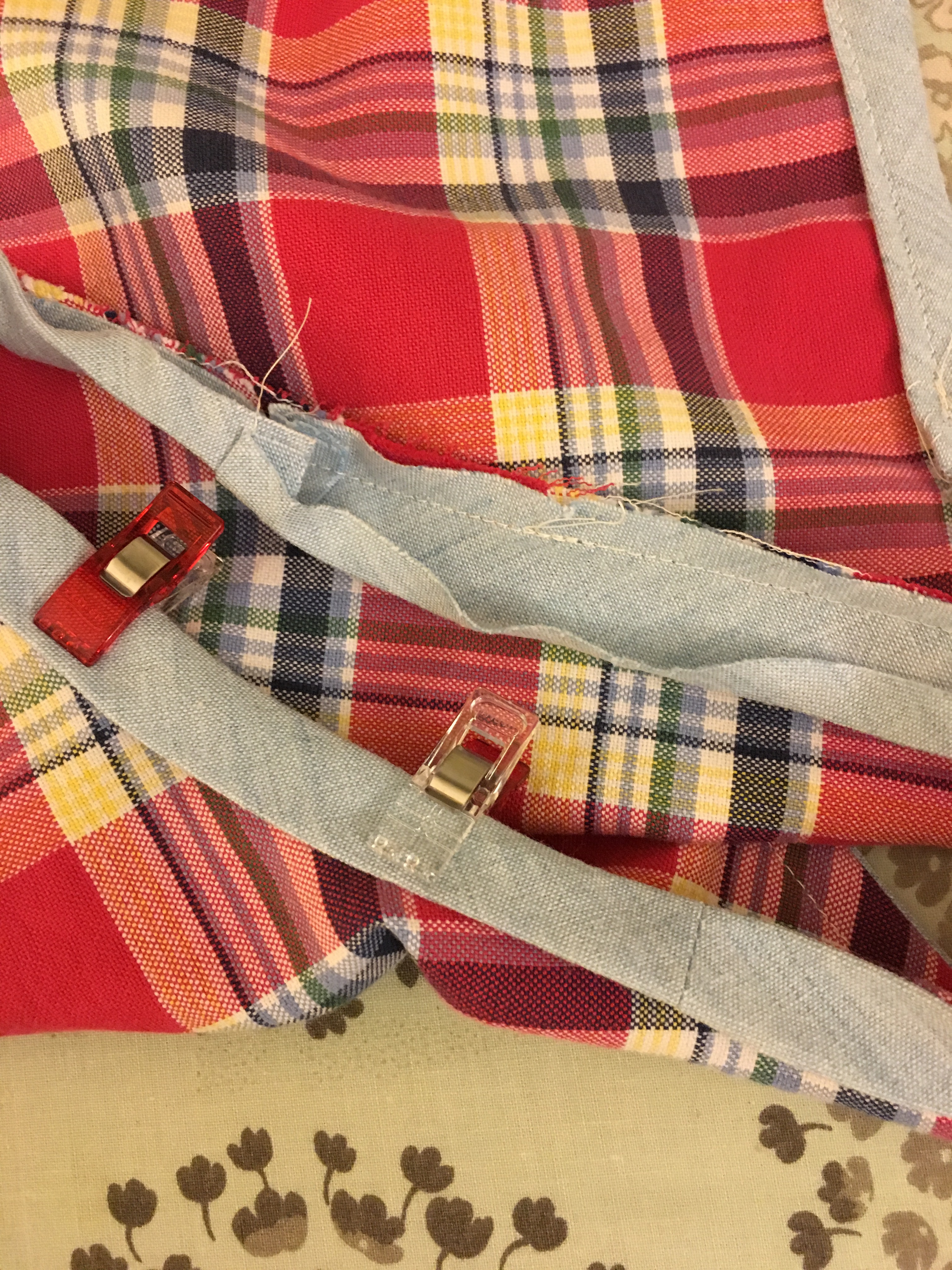 Then I flip the garment right side out and check to make sure that the fold is even and sometimes I iron a bit but I don’t go crazy ironing if it is a neckline or arm hole so as not to stretch the curve out. Then I sew from the right side, which is the opposite of the french technique Rae explains where she sews from the inside. I do this because I like the look of the stitches and I want them to be as pretty as possible and I find that my stitches are not as pretty on the underside. I also do it because I usually like to shift the fabric fold just enough to create a bit of a an edge that ends up looking like piping. I learned to do this by mistake when I made a black lined washi dress for myself. I then did it on purpose when I made a similar dress for my sister. It is an easy thing to do and I am really happy with the little extra zing it gives the garment. This is what it looks like below. I basically hold the fabric fold and feed it into the machine so I have a sense of where the thickness is to be able to catch the whole fold and have a relatively even width between the stitching line and the edge of the garment. I don’t always have exactly the same amount of contrasting material-fake piping showing but I think it ends up looking fine.
 In terms of my approach to upcycling, I did the opposite from my approach to my upcycled Beatrix shirt where I used the back for the front and the front for the back. In this case, I pieced the front from the two sides of the front of the oxford shirt and cut the Gemma back from the shirt back. I had to do this because of the size of the back pattern piece and the logo which was on the front of the shirt, seen below.
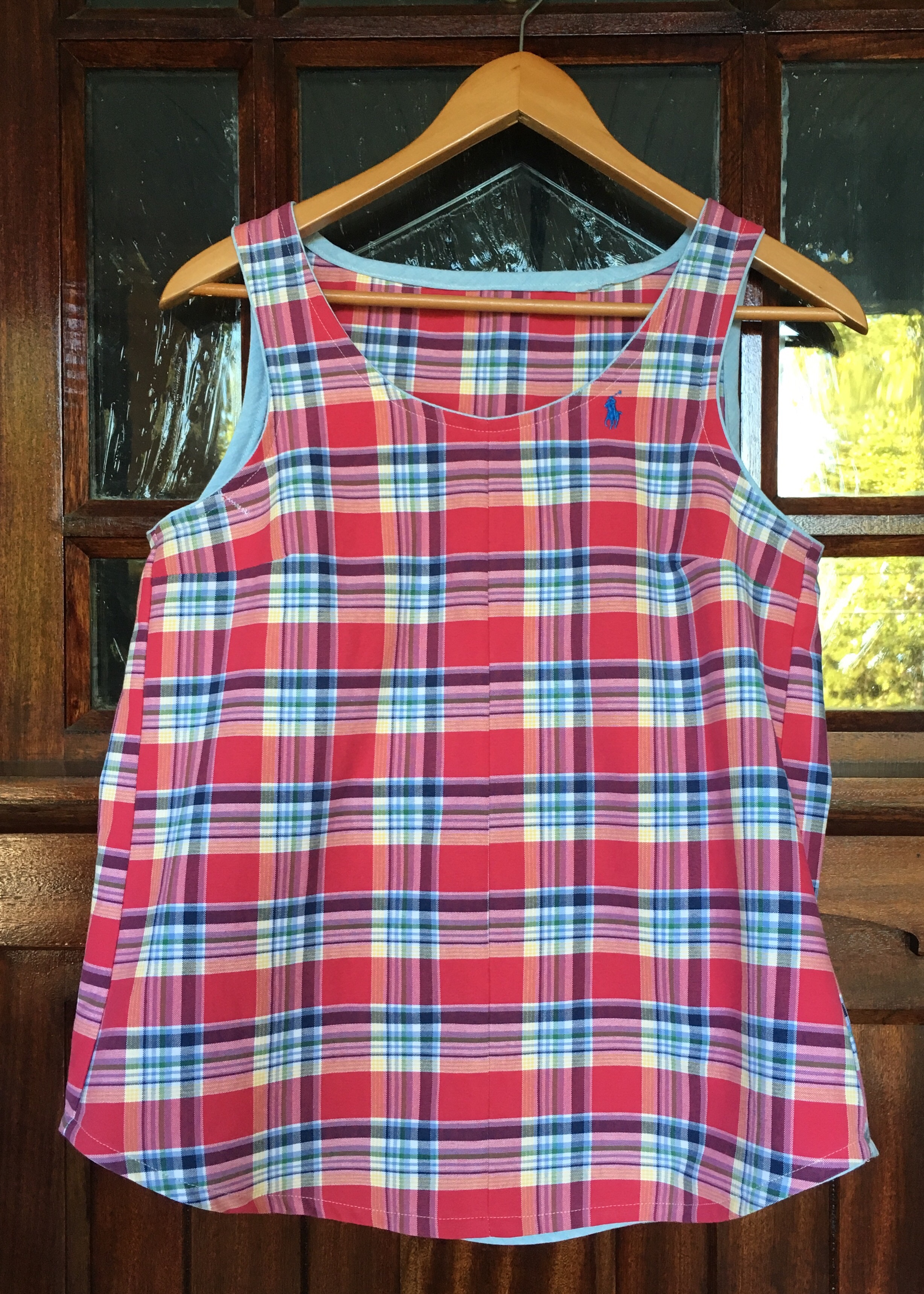
 Luckily there was no pocket to contend with but there was the polo player who ended up in just about the right spot. I really like the contrasting blue edge around the neck and arms.
 Back of shirt below. I cut the back from the back of the shirt. I needed the big piece because the Gemma tank neckline in back goes up high. I wouldn’t have had enough to piece it. Also the polo player.
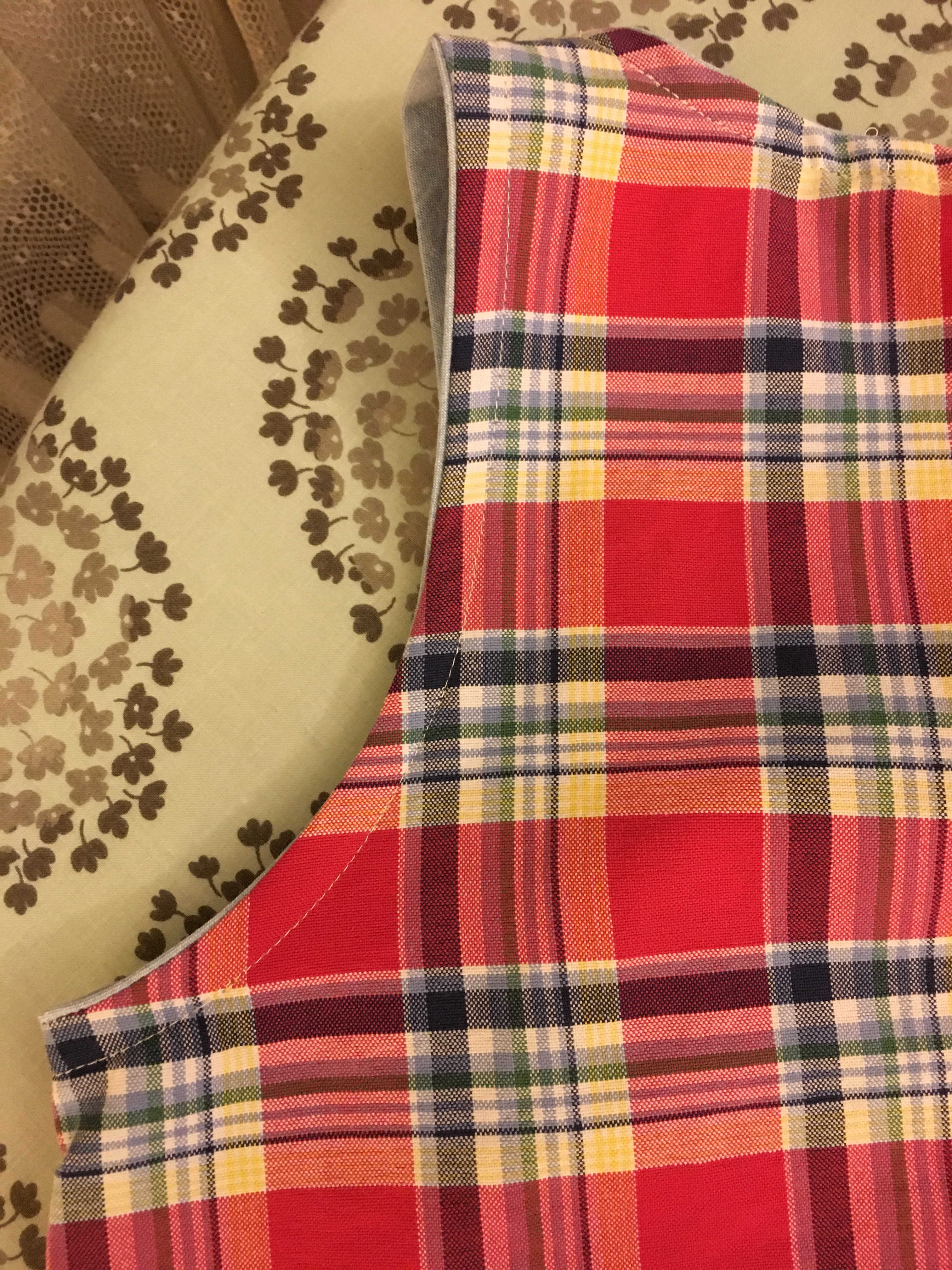 I did the binding for the chambray-like tank the same way. I cut 1.5 inch strips and followed exactly the steps as above except that I didn’t shift the fabric as much. In this case, I was ok with some of the plaid poking out but I wasn’t going for the look of an edge all the way around the seams since I wanted the tank to be a neutral piece I could layer with many colors. I felt a little bad about cutting into such a nice shirt but it wasn’t being worn. It is a really thin, fine dress shirt cotton poplin and was really easy to work with. I have plenty left over for more projects.
 Same steps.
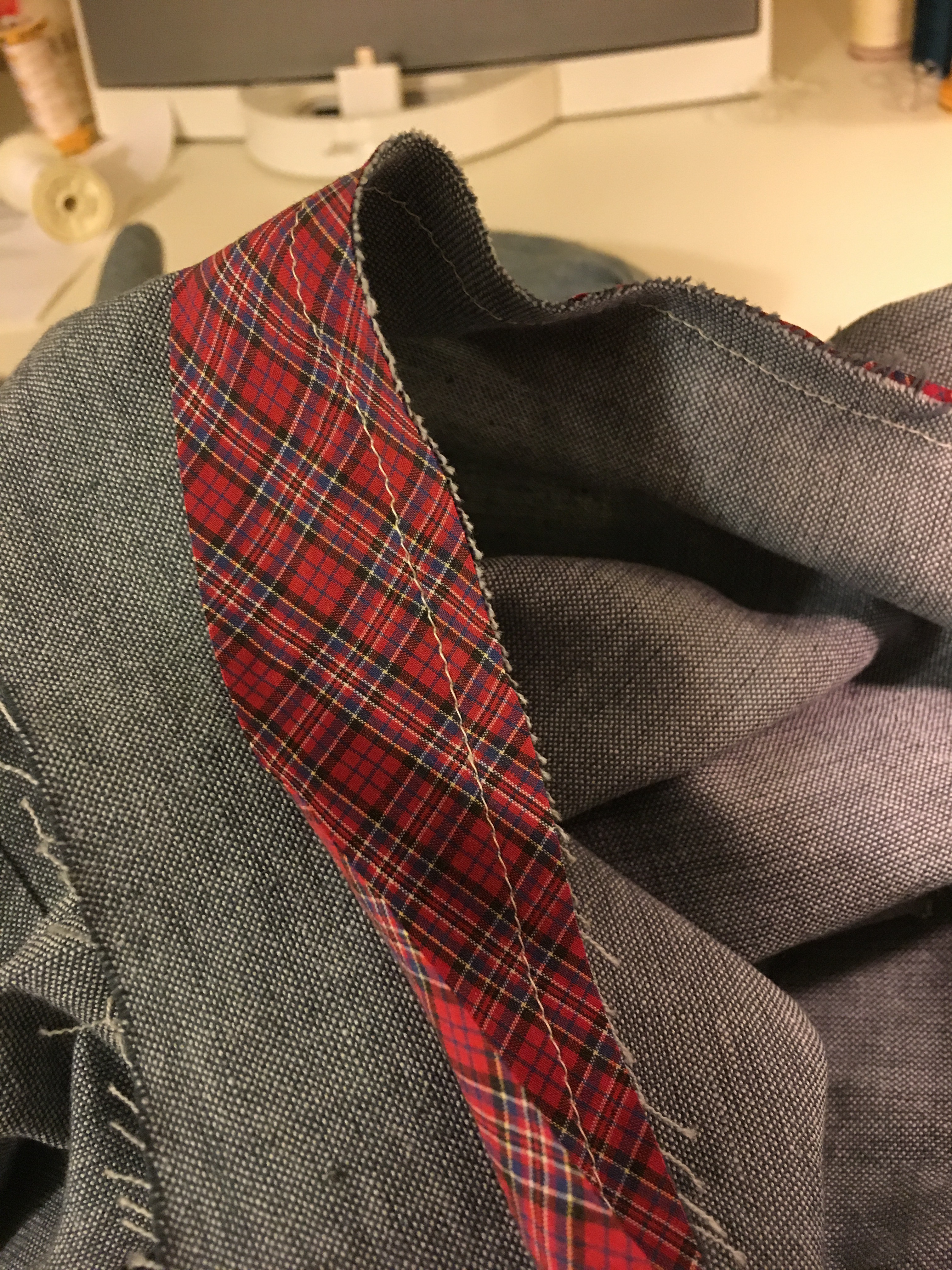 After sewing the first seam with the binding ironed up (this is the outside of the shirt) before turning garment inside out to make the fabric sandwich.
 Finished neckline below with binding sewn in place.
 Both versions.
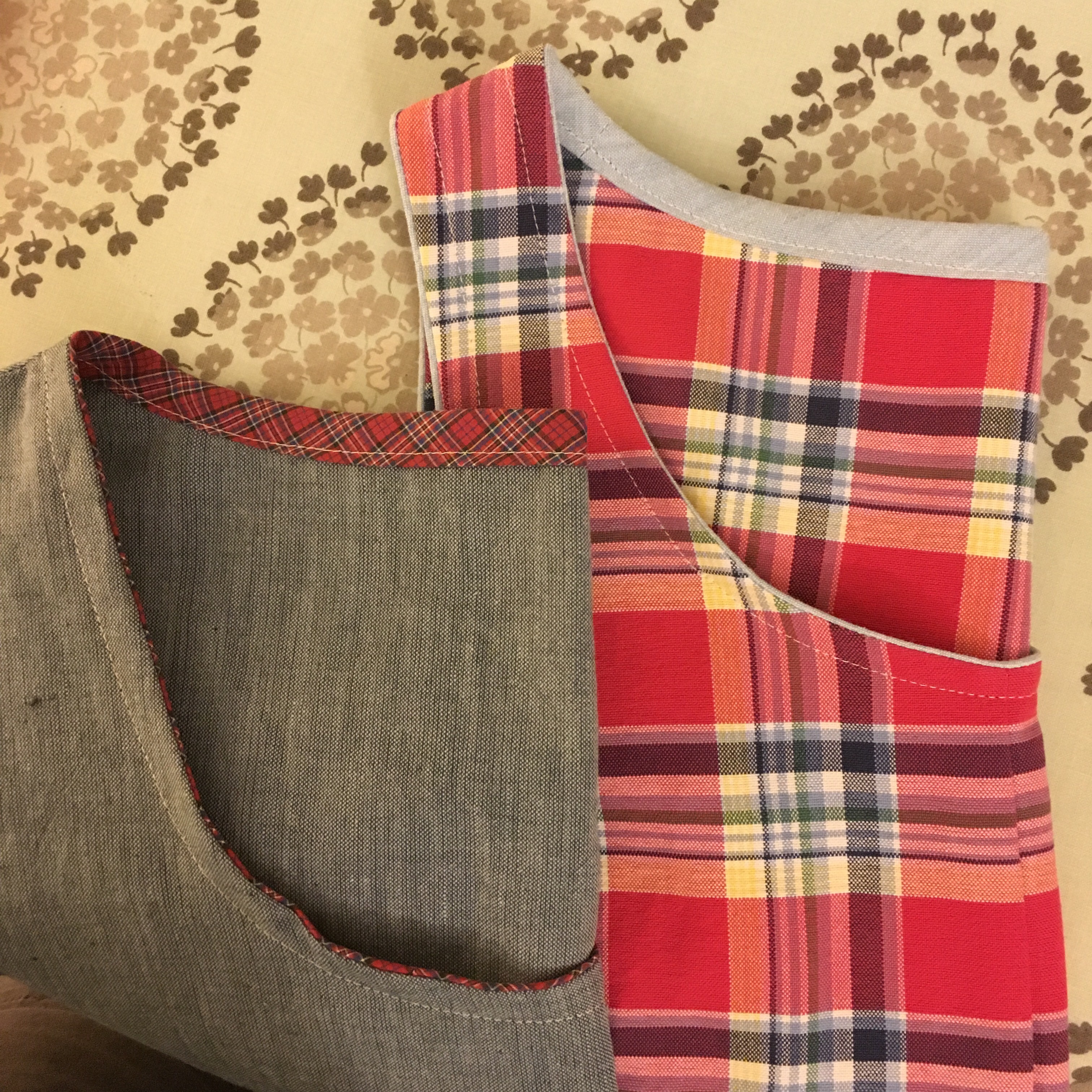 Another view so you can see the blue edging.
 Applying binding to the hem. You can see how the front seam doesn’t line up exactly in terms of plaid matching but it is pretty close.
 Another view of how I line up the edge with the seam when making the binding sandwich.
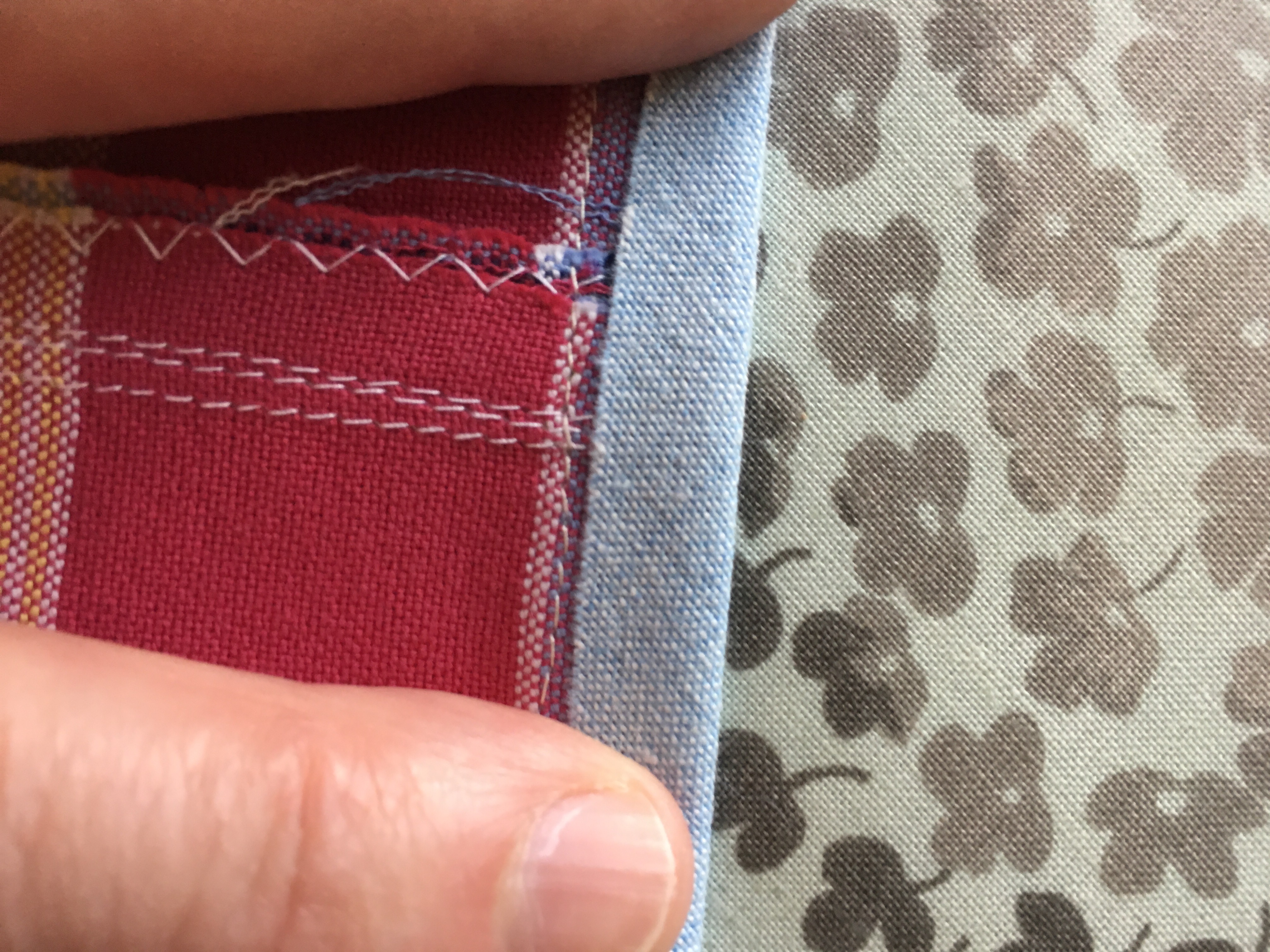 So many pictures (I went a little crazy).
 I ended up sewing a couple of lines of stitching when I joined the front pieces in an attempt to better match the plaid. Not the neatest but this is going to be a hang out on the weekend Gemma so I wasn’t a perfectionist.
 More pictures showing the front seam (wonder clips are a good investment btw.)
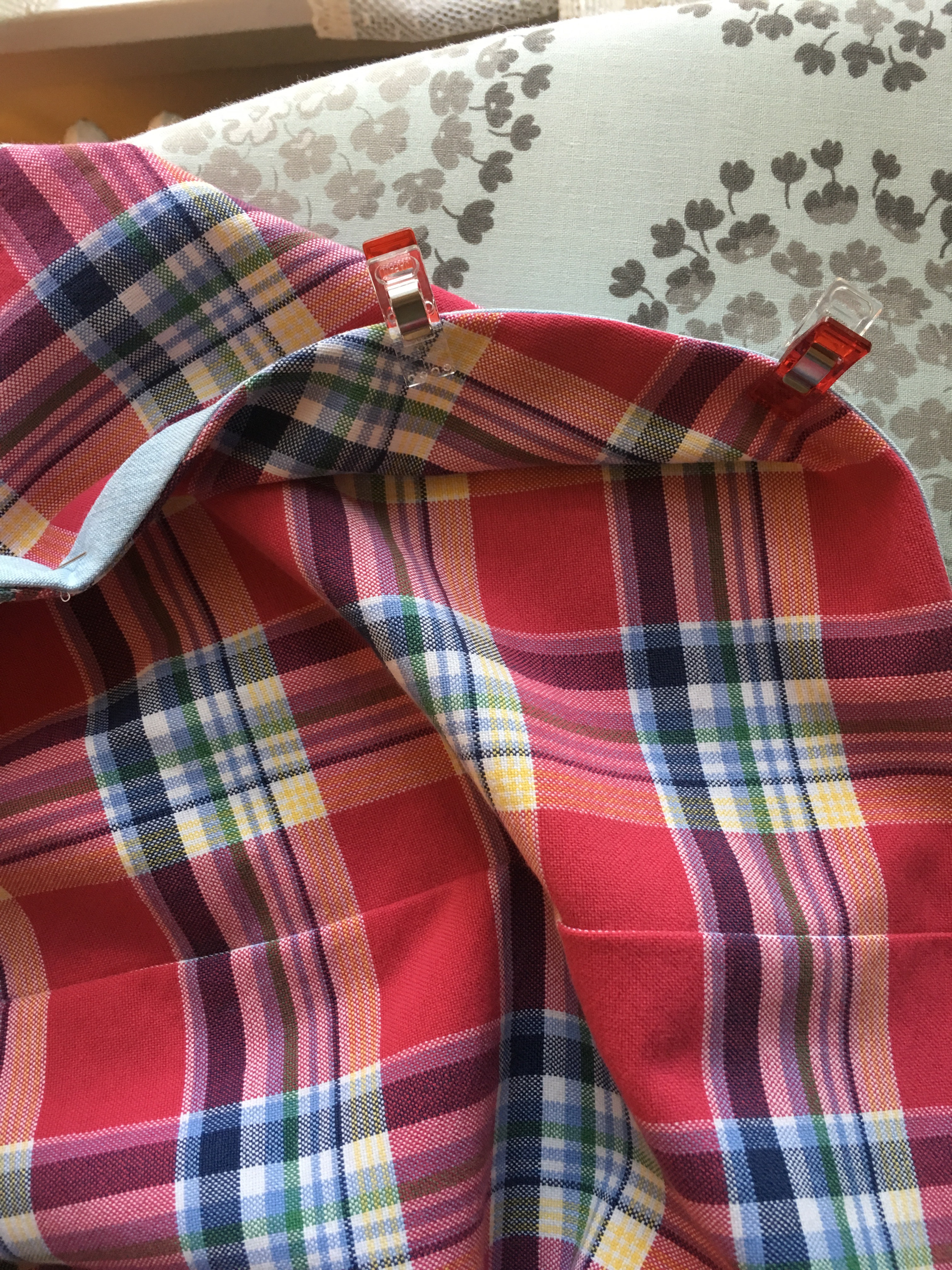 More binding close ups.
 Front door pictures of finished shirts.
 Sadly I cut a small bit of the fabric with my rotary cutter by mistake in my haste when I cut out the front. You can see a little repair I did under the arm hole with some interfacing and some zigzagging. It isn’t really noticeable when being worn.
 And as worn. Thanks to my daughter the photographer. Front view.
 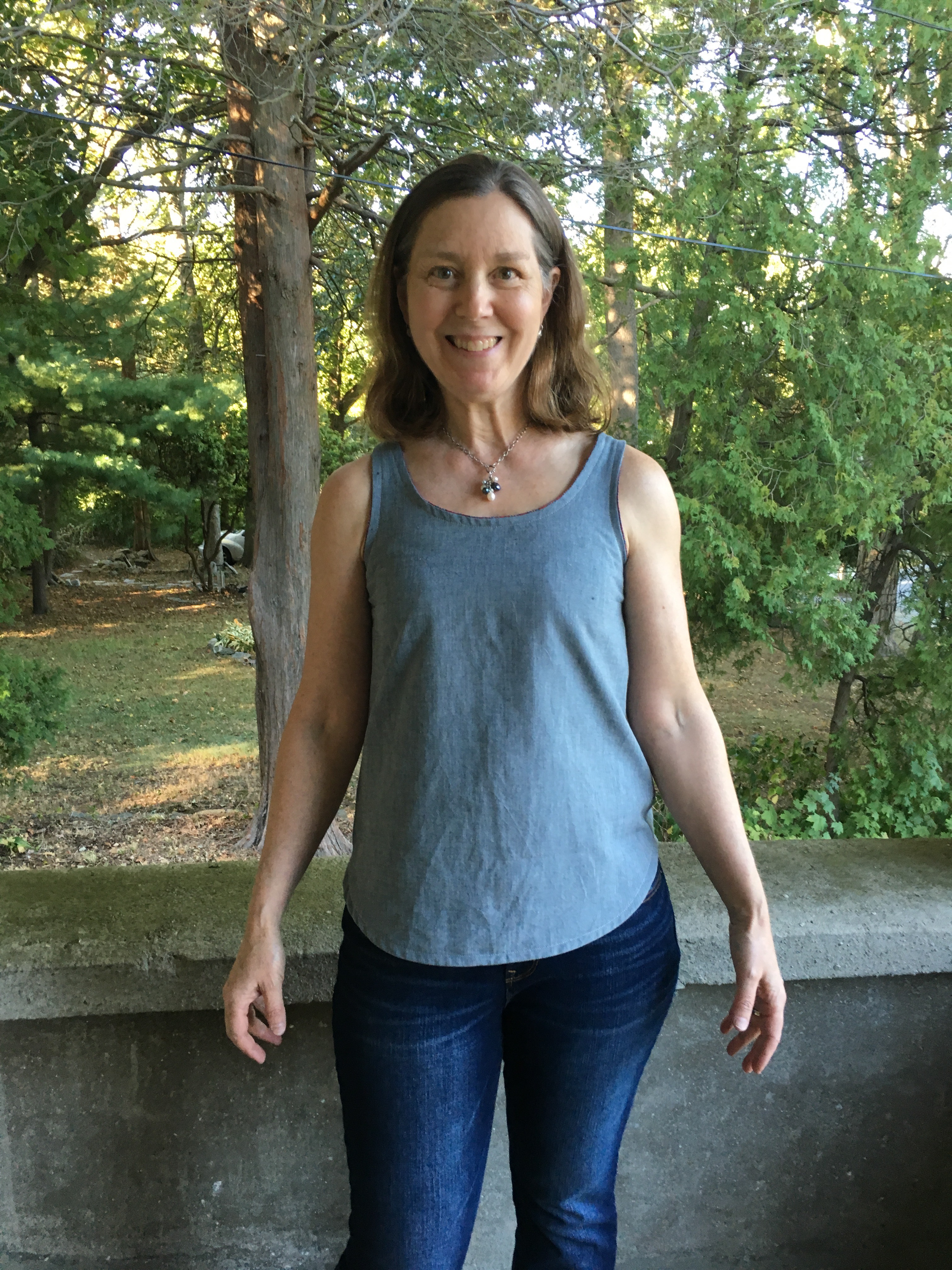 Both of these are cut between the medium and small line on the pattern using the scoop neck. Perfect with jeans.
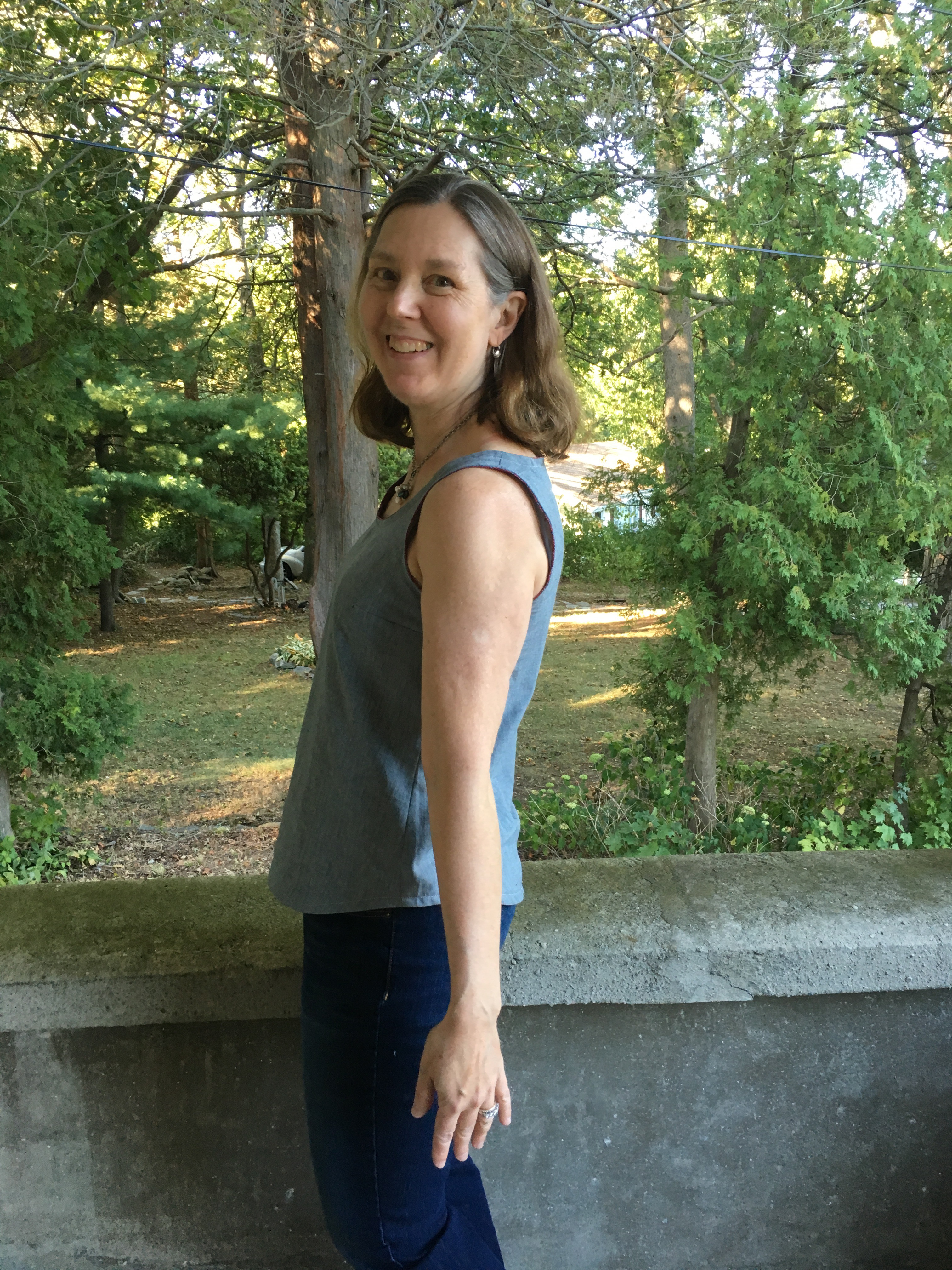 Side view and back view.
 And version 2. Pretty good for upcycling right? Run, do not walk, to your local Goodwill.
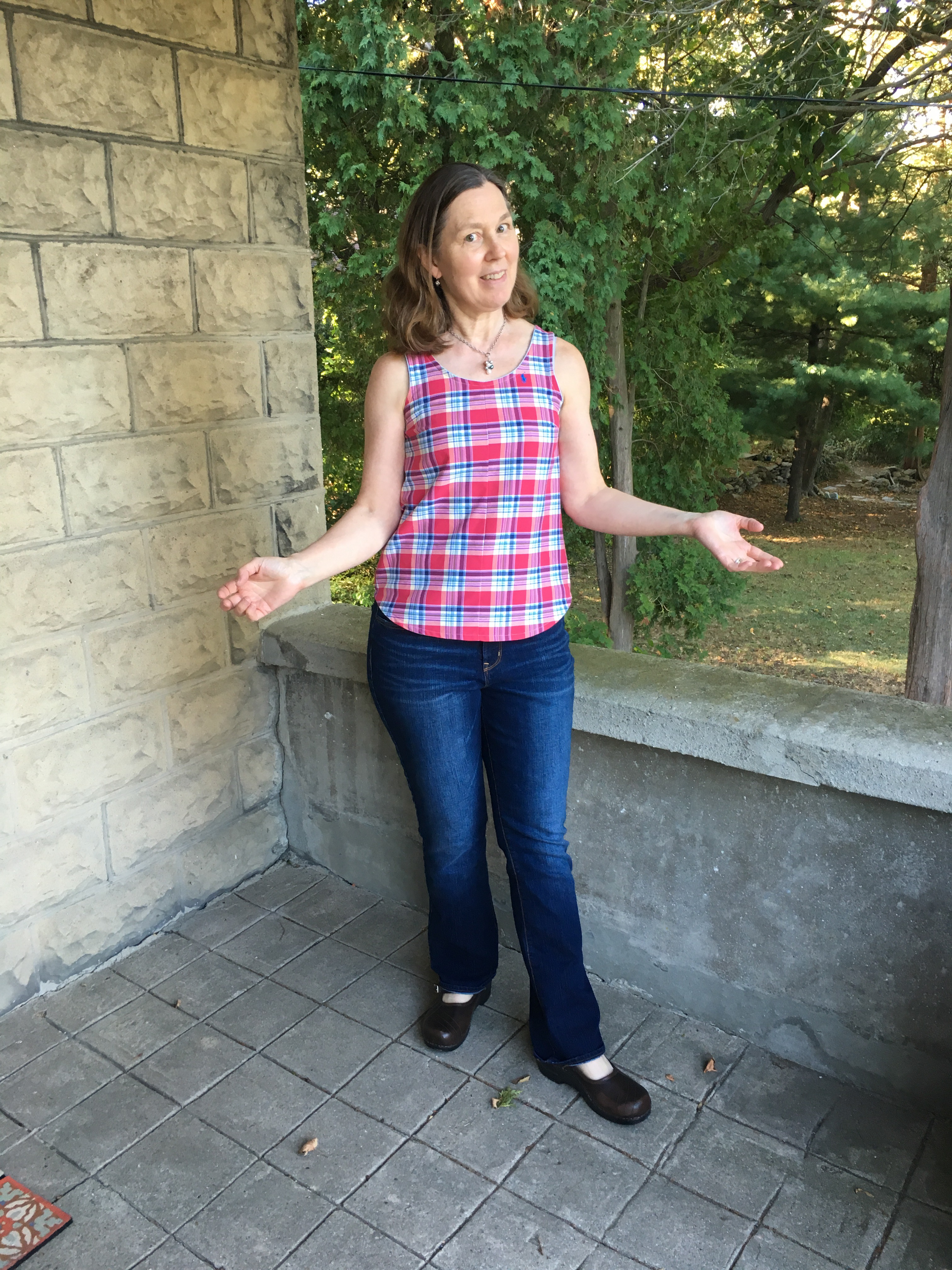 Side view.
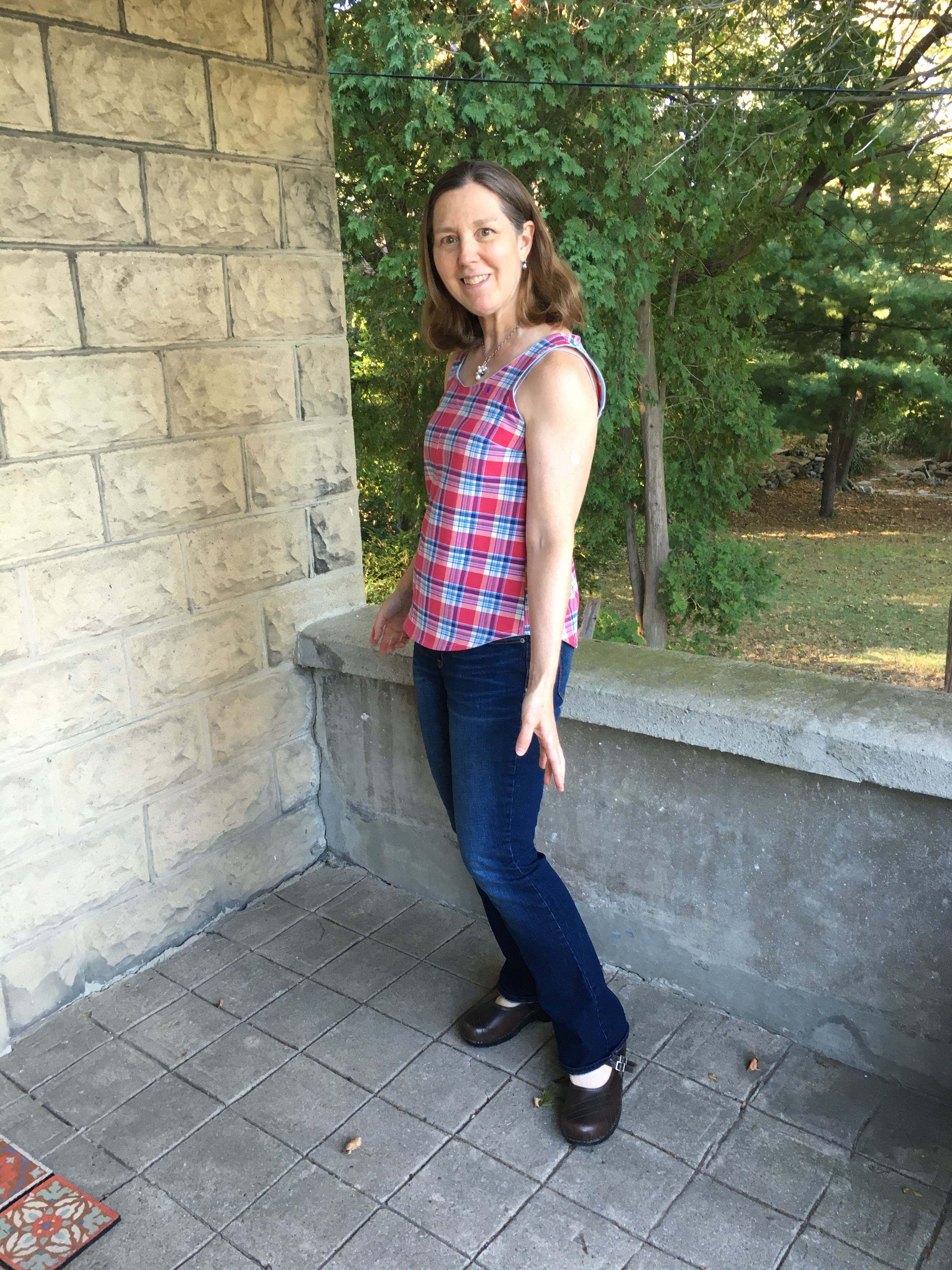 Back view.
 Love these shirts and love this pattern!

Bias Binding my Gemma Tanks: the Good, the Bad and the Ugly-Part 1 of many
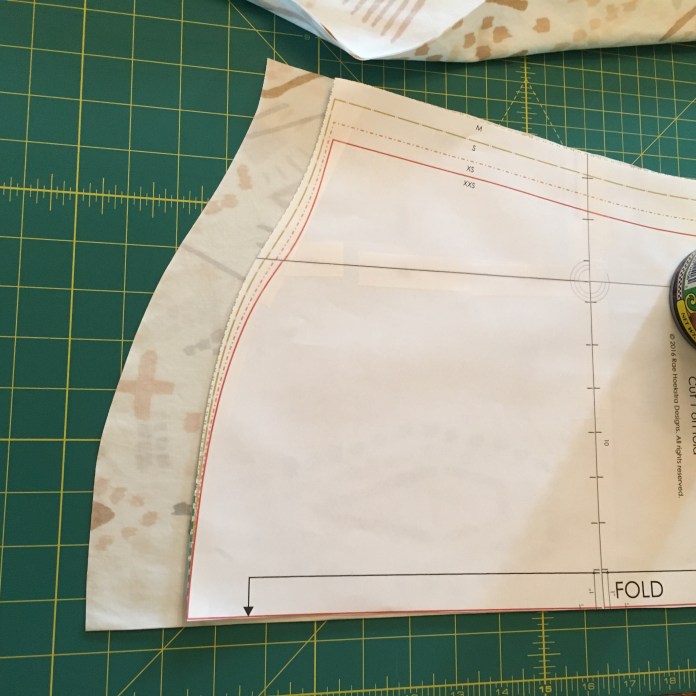
The first Gemma Tank I made was this one. Pictures of it as worn by me here.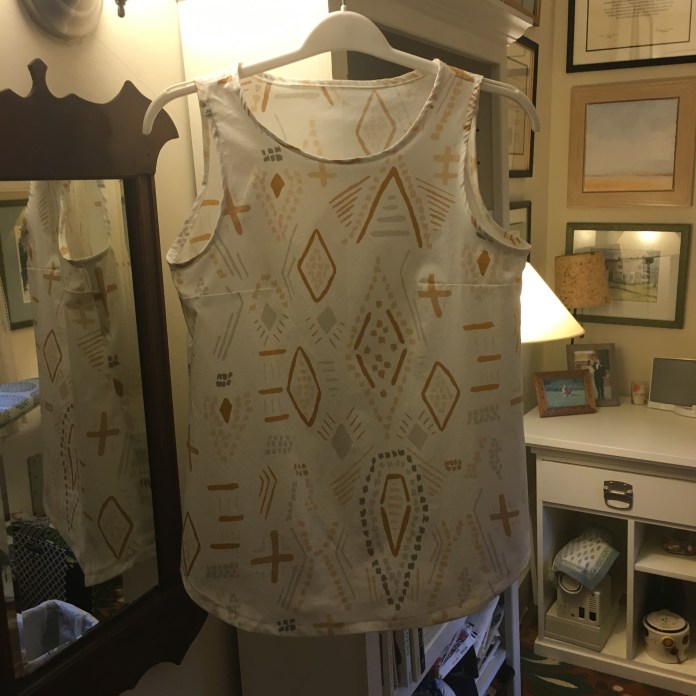 I cut a Medium with the higher neck option, although I shaved a small bit off the front of the neck. You can see approximately how much I took off below although the picture below is a different Gemma (made the same way). I just slid the pattern down and cut a bit lower using the same curve so that the edge would be below the collarbones.
 I also lengthened it by approximately two inches.
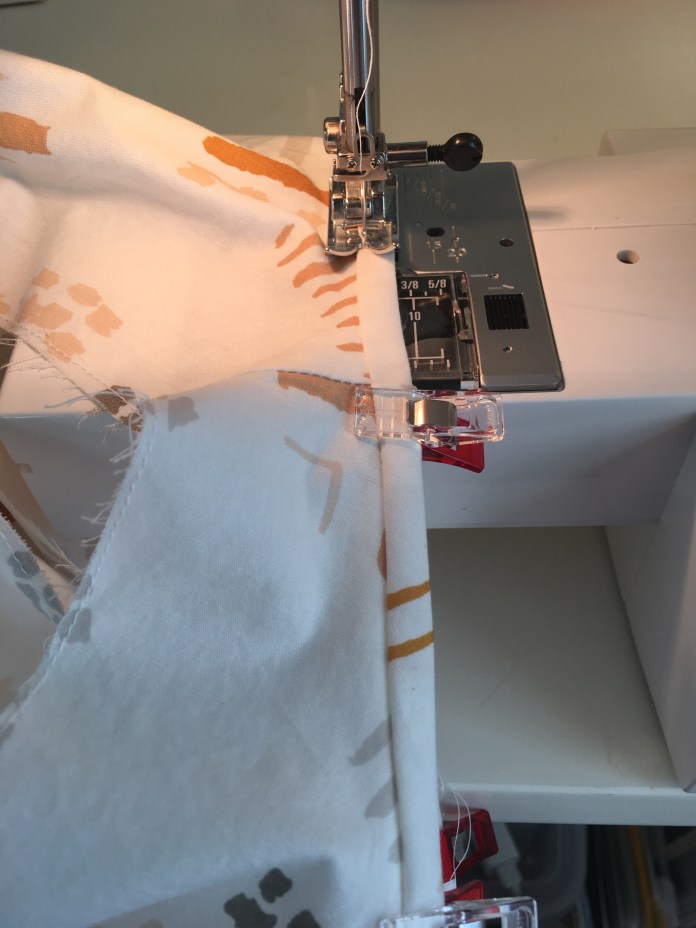
  I mostly followed the directions for the bias binding using the traditional method with two changes: I cut my bias strips 1.5 inches instead of 1.25 since I sometimes find I don’t catch the whole edge with the narrower strip and I sewed from the front side on the edge of the binding rather than in the ditch. I find I can line things up better that way and I like the look of the stitching. You can see the position of the needle below. When I initially sew the binding to the edge, I use my presser foot as a visual seam guide and it is about 3/8 inch so my whole binding ends up being a bit wider.
  I used this beautiful cream colored Art Gallery quilting cotton by April Rhodes. I love this line and had previously made a Washi Dress with the same fabric in the green colorway, seen below.
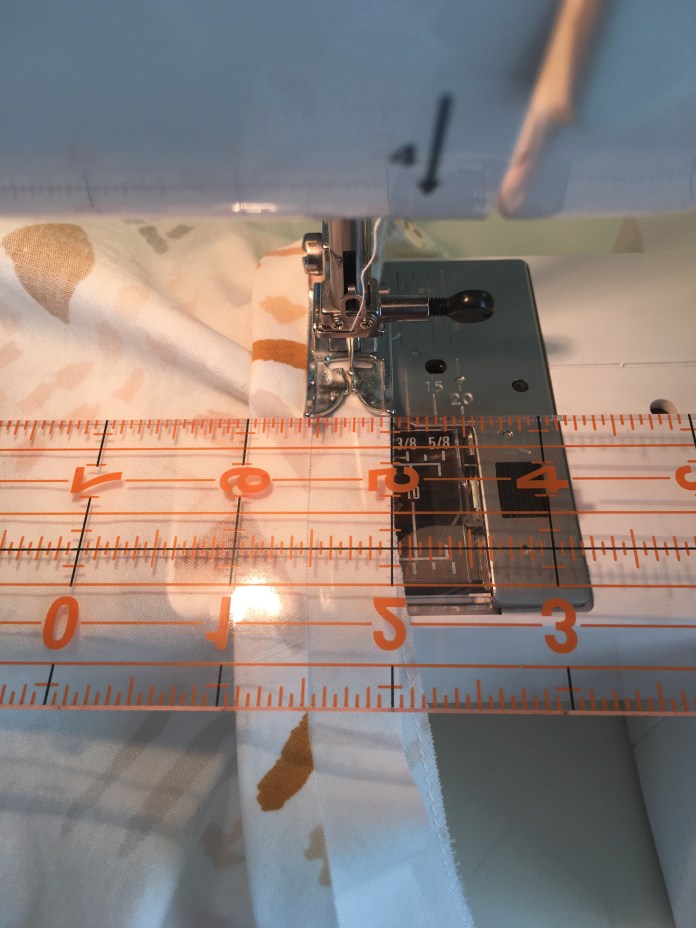
 I was so happy with the feel of the fabric-it is soft and works beautifully for sewing garments. It is more like a lawn than quilting cotton. In fact, I bought another 3 yards of the green as a back up plan. I have done that only a few times but I was so happy with my Washi that I wanted to have extra to be able to make it again when I wear it out which I will since I wear it all the time. I often make little changes as I sew and then forget what I changed (I do the same thing when I cook) so I have learned to take pictures. I actually had to look at my picture below to remember that my bias strips were 1.5 inches.
  I don’t pin before I sew, I just hold the edges together and it generally works pretty well. Then I iron the stitching line and press the edge to the other side and use wonder clips to hold the bias binding in place before I sew the second seam which, as seen below in the finished version, is just to the inside of the ditch. It actually looks like it was sewn on the inside and flipped to the front using the topstitch method, the way Rae shows you here in this great tutorial. Fellow blogger Teri used this method beautifully when she made this great checked Gemma. I am not sure if I would find the topstitch method easier than what I currently do because I have never tried it but I am really happy with this sort of fake topstitch method I developed by mistake. I actually started doing it this way because I couldn’t sew as straight a seam in the ditch as I liked and had better results sewing just over a bit on the side of the seam. I am really happy with how it turns out when everything cooperates. The picture below was taken after several washings and I am still very happy with how this shirt turned out.
 I like using the wonder clips because I turn the blouse inside out and iron the binding to the wrong side and whereas I used to pin it in place on the wrong side and then flip it and have to move all the pins to the outside before sewing, the side doesn’t matter with the wonder clips and it saves a step. This is what the outside looks like before sewing the second seam.
 I also sewed a facing onto the hem of this Gemma using more of the binding tape. For some reason, I get a much neater hem doing this than just turning up the fabric. Although it might seem like more work, the seam line gives a visual place to turn up the edge, I iron like crazy and everything just turns out neater. I also like a slightly wider hem than the pattern calls for because I find it lies flatter and doesn’t curl up.
 I do a lot of ironing when I make the hems this way. I have described this in several previous blogs. I often use contrasting fabric for fun. You can see other examples here, here, here and here. Pictures of the hem facing process below.
 As those of you who follow me on instagram know, I have been in the midst of sewing quite a few Gemmas. One might even call it Gemma madness. I have another binding method that I like even better that I will post about soon (also non-traditional.) Stay tuned!
 nursebeansews